Will Economic Growth Make People Prosper?
India’s strong growth rate is encouraging, but the real test of economic progress lies in its impact on household budgets, employment, agriculture and the everyday lives of ordinary citizens.
 City Air News
Sep 9, 2026 09:48
0
City Air News
Sep 9, 2026 09:48
0
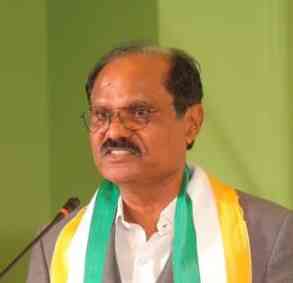
By Dr D. S. Kate
India recording an economic growth rate of 7.8 per cent in the first quarter is certainly an encouraging development. At a time when several major economies are facing economic uncertainty, India continues to be viewed as a relatively strong and sustainable growth story. Yet one important question deserves attention: does a higher growth rate necessarily make the common citizen feel more prosperous?
Economic growth is built through government policies, entrepreneurship, investment and the contribution of millions of working citizens. Its benefits, therefore, should reach a broad section of society. Growth becomes more meaningful when it improves living standards, creates opportunities and makes everyday life economically secure. This is where headline growth figures need to be viewed alongside household realities.
The middle class and lower-income groups continue to feel the pressure of rising living costs. Food, transportation and essential services consume a significant part of household income. Global geopolitical tensions can add another layer of uncertainty by disrupting trade and affecting energy prices. When fuel becomes expensive, transportation and production costs rise, eventually influencing the prices of numerous goods and services. Inflation, therefore, matters far beyond an economic statistic. Even a moderate inflation rate can hurt families when prices of frequently purchased essentials rise faster than their incomes.
Agriculture presents another concern. India continues to have a large population dependent directly or indirectly on farming and allied activities. Farmers face an unusual contradiction when their input and household costs rise while the prices realised for agricultural produce remain under pressure. Uncertain rainfall and changing climatic conditions can further affect farm output and income.
Employment is equally important. A growing economy needs to generate meaningful employment and entrepreneurial opportunities for young people. Economic progress becomes difficult to experience at the household level when educated youth struggle to find adequate work or sustainable business opportunities.
There is also a difference between growth in large organised sectors and the economic experience of a small shopkeeper, farmer or household enterprise. Major companies, infrastructure projects, automobiles and high-value service industries may report impressive expansion. Their contribution is important. Yet millions of smaller economic participants must also feel the momentum.
Inflation can further influence the growth cycle. Persistent price pressures may lead the central bank to maintain tighter monetary conditions. Higher borrowing costs affect homebuyers, small businesses and companies planning fresh investments. Expensive credit can discourage expansion, which may eventually slow employment generation and private investment.
This makes coordination between fiscal and monetary authorities particularly important. Policymakers need to understand supply constraints, encourage production, improve logistics and keep essential commodities reasonably affordable. Controlling inflation while supporting productive investment is a difficult balance, but it is essential for sustainable development.
India’s strong growth numbers should certainly give us confidence. They demonstrate the economy’s capacity to expand despite an uncertain global environment. The next stage is to ensure that this momentum travels deeper into society. While GDP is an important measure of national economic activity, citizens experience the economy differently. They experience it through the price of vegetables, fuel and transport; through salaries and business income; through farm earnings; through loan instalments; and through opportunities available to their children.
There is a Marathi saying, “Gajar vajantreecha, aaher naralacha” (much celebration and music, but only a coconut as the final gift). India’s economic growth should ensure that this old saying never becomes a description of its development story. Growth figures should eventually translate into better livelihoods, stronger purchasing power and wider opportunities. That is when economic progress becomes prosperity shared by ordinary people.
…
Dr D S Kate is an engineer, economic analyst & Founder, DS Kate Group of Industries, Aurangabad. Views expressed are personal.