Road Safety is a Life-Saving Mission, Not a Routine Exercise: DC Sachin Gupta
Deputy Commissioner Sachin Gupta chaired the monthly meeting on Road Safety and Safe School Vehicle Policy and made it unequivocally clear that road safety is not a routine administrative agenda but a life-saving mission requiring urgent, measurable outcomes.
 Girish Saini
Apr 17, 2026 09:35
0
Girish Saini
Apr 17, 2026 09:35
0
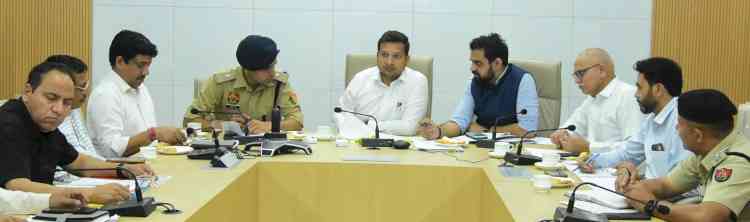
Rohtak, April 16, 2026: Deputy Commissioner Sachin Gupta chaired the monthly meeting on Road Safety and Safe School Vehicle Policy and made it unequivocally clear that road safety is not a routine administrative agenda but a life-saving mission requiring urgent, measurable outcomes.
Highlighting the gravity of the situation, the Deputy Commissioner stated that 456 road accidents and 212 deaths in 2025, followed by 86 accidents and 43 deaths till March 2026, reflect a deeply concerning trend that cannot be accepted. He emphasized that the focus must now shift from discussions to measurable reduction in fatalities.
The Deputy Commissioner highlighted key patterns emerging from district data:
• Peak accident periods: April–July and November–December
• Major causes: over-speeding, wrong-side driving and drunk driving
• Despite strong enforcement, with 11,144 challans issued in March 2026 alone, accidents continue
He stressed that, “Enforcement alone is not enough — engineering, awareness and accountability must converge.”
High-risk locations including Chuliana Mod, NH-9 stretch and Meham-Sampla belt were identified as accident-prone zones requiring immediate intervention.
The Deputy Commissioner said, “Every black spot is a predictable death point, not an accident.”
He directed all concerned departments to ensure rectification of black spots within 30 days, with clear accountability assigned to each agency.
Serious deficiencies in road infrastructure were flagged, including:
• Lack of road markings, reflectors and signage
• Inadequate street lighting
• Absence of pedestrian infrastructure such as footpaths
• Poor junction design and unsafe shoulders
• Waterlogging due to missing drainage systems
• Illegal cuts on highways contributing to accidents
He directed that all roads must be integrated with proper drainage systems to ensure zero waterlogging in future.
While enforcement remains strong, the Deputy Commissioner directed a shift towards risk-based and targeted enforcement, focusing on:
• Black spots and accident-prone stretches
• Night-time enforcement
• Highway patrol strengthening
He ordered strict action against:
• Over-speeding, wrong-side driving and drunken driving
• Unauthorized highway usage and illegal cuts
• Roadside parking causing obstruction
Taking serious note of safety risks, the Deputy Commissioner directed:
• Immediate closure of all unauthorized cuts on highways
• Registration of FIRs against violators
The Deputy Commissioner reviewed CCTV infrastructure:
• 250 CCTV cameras installed
• 232 currently functional
He directed that 100 percent functionality is non-negotiable and ordered integration of CCTV systems with enforcement mechanisms for real-time monitoring.
A total of 1514 school buses were checked, with 32 challans issued.
Expressing concern over low violation reporting, the Deputy Commissioner directed:
• Surprise inspections across the district
• Mandatory compliance with safety norms including GPS, speed governors and driver verification
Encroachments in areas such as Labour Chowk and major market zones were identified as significant contributors to congestion and accidents.
He ordered the weekly joint enforcement drives by Municipal Corporation and Police; and strict removal of encroachments to ensure smooth traffic flow.
The Deputy Commissioner took serious note of delays caused by jurisdictional disputes between agencies and directed, “Jurisdiction disputes cannot cost human lives — all such issues must be resolved within 48 hours.”
He also emphasized that:
• Pending Action Taken Reports must be submitted within defined timelines
• Delays in road repairs, signage and infrastructure works will not be tolerated
The Deputy Commissioner directed that:
• At least one fully compliant model road corridor be developed within 60 days
• Model roads must include signage, markings, lighting and enforcement systems
• Progress be monitored through regular reviews and documentation
To ensure accountability and measurable outcomes, the Deputy Commissioner issued the following directives:
1. All black spots to be rectified within 30 days
2. Pending Action Taken Reports to be submitted within 7 days
3. All CCTV cameras to be made functional within 10 days
4. Weekly encroachment removal drives to be conducted
5. Special enforcement campaign for school buses to be undertaken
The Deputy Commissioner concluded with a firm message: “Every delay, every missing sign, every ignored pothole can cost a life. We are not managing files today, we are responsible for saving lives.”