IIT Ropar Researchers Pioneer a New Frontier in Detecting Harmful Bacteria
Researchers at the Indian Institute of Technology (IIT) Ropar have developed a revolutionary method to detect harmful bacteria with unprecedented accuracy, a breakthrough that could dramatically reduce diagnosis time and improve patient outcomes in hospitals across the country. The innovation, published in the international journal Nature Communications, uses modified molecules called 'boronopeptides' that can identify disease-causing bacteria nearly 40 times more effectively than current methods.
 City Air News
Dec 30, 2025 09:09
0
City Air News
Dec 30, 2025 09:09
0
Researchers at the Indian Institute of Technology (IIT) Ropar have developed a revolutionary method to detect harmful bacteria with unprecedented accuracy, a breakthrough that could dramatically reduce diagnosis time and improve patient outcomes in hospitals across the country. The innovation, published in the international journal Nature Communications, uses modified molecules called 'boronopeptides' that can identify disease-causing bacteria nearly 40 times more effectively than current methods.
Bacterial infections have long posed a diagnostic challenge for clinicians. Many illnesses present similar symptoms, and existing laboratory tests can take hours or even days to pinpoint the exact microbe responsible. These delays often result in incorrect treatment or late intervention, putting patients at greater risk.
"The problem with current diagnostic approaches is the time lag between sample collection and definitive results," said Dr. Anupam Bandyopadhyay of IIT Ropar's Department of Chemistry. "By the time we know exactly which bacteria is causing the infection, valuable treatment time has been lost."
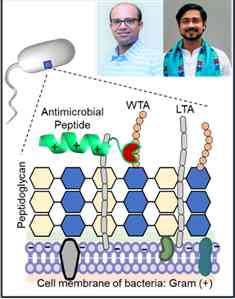
The team engineered a solution by inserting boron into antimicrobial peptides—naturally occurring defence molecules found in living organisms. When equipped with a boronic acid "warhead" these modified peptides can specifically identify and bind to lipoteichoic acid, a component found on bacterial surfaces.
The results exceeded expectations. The boronopeptides demonstrated a 40-fold improvement in detection performance while selectively targeting Gram-positive bacteria—a major class of disease-causing microbes—without damaging healthy human cells.
"We can achieve high-quality imaging for extended periods using only minute quantities of detection agents, making the technology both effective and economical.", added Dr. Anupam Bandyopadhyay
Perhaps most significantly, the IIT Ropar team has developed a straightforward chemical method to create these boronopeptides—one that doesn't require sophisticated equipment or extensive expertise. The accessibility is key to ensure that the technology can be adopted widely, including in resource-limited settings.
While boronic acid-based antibacterial materials have been studied before, the IIT Ropar research is the first to comprehensively unravel how these compounds target lipoteichoic acid in bacteria, opening new possibilities for diagnostic development. The research team is now focusing on adapting this technology to tackle antimicrobial resistance—a phenomenon where bacteria evolve to withstand existing antibiotics, rendering treatments ineffective.