IIM, Rohtak Director Prof. Dheeraj Sharma Conferred with Exemplary Governance Leadership Award
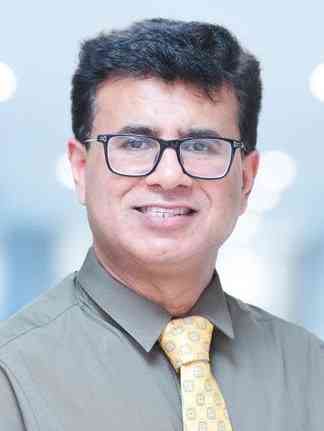
Prof. Dheeraj Sharma, Director of the Indian Institute of Management (IIM), Rohtak, has been honoured with the Exemplary Governance Leadership Award by the Awards and Appreciation Committee of the World Management Congress. The award was formally presented at a ceremony held at the India International Centre, New Delhi, during the 46th World Management Congress.
 Girish Saini
Jan 9, 2026 10:05
0
Girish Saini
Jan 9, 2026 10:05
0
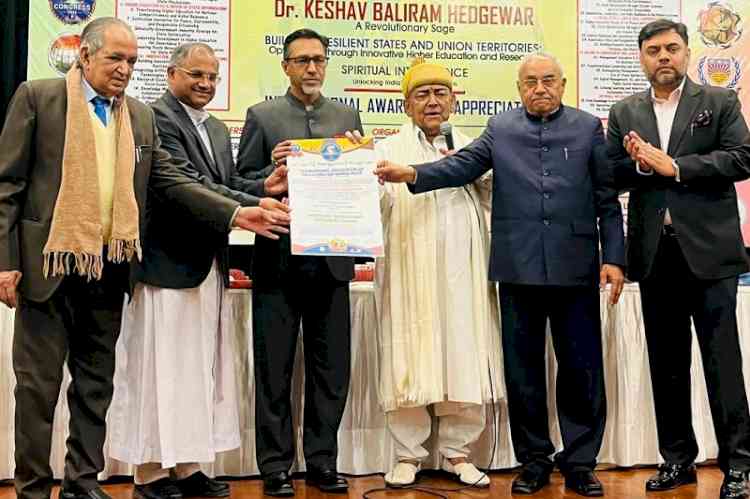
Rohtak, January 9, 2026: Prof. Dheeraj Sharma, Director of the Indian Institute of Management (IIM), Rohtak, has been honoured with the Exemplary Governance Leadership Award by the Awards and Appreciation Committee of the World Management Congress. The award was formally presented at a ceremony held at the India International Centre, New Delhi, during the 46th World Management Congress.
The award ceremony was graced by an eminent gathering of national and international dignitaries, reflecting the global stature and credibility of the Congress. Prominent among them were Mariano Caucino, Ambassador of Argentina; Fr. Roby Kannanchira, Carmelites of Mary Immaculate and a global expert in inter-religious dialogue; Dr. Janice Darbari, Honorary Consul General of Montenegro; Dr. Markandey Rai, President, Global Peace Foundation–India and Chancellor, Indira Gandhi Technological and Medical Sciences University, Arunachal Pradesh; Jesper Moller Sorensen, Denmark’s Ambassador to the United States; and Dr. Priya Ranjan Trivedi, Founder Chairman, Indian Institute of Ecology and Environment; President, Confederation of Indian Universities; and President of the 46th World Management Congress. The ceremony was further enriched by the presence of Vice-Chancellors, Directors of premier institutions, senior academicians, policymakers, and thought leaders from across the country.
The Exemplary Governance Leadership Award followed an exceptionally rigorous and transparent selection process. Over 1,400 nominations were received from across the globe, underscoring the prestige and scale of the award. Only seven individuals were selected for the honour, highlighting its exclusivity and the high standards of governance excellence it represents.
Prof. Dheeraj Sharma was recognised for his visionary leadership, exemplary governance practices, and institution-building capabilities, which have played a transformative role in positioning IIM Rohtak among India’s most dynamic and rapidly advancing management institutions. Under his leadership, the Institute secured international accreditations from the Association of MBAs (AMBA) and the Business Graduates Association (BGA), reinforcing its commitment to global benchmarks in management education, governance, and institutional accountability.
A major infrastructural milestone during his tenure was the successful transition of IIM Rohtak to its permanent campus in 2018, completed below the cost estimates, reflecting strong financial discipline, efficient project management, and transparent administrative practices. On the academic front, Prof. Sharma spearheaded pioneering initiatives such as the Integrated Programme in Management (IPM) at IIM Rohtak and the Integrated Programme in Law (IPL)- first such programme among all Indian Institutes of Management, thereby expanding access to high-quality education and introducing innovative interdisciplinary learning pathways.
A distinguished scholar, Prof. Sharma was featured in the Top 2% Researchers list released by Stanford University in 2023, highlighting his global research impact. He has served as Principal Investigator for several high-impact research projects funded by the Ministry of Home Affairs, Ministry of Agriculture & Farmers Welfare, Ministry of Consumer Affairs, and the Ministry of Commerce, contributing meaningfully to evidence-based policymaking and national development. During his tenure, IIM Rohtak emerged as the largest IIM in the country in terms of student strength, reflecting growing trust and confidence among aspirants nationwide. The Institute also launched the Executive Post Graduate Programme in Sports Management, a unique initiative that received special appreciation from the Prime Minister of India.
While accepting the award, Prof. Dheeraj Sharma delivered a thought-provoking address on exemplary leadership in higher education. He emphasised that institutional excellence begins with autonomy, particularly financial autonomy, without which innovation and sustained quality remain constrained. He observed that the historical overdependence of Indian higher education institutions on government funding has often limited their ability to innovate, respond to emerging challenges, and scale excellence.
Drawing from the Indian Institute of Management experience, Prof. Sharma noted that the success of IIMs lies in their financial independence, enabling responsible management of both operational and capital expenditures. He stressed that IIMs consciously integrate education with employability, taking moral responsibility not only to educate students but also to ensure that their capabilities are recognised, valued, and rewarded by the market.
He further reflected that the true measure of education lies not in degrees, but in the market recognition of human capability. Broadening the discourse, he highlighted that learning is multifaceted, continuous, and experiential, extending far beyond formal schooling. Fundamental attributes such as trust, language development, and cognitive capacity, he noted, are shaped significantly through early-life exposure rather than classrooms alone.
Expressing concern over early childhood education in India, Prof. Sharma pointed to the lack of adequate regulation in the pre-school education sector and the growing disconnect between examination success and foundational learning outcomes. He emphasised that while child education has received significant attention, parental education is equally critical in shaping values, behaviour, emotional intelligence, and lifelong learning.
Concluding his address, Prof. Sharma stressed that great leadership in education must prioritise building value-based citizens and better human beings, not merely physical infrastructure, thereby aligning education with ethical, social, and human development.