Philosophising with a false conscience
As we step into 2026, public debate in India should begin with a little New Year discipline. We should welcome scrutiny, even sharp criticism, but we should also insist that argument carries responsibility. A republic of over 1.4 billion people cannot be reformed by cynicism. Jobs, productivity, exports, and inclusion are not easy at the best of times, and progress comes through the unglamorous grind of design, implementation, correction, and scale. A New Year is also a moment to separate skepticism from pessimism.
 City Air News
Jan 8, 2026 07:52
0
City Air News
Jan 8, 2026 07:52
0
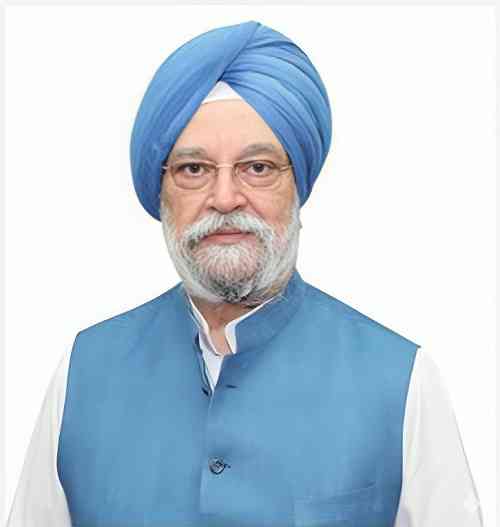
By Hardeep S Puri
As we step into 2026, public debate in India should begin with a little New Year discipline. We should welcome scrutiny, even sharp criticism, but we should also insist that argument carries responsibility. A republic of over 1.4 billion people cannot be reformed by cynicism. Jobs, productivity, exports, and inclusion are not easy at the best of times, and progress comes through the unglamorous grind of design, implementation, correction, and scale. A New Year is also a moment to separate skepticism from pessimism.
In Beyond Good and Evil (§211), Friedrich Nietzsche wrote, in substance: “The philosopher must be a creator of values, not a mere critic or spectator. He must philosophise from the standpoint of life, not against it.” Public policy needs the same temper. Critique is welcome, but it must be tethered to evidence and to the lived constraints of governing a complex, diverse democracy. When scepticism becomes a posture, it corrodes confidence in the institutions that make reform possible.
In recent years, a genre of commentary has emerged that markets doubt as sophistication. It reduces the work of reform to caricature, treats every imperfect transition as proof of permanent failure, and offers a familiar consolation: India is supposedly doomed by its own policymakers. That posture has consequences. It weakens trust in statistics and markets, it encourages fatalism among entrepreneurs and investors, and it hands outside actors a ready-made script for pressuring India in negotiations. Expertise must remain answerable to facts.
It is worrying to note that a few commentators, who boast of a strong professional and academic background, have resorted to such posturing. Some, whom I have known personally and who have anchored their identity and credibility on India are now trying to make a career out of badmouthing the country possibly for gaining attention or seeking relevance since they are no longer part of government.
Their charge that India’s datasets are uniquely unreliable sits uneasily with the direction of travel. The Goods and Services Tax created a national invoice trail and a compliance culture that simply did not exist a decade ago. In 2024-25, gross GST collections crossed ₹22 lakh crore, averaging about ₹1.8 lakh crore a month. Digital payments created another audit footprint. In November 2025, UPI recorded 20 billion transactions worth over ₹26 lakh crore. These are large, verifiable systems, and they expand the space for measurement, cross checks, and course correction.
Measured outcomes in welfare and inclusion further puncture this fatalism. NITI Aayog’s National Multidimensional Poverty Index shows almost 24 crore Indians moved out of multidimensional poverty between 2013-14 and 2022-23, with the incidence falling from nearly 30% to about 11%. Direct Benefit Transfer tightened delivery, with cumulative DBT transfers crossing ₹45 lakh crore in 2025 and savings of more than ₹3.5 lakh crore through leakage reduction over the DBT period. Financial inclusion is now mass infrastructure, with over 56 crore Jan Dhan accounts.
Reforms to financial discipline have had visible effects. The gross nonperforming asset ratio of scheduled commercial banks fell to 2.1% in 2025, down from about 11.2% in 2018. This did not happen by wishful thinking. It reflects a sustained cleanup of balance sheets, stronger supervision, and a system that has progressively reduced the space for evergreen lending and hidden losses. When critics say the state cannot reform, this quiet turnaround is the first answer.
The jibe that India cannot build at scale ignores what has changed in manufacturing ecosystems. Under the Production Linked Incentive programmes, realised investment crossed ₹2 lakh crore across 14 sectors, translating into incremental production and sales of over ₹18 lakh crore and employment generation of over 12 lakh jobs. Electronics is the sharpest illustration: electronics production crossed ₹11 lakh crore in 2024-25, mobile phone production ₹5.5 lakh crore, and mobile exports about ₹2 lakh crore. These are market tests in the toughest arena, and they are being passed.
Trade leverage is built by performance and consistency, not by performative despair. Total exports of goods and services hit an all-time high of over US$ 825 billion in 2024-25. In a world of tariffs and protectionist reflexes, partners respond to capability. India’s posture strengthens when it is seen as a market that produces, trades, and absorbs at scale, and when it can credibly offer diversified supply in sectors that matter. The combination of domestic reform and external engagement produces resilience, and resilience produces leverage.
Competitiveness is not secured by a single scheme or a single ministry. It is the cumulative effect of infrastructure, logistics, and administrative reform. The gains are visible in the spread of industrial corridors, improved freight connectivity, better port linkages, and integrated planning platforms that reduce the cost of time. The point is not that every bottleneck has vanished. The point is that the state has demonstrated the capability to build systems, shorten processes, and scale delivery, which is exactly how productivity improvements compound over years rather than weeks.
On agriculture and rural resilience, it is easy to list distortions and conclude that nothing can be fixed. The policy direction has moved toward targeted support and asset creation, while building basic services that raise productivity and dignity. Jal Jeevan Mission has, as per official updates, provided tap water connections to more than 12.5 crore rural households, improving public health and reducing the time burden on families.
The story of inclusion is also visible in health, housing, and energy access. Ayushman Bharat has issued more than 42 crore cards under PM-JAY, expanding financial protection against catastrophic health costs. Under PM Awas, almost 3 crore houses have been completed, giving families a formal asset and a foundation for mobility. Under PM Ujjwala Yojana, more than 10 crore LPG connections have brought cleaner cooking energy to households that were once trapped in smoke and drudgery. These outcomes are not abstractions. They are the practical foundation on which aspiration and productivity can rest.
The most sweeping pessimism is often reserved for states, as if a billion people must be governed through a single template. India’s federalism is noisy, but it is also adaptive. Several states, especially Uttar Pradesh, Bihar, Madhya Pradesh and Rajasthan, have shown that better law and order, faster clearances, and sustained infrastructure delivery can draw investment and formal jobs. The centre has reinforced this competitive federalism by building national platforms that states can plug into, by creating funding that rewards delivery, and by making reform data transparent enough for citizens to judge performance.
India’s story is far from finished and it will always invite argument. The question is the quality of argument we choose as we begin a new year. When eminent professionals treat insinuation as analysis, they weaken the very institutions that make reform possible. Nietzsche’s reminder is useful here. A serious thinker creates values that help societies live and improve. India has chosen the harder path of execution, and it is the results, audited in numbers and felt in households, that will outlast any brief for despair. In 2026, India should demand criticism that improves policy, not commentary that undermines confidence for applause. That standard protects reform, investment, and democratic choice at home.
(The author is the Union Minister for Petroleum & Natural Gas, Government of India)