IIIT Hyderabad hosts Digital Citizen Summit, making India's digital public infrastructure more inclusive, accountable and accessible
International Institute of Information Technology Hyderabad (IIIT Hyderabad) hosted the Digital Citizen Summit – Regional Dialogues: Digital Public Infrastructures for Governance on 28 October 2026, focusing on the evolution of India's digital public infrastructure and facilitating its advancement.
 City Air News
Oct 30, 2026 08:10
0
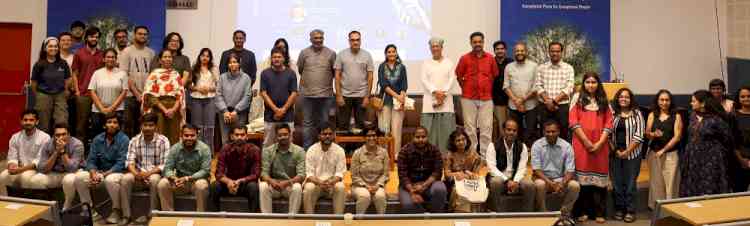
Hyderabad, October 30, 2026: International Institute of Information Technology Hyderabad (IIIT Hyderabad) hosted the Digital Citizen Summit – Regional Dialogues: Digital Public Infrastructures for Governance on 28 October 2026, focusing on the evolution of India's digital public infrastructure and facilitating its advancement.
Collectively organised by Digital Empowerment Foundation (DEF), the Human Sciences Research Centre at IIIT Hyderabad, and Code for Good Tech (C4GT), the regional dialogue brought together stakeholders from government, civil society, technology, research and community representatives who deliberated on making India's digital public infrastructure more inclusive, accountable and accessible.
India's Digital Public Infrastructures (DPIs), including Aadhaar, the Unified Payments Interface (UPI) and DigiLocker, have transformed how citizens access public services, financial systems and welfare benefits. As DPIs and Digital Public Goods (DPGs) become increasingly integral to governance, questions around equitable access, accountability, data-driven systems and citizen participation are gaining significance.
However, despite their transformative potential, digital systems can present barriers for people whose needs and lived experiences are not adequately reflected in their design. Rural women, migrant workers, persons with disabilities, linguistic minorities and informal-sector workers may face challenges such as biometric authentication failures, limited language support, unreliable internet connectivity and inaccessible grievance-redressal mechanisms. Therefore, addressing these barriers is essential to ensure that digital governance strengthens democratic participation.
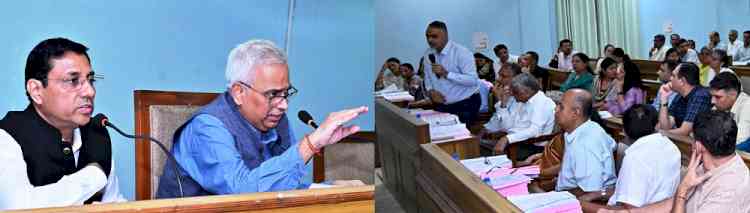
The regional dialogue featured a panel discussion and a workshop to examine how DPIs and DPGs can better respond to citizens' needs and contribute to a more inclusive and participatory model of governance. "If DPI is like a road, then everyone must be able to walk on it, not just those with smartphones or bandwidth”, shared Osama Manzar, Founder -Director, Digital Empowerment Foundation (DEF).
A panel discussion on DPI governance, accountability and grievance redressal in Telangana and beyond brought together government officials, civil society representatives, technologists, researchers and community representatives to discuss the governance of digital public infrastructure, mechanisms for accountability, and ways to strengthen grievance redressal. Panellists included Sam Kummary (Technical Director at the Mojaloop Foundation), Aakansha Natani (HSRC, IIIT-H), Ajitha Sindhe (Program Coordinator at Code for Good Tech), Rakesh Dubbubu (Founder of Factly), and SQ Masood (Hyderabad Urban Labs)
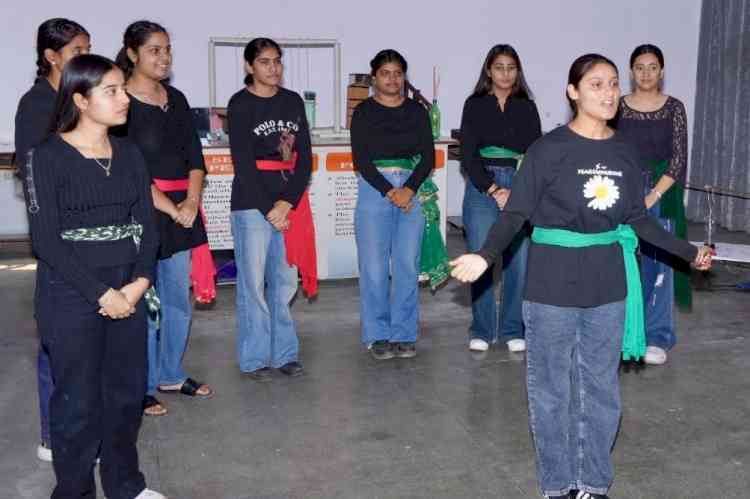
The summit also included a workshop on how to co-create and contribute to DPIs. This involved training participants with DPI tools, an introduction to DPI code and ways of contributing to DPI design and development.
These discussions and hands-on engagement created a space for dialogue between technology developers, policymakers, researchers and the communities that interact with digital public systems. It explored approaches to designing infrastructure that accounts for diverse user experiences and supports meaningful access to governance.
For IIIT Hyderabad, the regional dialogue reflects its commitment to advancing research and innovation that address societal challenges and strengthen the role of technology in public service delivery.