Holi – A Celebration of Colors, Courage and Togetherness
 Arvind Sharma
Mar 3, 2026 01:36
0
Arvind Sharma
Mar 3, 2026 01:36
0

By Arvind Sharma
When spring whispers through blooming flowers and golden sunshine replaces winter’s chill, India prepares to welcome one of its most beloved festivals — Holi.
Bursting with colors, music, laughter and warmth, Holi is far more than a celebration is a festival of hope, harmony, and happiness.
Celebrated in the month of Phalguna (February–March) on the full moon day (Purnima), Holi marks the arrival of spring and the renewal of life.
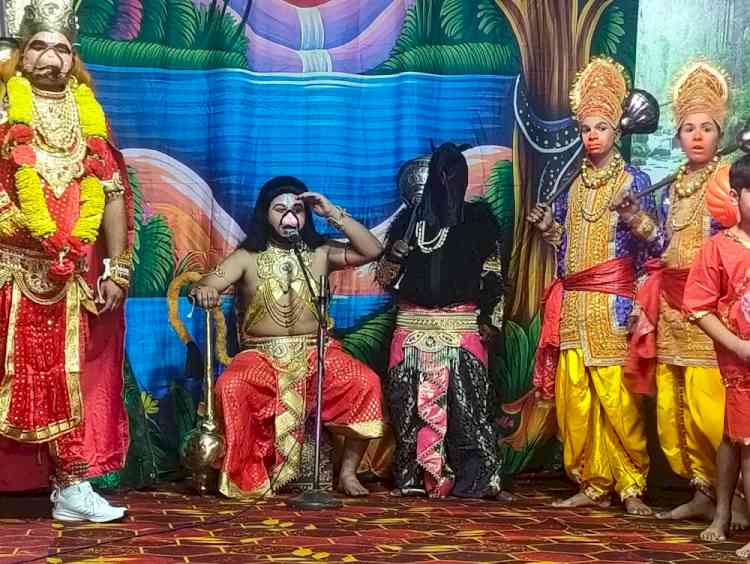
Holi is the Sacred Story of Faith and Victory .The origin of Holi lies in a powerful legend from Hindu mythology.The demon king Hiranyakashipu demanded that everyone worship him as a god. But his son, Prahlada, remained a devoted follower of Lord Vishnu. Furious at his son’s unwavering faith, the king plotted to punish him.He sought the help of his sister Holika, who had a magical boon protecting her from fire. She sat in blazing flames with Prahlada on her lap, confident she would survive. Yet, divine grace protected the innocent child, and Holika was reduced to ashes.
This event symbolizes the timeless truth — good always triumphs over evil and to remember this victory, people light bonfires on the eve of Holi, a ritual known as Holika Dahan, praying for prosperity, protection, and positivity.
The next day transforms into a carnival of colors. This joyous tradition is deeply connected with Lord Krishna and Radha. Legends describe Krishna playfully applying colors to Radha and her friends, giving birth to the beautiful custom of color play.
Even today in Holi people smear each other with gulal, splash colored water, dance to festive songs, and share sweets. Differences fade, hearts open, and relationships are renewed.
In Short Holi teaches us: To forgive past grievances,To celebrate love and unity,To embrace joy without hesitation
Every region of India celebrates Holi in its own unique style.
In Mathura and Vrindavan, it is associated with Krishna’s childhood, Holi is celebrated for days with temple rituals, devotional songs, and grand processions. Barsana hosts the famous Lathmar Holi, where women playfully chase men with sticks, recreating a legendary episode from Krishna’s life. Jaipur is known for its royal-style celebrations, folk dances, and cultural performances that reflect Rajasthan’s grandeur.
In Anandpur Sahib, Holi coincides with Hola Mohalla, a Sikh festival initiated by Guru Gobind Singh, featuring martial arts displays and spiritual gatherings.
Holi in Himachal Pradesh is a Blend of Culture and Colors
In the scenic hills of Himachal Pradesh, Holi carries a special charm. Along with colors and music, traditional fairs (melas), folk dances, and temple rituals add a cultural richness to the celebrations.
Sujanpur Tira in Hamirpur district hosts one of the most renowned Holi festivals in the state. Celebrated for nearly a week, it features wrestling matches, cultural programs, and grand fairs. This tradition dates back to the reign of Raja Sansar Chand.
Palampur celebrates Holi peacefully with temple visits and community gatherings, surrounded by lush tea gardens.
Kullu observes Holi with traditional customs and local fairs, reflecting Himachali heritage.
Dharamshala and McLeodganj present a lively mix of traditional and modern celebrations, where locals and tourists join in eco-friendly color play and music-filled gatherings.
(Author is Dharamshala, Himachal Pradesh-based Senior Journalist. Views are personal.)