Family of Brain Dead Youth from Bhiwani gives consent after persuasion by VC Dr. H.K. Agarwal
Amidst deep shock following the declaration of brain death by doctors, the family of a 28-year-old youth from Bhiwani district—who had been admitted to PGIMS, Rohtak, for treatment—gave their consent for organ donation late today evening.
 Girish Saini
May 16, 2026 09:53
0
Girish Saini
May 16, 2026 09:53
0
Rohtak, May 15, 2026: Amidst deep shock following the declaration of brain death by doctors, the family of a 28-year-old youth from Bhiwani district—who had been admitted to PGIMS, Rohtak, for treatment—gave their consent for organ donation late today evening. Following the family's approval, the organ donation procedure is scheduled to be completed on the morning of May 16. Through this noble decision by the youth's family, several of his organs—including his liver, heart, kidneys, and corneas—will give a new lease on life to needy patients.
According to reports, the youth—who had sustained critical injuries in a road accident on May 13—was brought to the Trauma Center at PGIMS, Rohtak, by his family members the previous day. Despite the doctors' tireless efforts, his condition failed to improve due to a severe head injury. On Friday, a medical board led by Medical Superintendent Dr. Kundan Mittal—comprising Dr. Tarun Yadav (Anesthesia), Dr. Varun Agarwal (Neurosurgery), and Dr. Surendra Verma (Surgery)—declared him brain dead after completing all prescribed protocols, including conducting the apnea test twice.
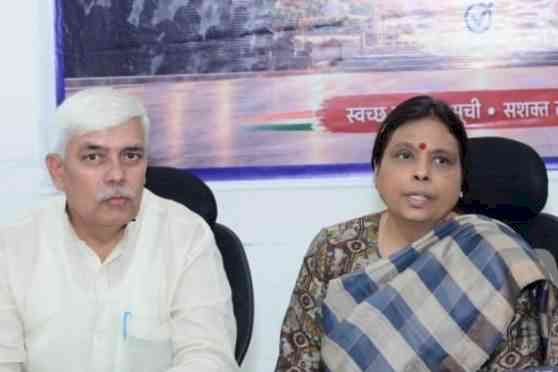
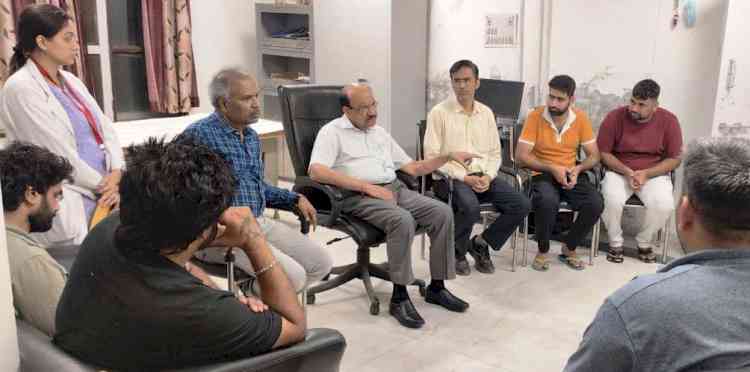
Upon receiving the notification of brain death, the counseling team from SOTTO (State Organ and Tissue Transplant Organization), Haryana, met with the family; however, the grief-stricken relatives were initially reluctant to agree to organ donation. Ultimately, Vice-Chancellor Dr. H.K. Agarwal personally visited the Trauma Center to meet with the youth's family. He spoke with the relatives and persuaded them to agree to this noble cause.
Expressing his gratitude to the family of the brain-dead youth, Vice-Chancellor Dr. H.K. Agarwal said that while their son could not return to them, his heart could continue to beat within someone else's chest, and his eyes could enable someone else to see the world. He emphasized that even in the midst of the greatest sorrow, if we can save a human life; there is no greater act of virtue.
Vice-Chancellor Dr. Agarwal provided the family with a detailed explanation regarding the entire organ donation process, its legal aspects, and associated religious beliefs. Ultimately, prioritizing social service over their own grief, the family members consented to organ donation.
Director Dr. S.K. Singhal said that SOTTO has, in accordance with regulations, duly notified ROTTO PGIMER (Chandigarh) and NOTTO (New Delhi). The allocation of organs will proceed strictly according to established protocols. He further noted that PGIMS also has patients on its waiting list for kidney transplants. The corneas will be provided to the local Regional Institute of Ophthalmology. The organ retrieval procedure is scheduled to commence at 6:00 AM on Saturday. Arrangements for a 'Green Corridor' will be made by the district administration and police as and when required.
Dr. Sukhbir Singh, the Nodal Officer for SOTTO, pointed out that the most significant misconception among the general public concerns the concept of 'brain death.' People often mistake it for a coma; however, the reality is that brain death constitutes a legally and medically confirmed declaration of death. Specifically, it involves the cessation of brainstem function. While on a ventilator, the heart may continue to beat for a few hours or days—solely because it is receiving oxygen from the machine—the heartbeat ceases the moment the machine is disconnected. Under these circumstances, organ donation remains the sole avenue through which the individual's passing can be rendered truly meaningful.
Medical Superintendent Dr. Kundan Mittal explained that the donation of organs from a single brain-dead individual can potentially save the lives of approximately eight people. In addition to the two kidneys, liver, heart, lungs, pancreas, and small intestine, other tissues such as corneas, skin, bones, heart valves, and blood vessels can also be donated.