Annual J.C. Anand Memorial Lecture
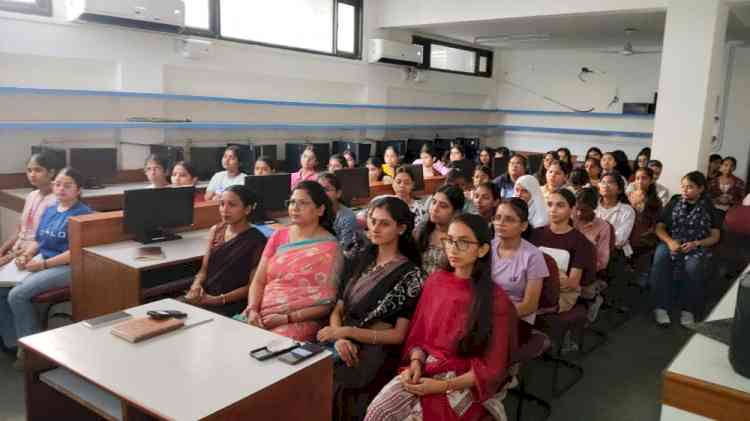
The Department of Political Science, Panjab University organised the Annual J.C. Anand Memorial Lecture. The speaker for the occasion was Prof. Satyajit Singh, Department of Political Science and Global Studies, University of California, Santa Barbara (U.S.A.).
 City Air News
Feb 18, 2026 05:45
0
City Air News
Feb 18, 2026 05:45
0
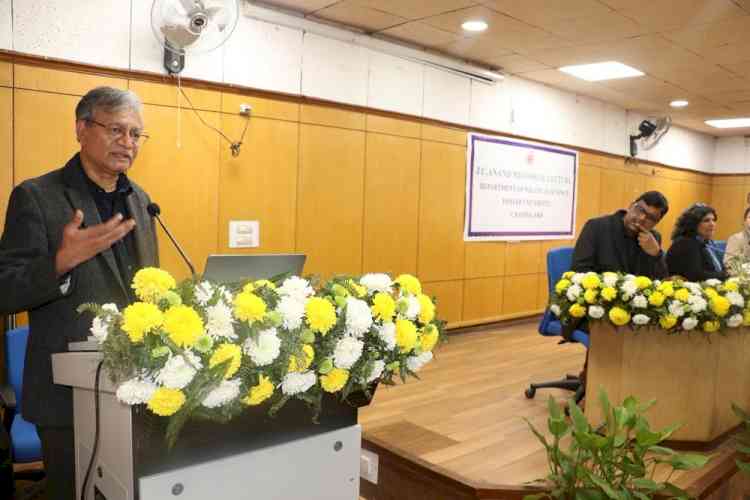
Chandigarh, February 18, 2026: The Department of Political Science, Panjab University organised the Annual J.C. Anand Memorial Lecture. The speaker for the occasion was Prof. Satyajit Singh, Department of Political Science and Global Studies, University of California, Santa Barbara (U.S.A.).
Prof. Satyajit spoke on Polity as Fiction, Fiction as Reality with reference to Raag Darbari, a classical novel written in Hindi by Shrilal Shukla in 1968. Written barely two decades after Independence, the novel narrates an important story of rural India, local politics, and administration.
Prof. Yojna Rawat, Dean of University Instructions, was the Guest of Honour, and the session was chaired by Prof. Ashutosh Kumar, Department of Political Science, Panjab University. The Chairperson of the Department, Prof. Pampa Mukherjee, formally welcomed the audience and introduced the speaker.
In his lecture, Prof. Satyajit Singh said that Raag Darbari has been neglected by scholars of Indian administration. He referred to the literary acclaim accorded to the novel by scholars such as Rupert Snell and Ulka Anjaria for its deft use of satire, realistic depiction, and continued contemporary relevance. Drawing on the work of noted anthropologist Akhil Gupta, he underlined that the novel is quasi-ethnographic, where Shukla depicts everyday realities through a thick description of village life and the improbability of the everyday.
Returning to administrative theory, Prof. Satyajit highlighted that Shukla provides a non-Eurocentric administrative thought. Given the limitations of Weberian and Wilsonian approaches that promote centralised administrative structures, Shukla offers a local perspective on administration. He noted that, as a political ethnographer, he found Shukla more relevant than much of the existing administrative literature. Administrative writings emphasising the autonomy of street-level bureaucrats emerged much later than Shukla’s work. In fact, Shukla goes beyond the street-level bureaucrat by underlining the agency and actions of local-level actors that influence policy implementation and local governance.
While acknowledging the pessimistic tone of Shukla, Prof. Satyajit concluded on a positive note on local governance and panchayats, stressing that institutional change and state capacities need to be strengthened to ensure safeguards against elite capture.
Distinguished administrators, family members of Prof. J.C. Anand, friends, guests, senior faculty members, and students also attended the memorial lecture.