Three-day Advanced Analytical Instrumentation Workshop begins at PU
The three-day workshop on ‘Advanced Analytical Instrumentation I-RISE Operator Training Program (I-OTP)’ started today at SAIF, Panjab University, Chandigarh.
 City Air News
Feb 18, 2026 05:41
0
City Air News
Feb 18, 2026 05:41
0
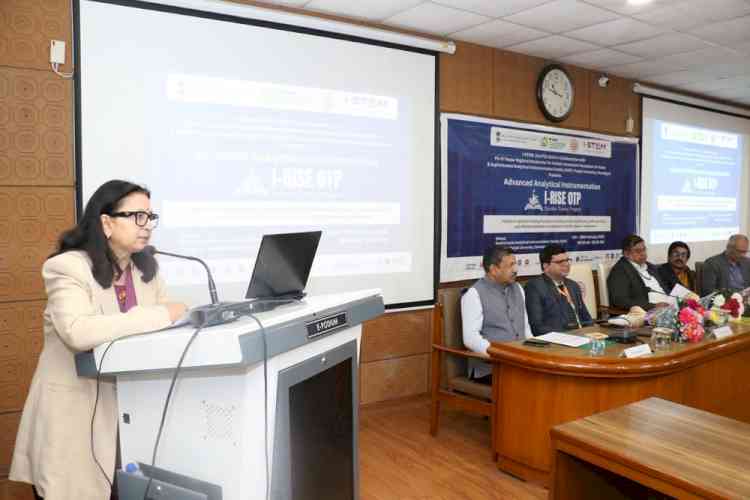
Chandigarh, February 18, 2026: The three-day workshop on ‘Advanced Analytical Instrumentation I-RISE Operator Training Program (I-OTP)’ started today at SAIF, Panjab University, Chandigarh.
The prestigious workshop is being jointly organised by the Panjab University-IIT Ropar Regional Accelerator for Holistic Innovations Foundation (PI-RAHI), the Northern Region Science & Technology Cluster established under the aegis of the Office of the Principal Scientific Adviser (PSA) to the Government of India, in collaboration with the Indian Science, Technology, and Engineering Facilities Map (I-STEM) and the Sophisticated Analytical Instrumentation Facility (SAIF), PU, Chandigarh.
The first-of-its-kind instrumentation training workshop was launched in the presence of PU Vice-Chancellor and Chairperson, PI-RAHI, Prof. Renu Vig; Director, CSIO, Chandigarh, Prof. Shantanu Bhattacharya; Scientist-F, Office of the PSA to the Government of India, Dr. Vishal Choudhary; COO and National Coordinator, I-STEM, Dr. Harilal Bhaskar; Honorary Director, SAIF, CIL and UCIM, Prof. Gaurav Verma; and Director, PI-RAHI, Prof. Rajat Sandhir.
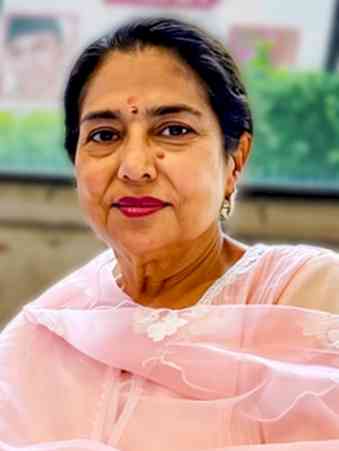
Addressing the national workshop, PU Vice Chancellor spoke on the rapidly evolving scientific landscape and the role of advanced analytical instrumentation across diverse disciplines, from material science and chemistry to biology and environmental studies. Prof. Vig described I-OTP as a vital platform with a mission to democratise access to advanced scientific infrastructure, calling it a transformative step for India’s research ecosystem to break barriers and enable a culture of shared excellence.
Prof. Shantanu Bhattacharya described I-OTP as the “Maha Kumbh” of technology innovation, bringing together instruments, operators, and institutes on a unified platform. He highlighted the growing importance of connected analytical instruments, digitalisation, and the integration of AI and ML in the era of data analytics, stressing the need for strengthened skill development initiatives. He also proposed the re-utilisation and exchange of underutilised instruments to maximise resources and encourage collaborative growth.
Dr. Vishal Choudhary highlighted two flagship initiatives of the Office of the PSA, first the Science & Technology (S&T) Clusters and second the I-STEM initiative. He spoke on the synergy between these two initiatives for on-ground implementation to strengthen the S&T ecosystem and infrastructure at the national level. He highlighted the use of the I-STEM portal as a national repository with an aim to enhance accessibility, resource sharing, and national research capacity for publicly funded research infrastructure, enabling knowledge sharing and access across Tier-1, Tier-2, and Tier-3 cities.
The workshop covered instrumentation across Liquid Chromatography Mass Spectrometry, Gas Chromatography Mass Spectrometry, Inductively Coupled Plasma Mass Spectrometry, electron microscopy, X-ray diffractometer, Circular Dichroism Spectrophotometer, Thermal Gravimetric Analysis, and Differential Scanning Calorimetry.
Participants from a wide range of states, including Chandigarh, Punjab, Delhi, Haryana, Himachal Pradesh, Maharashtra, Rajasthan, Uttar Pradesh, and Uttarakhand, along with several premier research and academic institutions across India, are participating in the workshop.