Water conservation is the most urgent need of the hour: HIRD Director Dr. Virender Singh Chauhan
 Girish Saini
Feb 14, 2026 11:39
0
Girish Saini
Feb 14, 2026 11:39
0
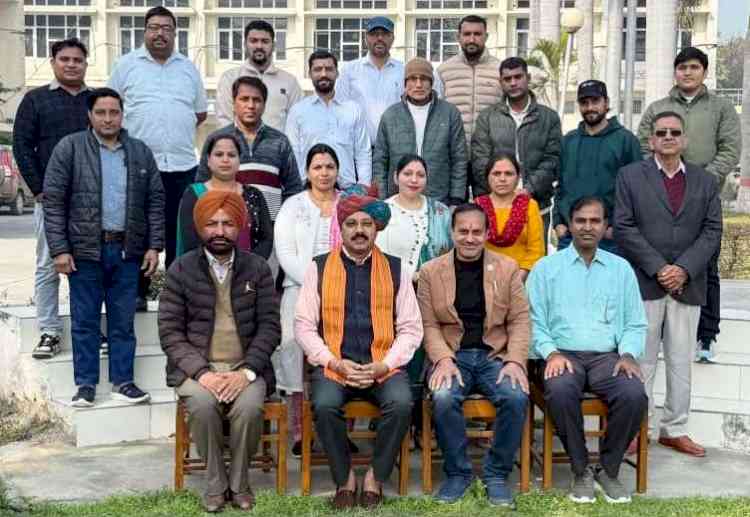
Nilokheri, February 14, 2026: The Amrit Sarovars developed in every district of the state could once again become dead ponds due to lack of continuous maintenance. To prevent this, officials from various projects related to water conservation must adopt one Amrit Sarovar each. It is the need of the hour to take on the role of guardian and protector of each Sarovar through self-motivation and to connect the rural community with the movement to conserve water resources. Dr. Virender Singh Chauhan, Director of the Haryana Institute of Rural Development (HIRD), expressed these views while interacting with participants at the closing ceremony of the five-day training program being conducted at the institute.
Program coordinator Prof. Kamaldeep Sangwan and K. Rajeshwar from the National Institute of Rural Development and Panchayati Raj, Hyderabad, welcomed Chief Guest Dr. Chauhan with a bouquet of flowers.
HIRD Director Dr. Chauhan said that training is not merely a formality, but an important step towards practical implementation. At the end of a five-day training program organized at the institute on the effective use of management information systems under the Watershed Development Component of the Pradhan Mantri Krishi Sinchai Yojana 2.0, Dr. Chauhan called upon participants from various districts of the Hisar division to wholeheartedly contribute to the maintenance of Amrit Sarovars. He made all participants pledge to adopt at least one Amrit Sarovar in their district and work towards its conservation, beautification, and enhancement of water storage capacity.
Dr. Chauhan said that water conservation is the most pressing need of the hour. The correct, transparent, and responsible use of management information systems is crucial for the effective implementation of watershed development projects under the Pradhan Mantri Krishi Sinchai Yojana 2.0. He said that technology can ensure monitoring, transparency, and accountability of schemes, which will give a new impetus to rural development. He expressed hope that participants will implement the knowledge and skills acquired in this training in their respective districts, giving a new direction to rural development, and transforming water conservation into a mass movement.
Dr. Virender Singh Chauhan said that if every officer develops a model water source, a permanent solution to the water crisis is possible. Officials and employees from various districts, including Gurbinder Singh, advisor from the National Institute of Rural Development, were present during the event.