The Panchayat Advancement Index (PAI) Will Provide a Scientific Basis for Rural Development: HIRD Director Dr. Virender Singh Chauhan
The Government of India is deeply committed to the widespread implementation of the Panchayat Advancement Index (PAI) as an effective indicator and metric within the process of formulating Panchayat Development Plans.
 Girish Saini
May 7, 2026 11:31
0
Girish Saini
May 7, 2026 11:31
0
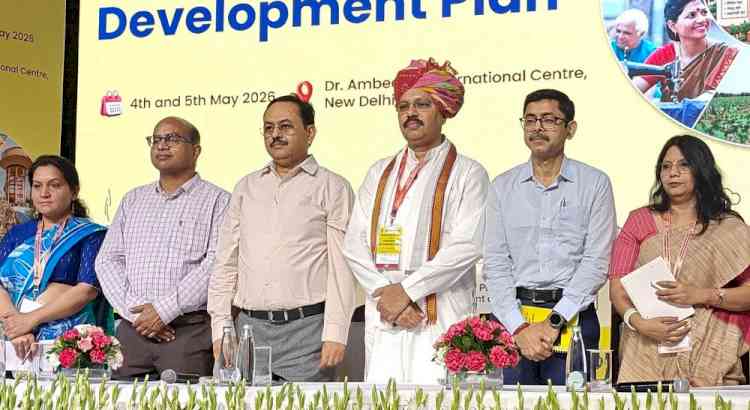
Nilokheri, May 7, 2026: The Government of India is deeply committed to the widespread implementation of the Panchayat Advancement Index (PAI) as an effective indicator and metric within the process of formulating Panchayat Development Plans. The objective is to take the global goals of sustainable development to every village and realize them at the grassroots level. This information was shared by Dr. Virender Singh Chauhan, Director of the Haryana Institute of Rural Development (HIRD), upon his return from a two-day national workshop focused on the Gram Panchayat Development Plan (GPDP).
Dr. Chauhan explained that this national workshop was organized under the aegis of the Ministry of Panchayati Raj, Government of India, at the Dr. Ambedkar International Centre in New Delhi. The event saw the participation of senior officials from Panchayati Raj Institutions and Rural Development Departments, policymakers, subject matter experts, and representatives from various states across the country, who engaged in intensive deliberations on measures to enhance the effectiveness of development plans at the Panchayat level. In the context of the recommendations of the 16th Finance Commission, the participants undertook a detailed practical exercise regarding the process of formulating village development plans.
The HIRD Director said that the Panchayat Advancement Index (PAI) is a comprehensive and scientific tool designed to assess the actual status of development within Gram Panchayats. This index will be based on various social, economic, environmental, and administrative parameters, thereby clearly indicating the specific stage of development a Panchayat has reached and identifying the areas where special efforts are required to foster further progress.
Dr. Chauhan further noted that the primary objective of this index is to implement the United Nations' Sustainable Development Goals—as established by the UN—at the local level. He emphasized that comprehensive and balanced development cannot be achieved until the plans formulated by Gram Panchayats are aligned with these global goals. He added that the performance of Panchayats will be regularly evaluated through their PAI scores; this process will not only lead to an improvement in the quality of development plans but also ensure greater transparency and accountability. Furthermore, high-performing Panchayats will receive incentives, while other Panchayats will gain the opportunity to learn from their successful counterparts.
Dr. Virendra Singh Chauhan said that this workshop placed special emphasis on critical themes such as the utilization of various digital platforms—including e-Gram Swaraj—data-driven decision-making processes, the formulation of plans tailored to local needs, and the promotion of community participation. He added that training, capacity building, and technical support would also be strengthened to enhance the effectiveness of the Gram Panchayat Development Plan.
He further noted that the Haryana Institute of Rural Development, playing a pioneering role in this endeavor, would train and guide the state's Panchayats to align with this new framework, thereby enabling the state's Gram Panchayats to set new benchmarks for development.
During the workshop, senior officials—including Vivek Bharadwaj (Secretary, Ministry of Panchayati Raj, Government of India), Sushil Kumar Lohani (Additional Secretary), Ashok K. Meena (Secretary, Ministry of Jal Shakti), and Vipul Ujwal (Director of Panchayati Raj)—engaged in dialogue with directors of rural development institutes from across the country, officials from the Panchayati Raj Department, and other representatives.