Sikyong Penpa Tsering Reaffirms Middle Way Policy at Swearing-in Ceremony in Dharamshala
Sikyong Penpa Tsering on Wednesday reaffirmed his commitment to the “Middle Way Policy” advocated by 14th Dalai Lama, emphasizing non-violence, dialogue, and a peaceful resolution to the Tibet-China issue during the swearing-in ceremony of the 17th Kashag of the Central Tibetan Administration (CTA). The ceremony was attended by the Dalai Lama.
 Arvind Sharma
May 27, 2026 01:47
0
Arvind Sharma
May 27, 2026 01:47
0
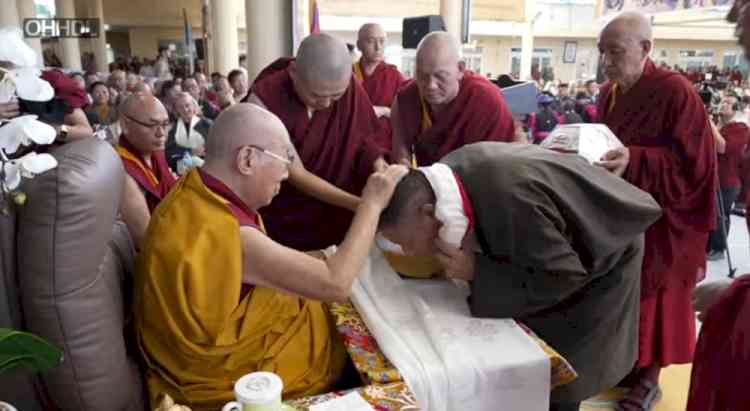
Dharamsala, May 27, 2026: Sikyong Penpa Tsering on Wednesday reaffirmed his commitment to the “Middle Way Policy” advocated by 14th Dalai Lama, emphasizing non-violence, dialogue, and a peaceful resolution to the Tibet-China issue during the swearing-in ceremony of the 17th Kashag of the Central Tibetan Administration (CTA). The ceremony was attended by the Dalai Lama.
Addressing the gathering after taking oath for a second consecutive term, Penpa Tsering expressed gratitude to the Tibetan community for re-electing him as Sikyong and pledged to further strengthen governance, social welfare initiatives, digital administration, and international advocacy for the Tibetan cause.
The ceremony was held at the Main Tibetan Temple courtyard at the Tsuglagkhang Complex in McLeod Ganj, adjacent to the official residence of the Dalai Lama. The Dalai Lama, senior Tibetan leaders, dignitaries, and guests were present on the occasion.
In his address, Penpa Tsering accused the Chinese government of attempting to erase Tibetan identity and spreading misinformation aimed at weakening Tibetan unity. He stressed the need to preserve Tibetan language, culture, and religion among Tibetans living both inside Tibet and in exile.
“I take this opportunity to express my sincere gratitude to the governments and people of India, the United States, and all our supporters. Your support remains key to the effective continuation of our struggle for truth and justice,” he said.
Concluding his speech, Sikyong prayed for the long life of the Dalai Lama and expressed hope for the eventual reunion of Tibetans living inside and outside Tibet.
The Central Tibetan Administration is also organizing a Tibetan cultural festival at the Police Ground in Dharamshala from May 28 to May 30.
India is home to the world’s largest Tibetan diaspora, with an estimated population of 80,000 to 100,000 Tibetan refugees and their descendants. Since the arrival of the Dalai Lama in 1959, the community has preserved its language, culture, and Buddhist traditions while living in settlements across the country.
Headquartered in Dharamshala, the CTA functions as the Tibetan government-in-exile and serves as the political and cultural center of the Tibetan community. McLeod Ganj, often regarded as the spiritual hub of Tibetans in exile, houses major Tibetan institutions and the residence of the Dalai Lama.
The Dalai Lama voluntarily devolved all political and administrative authority to democratically elected Tibetan leadership, ending nearly 400 years of combined spiritual and temporal rule by the Dalai Lamas. The democratic transition evolved over decades, beginning with the election of Tibetan representatives in exile in 1960 and culminating in 2011, when the Dalai Lama formally relinquished his remaining political authority to elected leaders.