Rohtak Scales Up High-Impact Cleanliness Drive with Innovative Interventions Ahead of Swachh Survekshan 2025–26
“Visible Cleanliness, Sustained Cleanliness” Model Backed by Technology, Accountability and Citizen Participation
 Girish Saini
Apr 15, 2026 09:51
0
Girish Saini
Apr 15, 2026 09:51
0
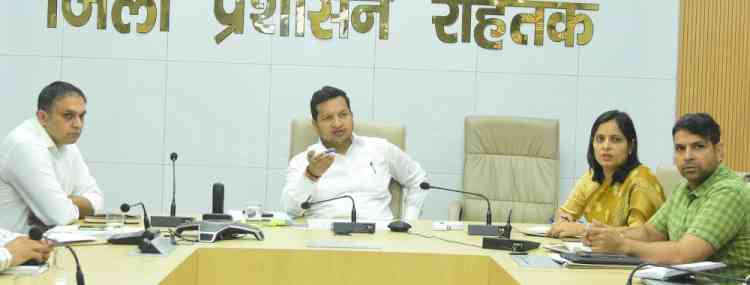
Rohtak, April 15, 2026: With a clear objective of securing top rankings in Swachh Survekshan 2025–26, the Municipal Corporation Rohtak has intensified its citywide cleanliness drive through a combination of strong governance, data-driven monitoring, and innovative on-ground interventions.
The campaign is guided by the principle that the city must not only be clean, but must consistently appear clean. This has led to the adoption of a “Visible Cleanliness, Sustained Cleanliness” model, ensuring that sanitation standards are both measurable and perceptible to citizens.
To enforce accountability, strict instructions have been issued to ensure complete alignment between field-level execution and digital reporting. All sanitation activities are being supported through geo-tagged records, photographic evidence, and real-time monitoring. A ward-wise responsibility framework has been institutionalized, with dedicated nodal officers and a centralized control mechanism enabling continuous supervision and prompt corrective action.
A zero tolerance policy has been implemented against garbage accumulation and visible stains. Intensive cleaning, mechanized washing, and targeted interventions are being carried out across markets, public spaces, transport hubs, and residential areas. Parallel efforts in beautification, including wall art, green corridors, and dust control, are enhancing the city’s visual appeal.
Scientific waste management remains a core priority, with strengthened door-to-door collection and strict enforcement of source segregation. Wet, dry, and domestic hazardous waste streams are being handled separately, with processing systems aligned for efficient treatment and disposal. Bulk waste generators are being brought under stricter compliance, and resource recovery systems are being expanded to support recycling and reuse.
Sanitation infrastructure, including public and community toilets, is being upgraded to ensure cleanliness, functionality, and accessibility. Enforcement measures have been strengthened to eliminate open defecation and urination. Wastewater treatment and reuse systems are also being closely monitored to ensure environmental sustainability.
To create visible and measurable transformation, the Municipal Corporation has launched a series of innovative initiatives designed for high impact -
A focused drive to eliminate gutka stains, urination spots, and visual dirt through daily identification, pressure washing, enforcement action, and before-after transformation of identified locations.
A citywide operational benchmark ensures that all major roads, markets, and public spaces achieve a visibly clean state by 10 AM every day, with accountability fixed at ward and zone levels.
Systematic identification and permanent removal of garbage-prone locations through infrastructure support, strict monitoring, and behavioral interventions.
Targeted cleaning and restoration of rear lanes and low-visibility areas, ensuring that cleanliness is uniform across the city and not limited to main roads.
24x7 Clean Zones in High Footfall Areas; Continuous sanitation deployment in markets, transport hubs, and dense commercial areas to maintain hygiene standards round the clock.
A performance-based model where wards are ranked on cleanliness indicators, driving healthy competition and accountability among field teams.
Twin Bin and Source Segregation Mission; Strengthening household-level segregation through distribution, awareness, and strict compliance monitoring.
RRR Centres and Circular Economy Promotion; Activation of Reduce Reuse Recycle centres to channel recyclable waste, reduce landfill burden, and promote sustainable consumption practices.
Recognizing that sustained cleanliness requires public participation, the Municipal Corporation has launched extensive awareness campaigns across schools, residential areas, and markets. Students are being engaged as change agents to influence households, while citizen feedback is being integrated into the monitoring framework.
The grievance redressal system has been strengthened to ensure timely resolution, with citizen satisfaction being treated as a key performance indicator.
As part of the final preparation phase, a focused action plan has been rolled out to intensify field activities, conduct internal assessments, and ensure readiness across all wards. Continuous reviews and ground-level inspections are being undertaken to maintain high standards.
The Municipal Commissioner said that cleanliness is a shared civic responsibility and appealed to citizens to actively participate by maintaining hygiene, segregating waste, and supporting municipal efforts.
For public convenience, a dedicated helpline system is operational. Prompt resolution of complaints is being ensured.
With a strong blend of innovation, accountability, and citizen engagement, Rohtak is setting a robust benchmark in urban sanitation. The ongoing efforts are expected to not only deliver strong performance in Swachh Survekshan 2025–26, but also create a long-term transformation in urban cleanliness and livability.