Tibetan Democracy Day: Exile leadership targets China’s Tibet policies; Wang Dan sees Tibetan model for future China
The Tibetan leadership on Wednesday launched a strong attack on China’s policies in Tibet on the 66th Tibetan Democracy Day, alleging erosion of the Tibetan language, culture, religion and identity, while prominent Chinese pro-democracy activist Wang Dan held up the Tibetan democratic system in exile as a possible model for a future democratic China.
 Arvind Sharma
Sep 2, 2026 02:15
0
Arvind Sharma
Sep 2, 2026 02:15
0
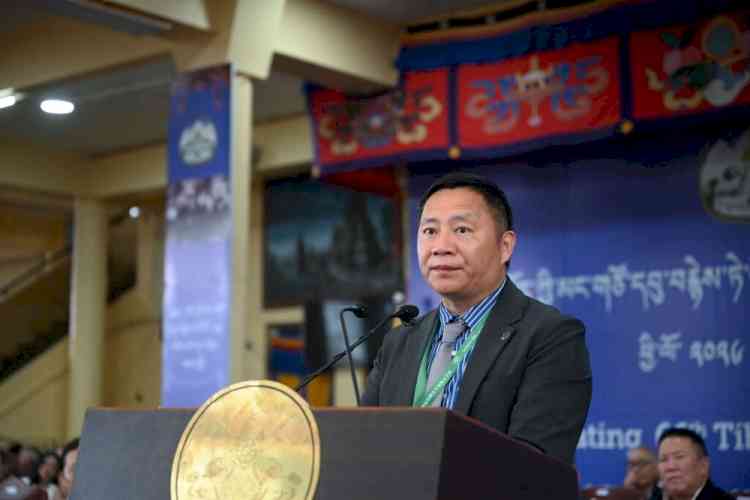
Dharamshala, September 2, 2026: The Tibetan leadership on Wednesday launched a strong attack on China’s policies in Tibet on the 66th Tibetan Democracy Day, alleging erosion of the Tibetan language, culture, religion and identity, while prominent Chinese pro-democracy activist Wang Dan held up the Tibetan democratic system in exile as a possible model for a future democratic China.
The commemoration at the main Tibetan temple in McLeod Ganj was held on the eve of the scheduled return of the Dalai Lama to Dharamshala and was attended by Central Tibetan Administration (CTA) leaders, Tibetan settlers, monks, students and civil society representatives.
Wang Dan, a survivor of the 1989 Tiananmen Square crackdown and founder of Dialogue China, contrasted the political systems in China and the Tibetan exile community, saying the Chinese Communist Party relied on “violence, lies and control”, while Tibetans had built institutions based on popular participation and democratic legitimacy.
He said the Tibetan experience could offer valuable lessons for China’s eventual democratic transition. Wang said Chinese pro-democracy activists in exile were working to establish a “China Congress”, with more than 1,000 founding electors already involved, and suggested that the Tibetan Parliament-in-Exile could serve as an important model.
A future democratic China, he said, should respect Tibet’s religion, culture, language and national identity and engage in dialogue on an equal footing. He also praised the Dalai Lama’s Middle Way Policy and his gradual devolution of political authority to elected Tibetan institutions.
Sikyong Penpa Tsering, meanwhile, expressed concern over what he described as Beijing’s efforts to undermine Tibetan identity, particularly through policies affecting language, cultural traditions, religious practices and regional autonomy.
He referred to China’s ethnic unity and progress law, which came into force on July 1, and raised concerns over cultural assimilation, the alleged Sinicisation of Tibetan Buddhism, surveillance and restrictions on Tibetan-language use.
Penpa Tsering called on Tibetans worldwide to remain united and collectively safeguard their language, culture, traditions and religious heritage.
Speaker of the Tibetan Parliament-in-Exile Dolma Tsering Teykhang and other Tibetan leaders also highlighted the evolution of democratic institutions in exile.
The event also honored two CTA employees for 25 years of service. Seven PhD scholars received academic awards of ₹20,000 each, while 10 Class XII toppers from Tibetan schools were presented Gaden Phodrang awards.
Several publications on Tibet’s democratic evolution, the Dalai Lama’s reincarnation, his parliamentary addresses and Tibet’s historical foreign relations were also released.
The programme concluded with cultural performances by students from Tibetan schools and institutions in Dharamshala.
The observance underscored the Tibetan exile leadership’s continuing emphasis on democracy, cultural preservation and the protection of Tibetan identity.