Panjab University Organises Awareness Programme for Students on Alcohol and Drug Dependency; Peer Support Can Become a Powerful Force for Recovery
An awareness programme on “Alcohol/Drug Dependency” was organised by the Department of Forensic Science (DFS), Panjab University (PU), Chandigarh, in association with the "Chandigarh Chapter of Alcoholics Anonymous (AA)." The programme witnessed an enthusiastic response from students and research scholars, with the classroom packed and students actively participating in the interaction.
 City Air News
Sep 17, 2026 09:01
0
City Air News
Sep 17, 2026 09:01
0
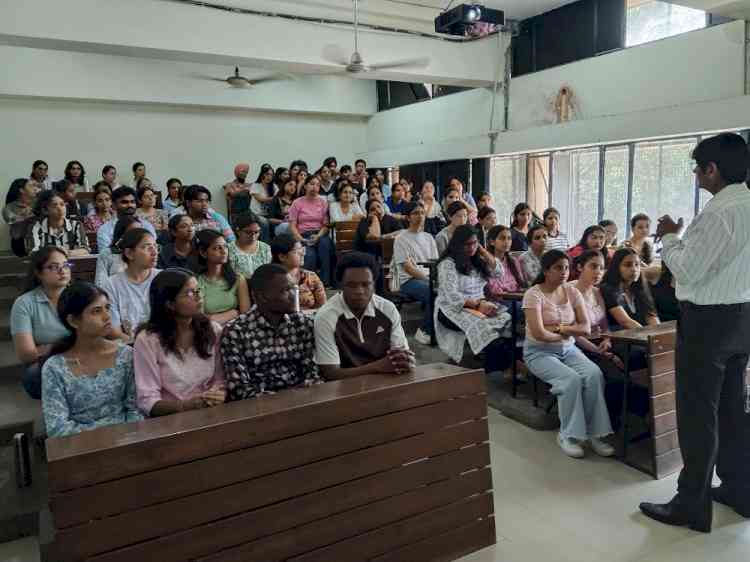
Chandigarh, September 17, 2026: An awareness programme on “Alcohol/Drug Dependency” was organised by the Department of Forensic Science (DFS), Panjab University (PU), Chandigarh, in association with the "Chandigarh Chapter of Alcoholics Anonymous (AA)." The programme witnessed an enthusiastic response from students and research scholars, with the classroom packed and students actively participating in the interaction.
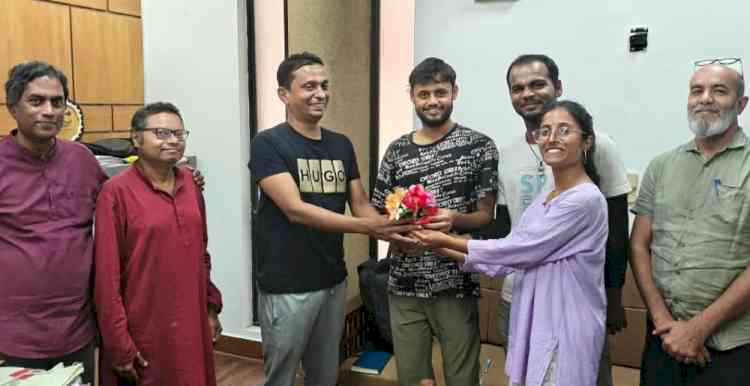
Chairperson, Department of Forensic Science, Dr. Jagdish Rai, welcomed the AA team and formally initiated the programme. The AA team, comprising PU alumnus and head of the Chandigarh Chapter of AA, Dr. Sanjeev Kaushal along with Chandigarh-based psychologists Dr. Dilbagh and Dr. Amber and Balbir Singh interacted with the students on substance misuse, its consequences, prevention and the process of recovery.
A distinctive feature of the programme was the emphasis on the “Power of peer support in overcoming addiction”. While peer influence can sometimes contribute to the initiation or continuation of substance use, AA demonstrates how the same human need for social connection can be channelled positively towards recovery. Through people sharing their own experiences, offering mutual support and helping others in recovery, AA creates a supportive social environment in which individuals can work towards maintaining sobriety.
AA is a worldwide fellowship based on "mutual support, shared experience and the Twelve-Step programme". Its approach does not depend simply on giving information about the harms of alcohol; rather, it creates continuing social support for people seeking recovery. The organisation also places strong emphasis on anonymity and does not charge membership fees.
The effectiveness of sustained peer support has also attracted substantial scientific research. A Cochrane systematic review of Alcoholics Anonymous and other Twelve-Step programmes found evidence that AA/12-step facilitation can improve continuous abstinence outcomes and can produce healthcare-cost benefits in comparison with some alternative approaches.
The interaction at Panjab University was particularly engaging, with students asking questions and participating actively in discussions.
Dr. Jagdish Rai appreciated the Chandigarh Chapter of AA for taking the initiative to interact with young people and for bringing the experience of a peer-led recovery fellowship into an academic setting. He emphasised the importance of creating awareness among young people about substance misuse and of encouraging healthy social environments that support responsible choices and early help-seeking.
The programme was organised as part of the Department of Forensic Science's efforts to promote "awareness and prevention of substance misuse among students", while also exposing them to practical perspectives on addiction, recovery and community-based support.