Panjab University joins elite ANRF research consortium on India’s archaeological heritage
Prof Gaurav Verma to apply nanotechnology and AI in Rs 15-crore national archaeomaterials project
 City Air News
May 16, 2026 11:31
0
City Air News
May 16, 2026 11:31
0

Chandigarh, May 15, 2026: Panjab University, Chandigarh, has become part of an elite national research initiative after the Anusandhan National Research Foundation (ANRF) selected only 10 Convergence Research Centres of Excellence from 945 proposals received across the country.
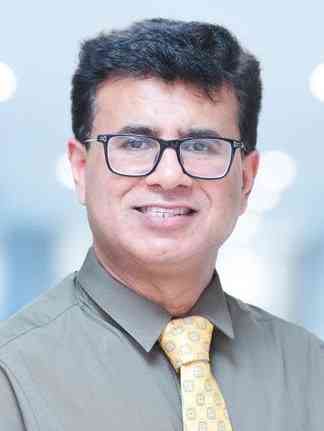
PU is a key partner in the newly approved Rs 15-crore Centre for Excellence in Archaeomaterials and Archaeometallurgy Advanced Research (CAAAR), led by the National Institute of Advanced Studies (NIAS), Bengaluru, along with the Indian Institute of Science (IISc), Bengaluru, and Deccan College, Pune. Panjab University’s Prof. Gaurav Verma is a part of this prestigious consortium to apply nanotechnology, corrosion science, and artificial intelligence to the conservation and scientific investigation of India’s archaeological heritage.
Prof. Gaurav Verma (Professor in SSB UICET) is a materials nanotechnologist and, notably, one of the few engineers in a programme otherwise dominated by archaeologists and historians. His work at the Centre will be threefold: developing nanoscale techniques to preserve ancient artefacts and monuments through microscopic shields against rust, weathering, and pollution; using modern instruments to analyse the chemistry of ancient objects — what alloys smiths used a thousand years ago and where the ore came from; and later applying artificial intelligence to interpret vast archaeological datasets at a speed no human team could match.
The Centre will explore advanced conservation technologies using organic nanocomposite materials and green corrosion-control systems for preserving ancient artefacts, metals, monuments, and pigments.
PU is home to a large number of teaching and research departments, specialised centres, and chairs, accredited with the highest NAAC A++ grade. Crucially for a project like this, PU houses one of the country’s oldest and most respected Departments of History, with active programmes in Ancient, Medieval, Modern, and Contemporary Indian History — research traditions stretching back to before Independence.
For decades, these departments have largely worked in their own silos. The ANRF Centre changes that equation overnight. A historian studying Harappan trade routes can now sit across the table from a nanotechnologist who can explain exactly what a piece of 4,000-year-old copper was made of, and an AI specialist who can model patterns across thousands of such fragments.
“The setting up of such a centre opens new pathways for a truly interdisciplinary research focus, converging humanities with technology. This Centre is a once-in-a-generation opportunity to bring the rigours of archaeomaterials, nanotechnology, and AI to the service of India’s civilisational heritage,” said Prof. Gaurav Verma.
“To be one of only ten teams selected from across the country, and to bring an engineering perspective to a problem traditionally owned by archaeologists, is both a privilege and a responsibility. We would be inviting historians, scholars from Panjab University and this region, and even common citizens to join us in this national heritage initiative.”
Among the proposed studies are investigations into the corrosion resistance of the Iron Pillar near Qutub Minar, ancient dyes and pigments, Damascus steel, and nanomaterial signatures in historic artefacts.