Panel discussion on theme “Queers in India: The Present Scenario”
The Centre for Trans Studies (Rainbow), University Institute of Legal Studies, Panjab University, in collaboration with Saksham Prakriti Welfare Society, Chandigarh, today hosted a panel discussion on the theme “Queers in India: The Present Scenario” as part of Garvotsav 2026.
 City Air News
Feb 21, 2026 02:01
0
City Air News
Feb 21, 2026 02:01
0
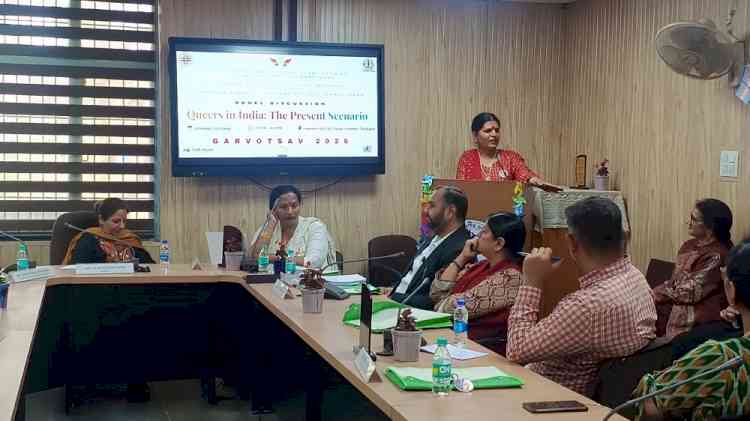
Chandigarh: The Centre for Trans Studies (Rainbow), University Institute of Legal Studies, Panjab University, in collaboration with Saksham Prakriti Welfare Society, Chandigarh, today hosted a panel discussion on the theme “Queers in India: The Present Scenario” as part of Garvotsav 2026.
The session consisted of seven panellists: Prof. (Dr) Monica Munjial from the Centre for Social Work; Dr Vinod Kumar from the Department of Sociology; Kajal Mangalmukhi, Brand Ambassador of Swachh Bharat Abhiyan, Chandigarh; Maninderjit Singh, Advocate (practitioner in the Punjab and Haryana High Court); Dhananjay Chauhan, President of Saksham Prakriti Welfare Society, Chandigarh; Oshin Sarkar, General Secretary of The Voice of Warriors Foundation, Dehradun; and Sudhir Beniwal, Mental Health Expert from Pushpanjali Trust.
The session was moderated by Prof. (Dr) Navneet Kaur Arora, Faculty Co-ordinator of CTS (Rainbow), and witnessed a large gathering of students.
The session commenced with a welcome address by Prof. Dr Shruti Bedi, Director, UILS. The panellists deliberated on key issues concerning the acceptance of queer- and trans-identifying individuals in India in the current socio-political climate, with emphasis on awareness and sensitisation of the general public. Experts from diverse fields contributed to the discussion, which covered various aspects of queer identity and lived experiences, including health, education, mental health, social acceptance, economic factors and legal frameworks.
The panellists stated that acceptance at social and familial levels must be inculcated at the grassroots through community-level interventions. They also challenged prevailing notions of “normalcy”, tracing their roots to authoritarianism, capitalist structures, religious dogma and societal expectations. The experts shared personal experiences and highlighted the turmoil faced by trans persons navigating life away from their families. Legal aspects of trans identity and civil acceptance were also discussed, noting that while legal reforms and policy interventions have moved society forward, social attitudes continue to lag behind.
The panel concluded with the understanding that true inclusion cannot be achieved through laws alone and requires a deeper cultural shift rooted in empathy, dignity and respect.