‘Palash’ – A Cultural Festival Organized by Pune International Centre Concludes Successfully
Palash, a musical and cultural event blending music, dialogue, and reflection, was recently organized by the Pune International Centre (PIC) at Panchwati. In its inaugural three-day edition, renowned Carnatic vocalist and author T.M. Krishna enriched audiences with his thoughts, perspectives, and soulful music.
 City Air News
Mar 4, 2026 07:41
0
City Air News
Mar 4, 2026 07:41
0
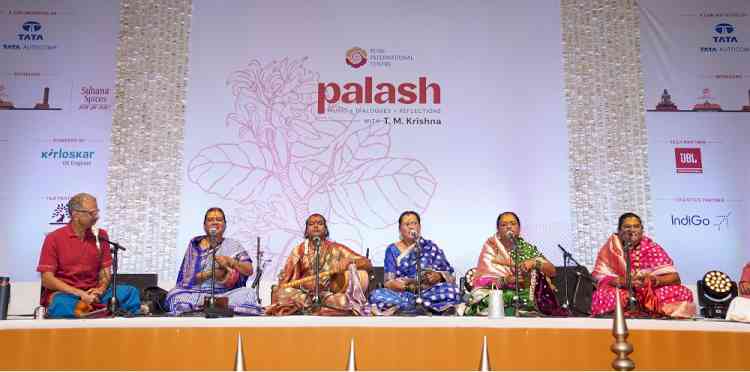
Pune, March 4, 2026: Palash, a musical and cultural event blending music, dialogue, and reflection, was recently organized by the Pune International Centre (PIC) at Panchwati. In its inaugural three-day edition, renowned Carnatic vocalist and author T.M. Krishna enriched audiences with his thoughts, perspectives, and soulful music.
Initiated by Arti Kirloskar, Convenor of PIC’s Arts and Culture Division, Palash is an innovative cultural initiative. It marks a deliberate step towards using art as a means to stimulate thought and public discourse—extending beyond the Centre’s conventional focus on policy discussions.
On the opening day, T.M. Krishna’s new book “We the People of India – Decoding a Nation’s Symbol” was released, followed by an analytical conversation between Krishna and eminent political analyst Prof. Suhas Palshikar. Krishna offered insightful reflections on several topics: music, symbolism, the science of art, its diverse expressions, and the need for artists to take unequivocal positions on pressing socio-political issues. His commentary opened new avenues of thought for the audience. The enthusiasm with which listeners engaged demonstrated a deep curiosity about how art and symbols shape identity and perception.
The second session featured a special musical collaboration between T.M. Krishna and practitioners of Jogappa, a traditional musical heritage of the transgender community. The presence of transgender attendees from Pune and surrounding areas added significant meaning to the evening, making the event truly inclusive. Krishna presented compositions in both Marathi and Kannada. The audience’s openness and wholehearted response transformed the performance into a profound collective experience—affirming Pune’s wholehearted embrace of this new cultural direction.
On the final day of the festival, Krishna mesmerized listeners with his extraordinary musical expression, accompanied by artists on the ghatam, kanjira, and violin. As he performed, a gentle breeze drifting over the Panchwati hills, the delicate fragrance of Rajnigandha, and Krishna’s soulful voice came together to create an atmosphere of pure magic. The concert began against a vivid sunset and concluded under a sky illuminated by thousands of stars.
Speaking on the occasion, Arti Kirloskar, Convenor of the Arts and Culture Division at PIC, shared her thoughts: “With immense gratitude and inspiration, the first edition of Palash has concluded successfully. PALASH, was envisioned as a space where artistic practice could foster the reflection and dialogue necessary for an enriched community. This year’s festival not only fulfilled that purpose but also offered us renewed inspiration. It is our intention to organize this festival annually so that art continues to broaden and enrich our mission.”
She further added: “This integration of ‘right brain’ creativity with the Centre’s established ‘left brain’ analytical work is an important step toward evolving PIC into a truly holistic entity. The overwhelming response in the very first year gives us confidence that this newly launched arts division—like the main institution, which is a strong pillar of policy transformation—is moving in the right direction toward nurturing a thoughtful and vibrant republic.”
This year’s featured artist, T.M. Krishna, remarked: “Pune’s audiences are deeply knowledgeable about the arts. Through this program, I witnessed a unique confluence of art and thought. Events like this are essential for bridging widening social gaps. ‘Palash’ reflects a nonexclusive, open and collective society, embodying the spirit of fraternity which is etched in the Indian constitution. I am delighted that, through music and conversations, people with diverse viewpoints could come together, set aside ideological differences, and engaged in an inner dialogue.”
With the inaugural edition of Palash, Pune—long celebrated as a home of the arts—witnessed classical arts and folk traditions coming together on one stage. The festival fostered a mature conversation on art, identity, and inclusivity and received an exceptional response from audiences.