Over-speeding and casual driving are claiming India’s youth: Deepak Sharma
Expressing grave concern over the alarming rise in road fatalities across the country, Deepak Sharma, Founder of Mayank Foundation and Member of the Road Safety Advisory Committee, Punjab Police, said that over-speeding and casual driving have emerged as the leading causes of death among India’s youth.
 Vikramditya Sharma
Jan 20, 2026 08:53
0
Vikramditya Sharma
Jan 20, 2026 08:53
0
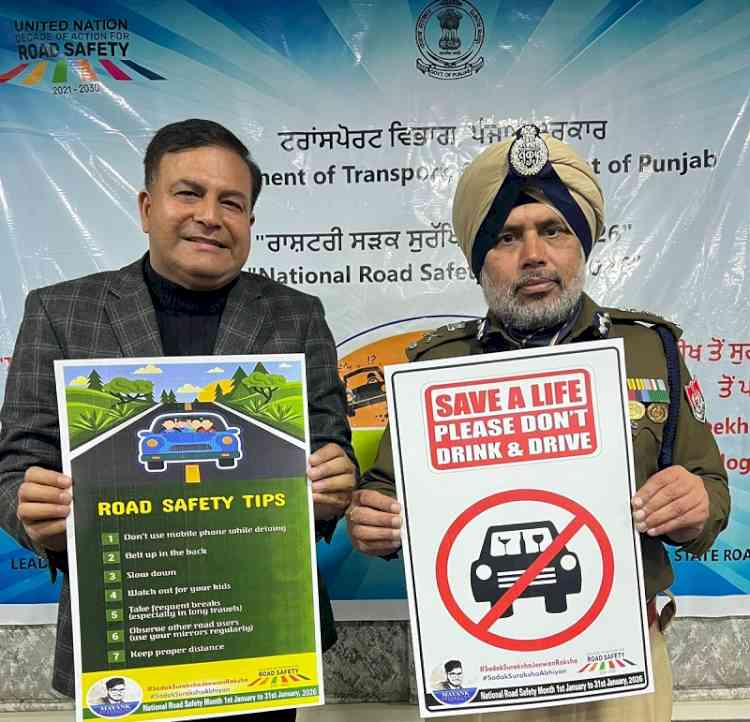
Ferozepur, January 20, 2026: Expressing grave concern over the alarming rise in road fatalities across the country, Deepak Sharma, Founder of Mayank Foundation and Member of the Road Safety Advisory Committee, Punjab Police, said that over-speeding and casual driving have emerged as the leading causes of death among India’s youth.
Sharma made these remarks on the sidelines of National Road Safety Month, underscoring the urgent need for collective responsibility, behavioural change, and strict compliance with traffic regulations to prevent avoidable loss of young lives.
Citing national statistics, Sharma stated that India witnesses over 4.6 lakh road accidents annually, resulting in more than 1.7 lakh deaths, with over-speeding alone accounting for nearly 70 per cent of fatal crashes. He noted with concern that a significant proportion of victims fall within the 18–35 age group, highlighting the growing vulnerability of young drivers and riders. He added that the continued non-use of helmets and seat belts remains a major contributor to fatalities, reflecting a dangerous culture of negligence on Indian roads.
“Speed may thrill, but it kills. Casual driving, mobile phone usage while driving, failure to wear helmets and seat belts, and disregard for traffic rules are wiping out our youth at an alarming rate. Road crashes are not accidents; they are preventable tragedies,” Sharma asserted.
Emphasizing the global commitment to road safety, Sharma said that achieving Sustainable Development Goal Target 3.6, which aims to halve road traffic deaths by 2030, requires focused and sustained implementation of the four pillars of road safety—Engineering, Enforcement, Education, and Emergency Care. He stressed that isolated efforts would not suffice.
“Only a coordinated approach involving government agencies, enforcement authorities, civil society, educational institutions, and responsible citizens can help India move towards safer roads and sustainable mobility,” he said.
Appealing to parents, schools, enforcement agencies, and the youth, Sharma called for treating road safety as a shared national responsibility. “Protecting our youth is not optional—it is a national duty. Every life saved brings us closer to the vision of safer roads by 2030,” he added.