Observing June 25 as 'Samvidhan Hatya Diwas' does justice to history: Nitin Nabin
BJP National President Nitin Nabin on Thursday said that for decades, attempts were made to erase the dark chapter of the Emergency from the nation's collective memory. He further stated that under the leadership of Prime Minister Narendra Modi, justice had been done to history by deciding to observe June 25 as 'Samvidhan Hatya Diwas’.
 IANS
Jun 25, 2026 04:37
0
IANS
Jun 25, 2026 04:37
0
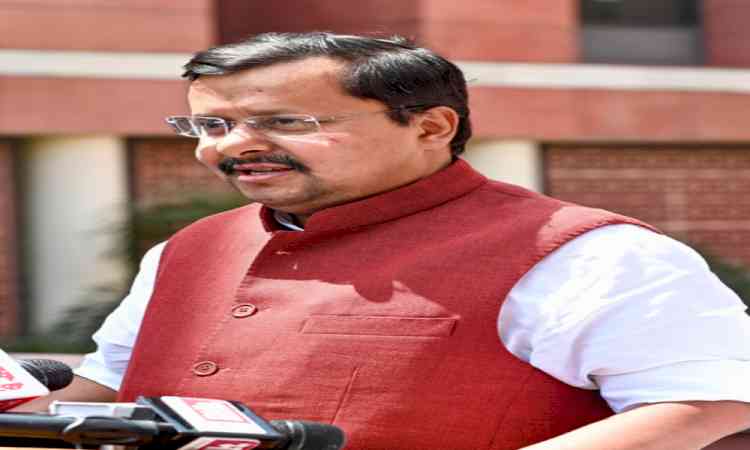
New Delhi, June 25 (IANS) BJP National President Nitin Nabin on Thursday said that for decades, attempts were made to erase the dark chapter of the Emergency from the nation's collective memory. He further stated that under the leadership of Prime Minister Narendra Modi, justice had been done to history by deciding to observe June 25 as 'Samvidhan Hatya Diwas’.
Taking to social media platform X with the hashtag #SamvidhanHatyaDiwas, Nabin said the observance serves as a reminder of the events that unfolded during the Emergency and reinforces the country's commitment to protecting democratic values.
"On June 12, 1975, the Allahabad High Court declared the election of then-Prime Minister Indira Gandhi null and void. Following this, priority was given to the interest of retaining power rather than national interest. To save the position of one individual, the freedom of the entire nation was held hostage, and an attempt was made to crush the constitutional values and democratic principles established by Babasaheb Dr. B.R. Ambedkar," he said.
Nabin further claimed that many leaders and activists who raised their voices in defence of democracy were arrested during the period.
"A large number of leaders and activists who raised their voices for democracy were arrested. Thousands of 'Democracy Warriors' including Loknayak Jayaprakash Narayan, Atal Bihari Vajpayee, and L.K. Advani were thrown into prison," he said.
Referring to restrictions imposed during the Emergency, the BJP leader claimed that Press freedom and civil liberties came under severe pressure.
"Censorship was imposed on the Press, forced sterilisation drives were carried out, fundamental rights were suspended, and civil liberties were suppressed through laws like MISA. This was not merely a political crisis; it was a direct assault on democracy," he said.
Nabin also said that constitutional changes were introduced with the objective of concentrating power.
"Several amendments were made to the Constitution to render the exercise of power absolute and unchecked. Attempts were made to curtail the powers of the judiciary. However, the democratic spirit of India could not be suppressed," he said.
"From Kashmir to Kanyakumari, the nation's youth and ordinary citizens united to struggle against this authoritarianism and paved the way for the restoration of democracy," he alleged.
Highlighting the role played by political workers and organisations during the Emergency, Nabin referred to Prime Minister Narendra Modi's activities during that period.
"During that period of struggle, a young Pracharak, the respected Narendra Modi, evaded arrest and while in disguise carried the message of the movement to many households. Prioritising national interest and the defence of democracy above all else, and rising above personal and organisational interests, the Bharatiya Jana Sangh merged itself into the Janata Party," he said.
He also praised the contribution of the Rashtriya Swayamsevak Sangh (RSS) and the Akhil Bharatiya Vidyarthi Parishad (ABVP) in mobilising opposition to the Emergency.
"Thousands of Swayamsevaks of the Rashtriya Swayamsevak Sangh worked underground to safeguard democracy, while the Akhil Bharatiya Vidyarthi Parishad mobilised student power and spearheaded a mass awareness campaign. This spirit of sacrifice, dedication, and devotion to the nation marks a golden chapter in Indian politics," he said.
Nabin further accused the Congress of attempting to portray itself as a defender of democratic institutions despite its role during the Emergency.
"Today, the country is witnessing a strange irony. Those who perpetrated the greatest assault on democracy are now attempting to position themselves as its self-proclaimed greatest defenders," he said.
He also criticised the Opposition's stance on institutions, alleging that it questions democratic processes whenever electoral outcomes are unfavourable.
"When the public rejects them in elections, they lose faith in the Election Commission; questions are raised about EVMs. When court verdicts do not align with their political interests, the impartiality of the judiciary is called into question. Congress' politics today has been reduced to a politics of blame-shifting rather than accountability," he said.
He further added. "If Parliament fails to function, the government is blamed; if an election is lost, the system is blamed; if the public withholds support, the institutions are blamed."
Raising questions about the Congress party's position on the Emergency, Nabin said, "The biggest question is this: Why hasn't the party that invokes the Constitution today ever offered an unconditional apology to the nation for the Emergency? Had there been genuine concern for the Constitution, the first step would have been to seek forgiveness from the country for that crime, the murder of democracy."
Recalling the significance of June 25, Nabin reiterated that the struggle of those who opposed the Emergency had not received adequate recognition for many years.
"For decades, the struggle of the 'Democracy Warriors' and this assault on the Constitution were relegated to the margins of history," he said.
He concluded by praising the Centre's decision to observe June 25 as ‘Samvidhan Hatya Diwas’.
"However, under the leadership of the Prime Minister Narendra Modi, justice has been done to history by deciding to observe June 25 as ‘Samvidhan Hatya Diwas’ . #SamvidhanHatyaDiwas not only reminds us of the past but also reinforces our resolve to remain ever-vigilant and dedicated to safeguarding the Constitution, democracy, and civil liberties," he said.
--IANS
jk/rad