NFDC Applauds Short Film ‘Dhara Ka Tem’; Includes in the promotional material for the 19th MIFF
The short film ‘Dhara Ka Tem’ (Time for Milking)—created by an alumnus of the Dada Lakhmi Chand State University of Performing and Visual Arts (DLC SUPVA), Rohtak—has received commendation from the NFDC (National Film Development Corporation).
 Girish Saini
May 20, 2026 09:03
0
Girish Saini
May 20, 2026 09:03
0
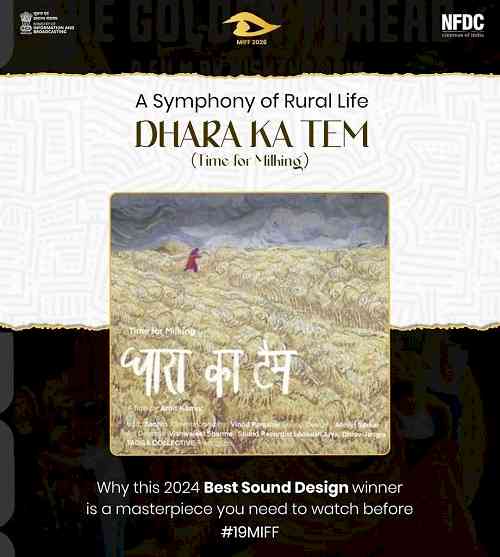
Rohtak, May 20, 2026: The short film ‘Dhara Ka Tem’ (Time for Milking)—created by an alumnus of the Dada Lakhmi Chand State University of Performing and Visual Arts (DLC SUPVA), Rohtak—has received commendation from the NFDC (National Film Development Corporation). The NFDC has included this film in the promotional material for the 19th Mumbai International Film Festival (MIFF). Through posts on its social media handles regarding this, the corporation is encouraging filmmakers working in regional languages to participate in the festival.
‘Dhara Ka Tem’ was directed by Amit Kumar, a Direction student from SUPVA's 2012 batch, while its sound design was crafted by Abhijit Sarkar, an Assistant Professor in SUPVA's Department of Audiography. Abhijit notes that for this 30-minute short film, he has already received the award for 'Best Sound Designer' at the 18th Mumbai International Film Festival (MIFF) held in 2024.
It is noteworthy that MIFF is organized jointly by the Union Ministry of Information and Broadcasting and the NFDC. Following the National Film Awards, MIFF is considered India's second-largest film awards event.
Mahesh T.P., a faculty member in the Department of Film and Television, stated that it is not only the students studying at the university who hone their skills; the faculty members themselves are also provided with ample opportunities to showcase their talents.
Assistant Professor Abhijit Sarkar explained that, as the title ‘Dhara Ka Tem’ suggests, the short film is set against a Haryanvi backdrop. It captures the specific atmosphere and environment that prevails every morning during the daily milking of livestock. A deliberate effort has been made to depict every detail—from the chirping of birds to the various elements that typically constitute the everyday scene surrounding tethered livestock in the courtyard of a home in any ordinary village. Sounds such as the creaking of the rope used to tether livestock, the sudden, sharp exhale of breath, and the preparations made by the farming family for milking have all been incorporated.