India, Nepal Can Become a Model for Sustainable Hill Agriculture: VC
10-Day International Training Programme for Nepalese Agriculture Officers Concludes at UHF
 City Air News
Jan 15, 2026 07:21
0
City Air News
Jan 15, 2026 07:21
0
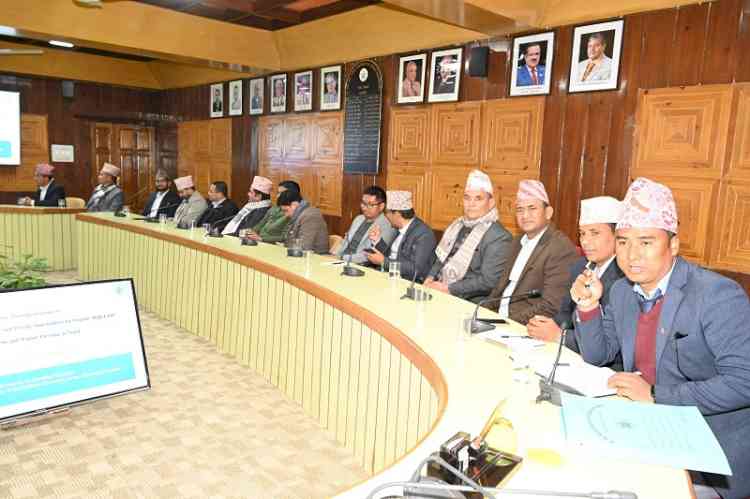
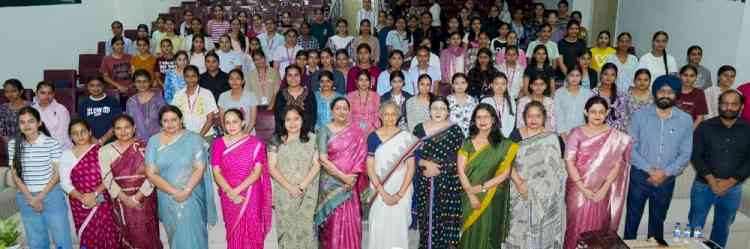
The ten-day international training programme for Nepalese agriculture officers concluded at Dr YS Parmar University of Horticulture and Forestry (UHF), Nauni, marking yet another milestone in strengthening Indo–Nepal cooperation in the agricultural sector.
The programme was organised under the collaborative initiatives of the Ministries of External Affairs of India and Nepal. Supported by the Ministry of External Affairs, New Delhi, the training was conducted in collaboration with the Federal and Provincial Ministries of Agriculture, Government of Nepal. This was the second batch under the ongoing Indo–Nepal initiative aimed at building the capacity of nearly 300 Nepalese agriculture officials and farmers. The initiative is expected to play a significant role in strengthening horticulture-based livelihoods in Nepal’s hill regions while further reinforcing the close ties between the two neighbouring countries. A 30-member delegation comprising agriculture officers from four Nepalese provinces—Karnali, Lumbini, Sudurpaschim and Gandaki—participated in the programme. The training focused on skill enhancement in organic and natural farming practices of temperate fruits such as apple, walnut and kiwi.
Addressing the delegation during the valedictory session, Vice-Chancellor Prof. Rajeshwar Singh Chandel said that India and Nepal, by leveraging their shared agro-climatic conditions and rich traditional knowledge, can together emerge as a role model for sustainable hill agriculture. Stressing the importance of low-cost and environmentally friendly farming practices for small and marginal farmers, he said natural farming has emerged as a viable and promising alternative for the fragile hill ecosystems. Prof. Chandel highlighted Himachal Pradesh’s experience in natural farming and expressed confidence that these practices could be suitably adapted to Nepal’s conditions. He also urged the participants to disseminate the knowledge gained during the training at the grassroots level for the benefit of farmers.
Prem Bahadur Oli, Team Leader of the delegation and Agriculture Extension Officer from Nepal, expressed gratitude to the university scientists for organising a highly informative and practice-oriented programme. He said the exposure to scientific orchard management, organic production systems and natural farming practices would be of immense benefit to agriculture officers and farmers in Nepal, particularly in the hill regions. Tikendra Kusmi, Director Extension Sudurpaschim province thanked the Governments of India and Nepal for providing the opportunity to learn modern agricultural practices. He said the knowledge and skills acquired during the training would be taken to the grassroots level and would ultimately benefit farmers.
Earlier, Director of Extension Education Dr Inder Dev presented a brief overview of the training programme and highlighted the long-standing agricultural cooperation between India and Nepal. He emphasised that the similarities between the hill regions of Nepal and Himachal Pradesh make the technologies demonstrated during the programme highly relevant and easily adaptable. Dr Anil Handa, Joint Director (Training), gave a detailed presentation on the activities conducted during the programme, including field visits, hands-on training sessions and interactions with scientists and progressive farmers.
During the programme, participants received practical exposure to modern nursery and propagation techniques, pruning and canopy management, irrigation and water management in high-density orchards, post-harvest management, and integrated pest and disease management. Visits to university research stations and farmers’ fields, along with demonstrations on biocontrol measures and natural farming practices, were also integral components of the training.