IIT Roorkee and WRI India Sign MoU to Advance Sustainable Battery Research and Clean Energy Innovation
Collaboration to Promote Research, Technology Development, Capacity Building, and Knowledge Exchange in Sustainable Battery Ecosystems
 City Air News
Jun 20, 2026 08:30
0
City Air News
Jun 20, 2026 08:30
0
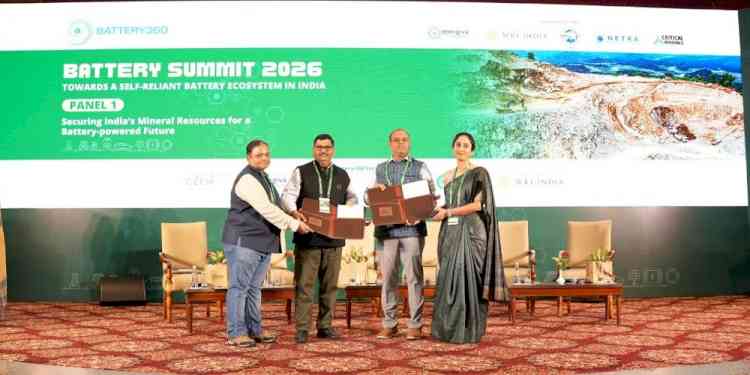
Roorkee, Uttarakhand, June 20, 2026: Indian Institute of Technology Roorkee (IIT Roorkee) and WRI India have signed a Memorandum of Understanding (MoU) to strengthen collaboration in sustainable battery ecosystems, the circular economy, critical minerals, the clean energy transition, research, innovation, and capacity building. The partnership aligns with India's vision of accelerating clean energy adoption, strengthening domestic battery and electric mobility ecosystems, promoting resource efficiency, and advancing the goals of sustainable and self-reliant economic growth.
The MoU was signed by Prof. Vivek Kumar Malik, Dean, Sponsored Research and Industrial Consultancy (SRIC), IIT Roorkee, and Mr. Pawan Kumar Mulukutla, Executive Program Director - Integrated Transport, Clean Air and Hydrogen, WRI India, establishing a collaborative framework to advance research, innovation, capacity building, and policy engagement in sustainable batteries, electric mobility, and clean energy systems. The signing ceremony was witnessed by Prof. Yogesh Sharma, Dean of Resources and Alumni Affairs, IIT Roorkee, and Mr. Chaitanya Kanuri, Program Director - Electric Mobility & Batteries, WRI India. The MoU was formally exchanged during the Battery Summit 2026, held at Hotel Ashok, New Delhi, with Prof. Yogesh Kumar Sharma representing IIT Roorkee.
The collaboration aims to promote joint research, knowledge exchange, academic engagement, policy studies, workshops, training programmes, conferences, student and faculty interactions, and other mutually beneficial activities in the areas of sustainable mobility, battery technologies, resource efficiency, recycling, the circular economy, and critical mineral value chains.
India's rapid expansion of renewable energy, electric mobility, and advanced manufacturing is creating an increasing need for sustainable battery technologies, resilient supply chains, responsible resource utilization, and evidence-based policy frameworks. The collaboration seeks to support these national priorities through research-driven innovation, stakeholder engagement, knowledge generation, and capacity-building initiatives that contribute to both national development goals and global sustainability objectives.
Prof. Kamal Kishore Pant, Director, IIT Roorkee, said, " The transition towards a sustainable and self-reliant energy future requires strong collaboration among academia, industry, research organizations, and policymakers. This partnership with WRI India will create new opportunities for research, innovation, capacity building, and knowledge generation in areas critical to India's energy transition, including sustainable batteries, circular economy, critical minerals, and clean mobility. The collaboration aligns closely with national priorities such as Atmanirbhar Bharat, sustainable industrial growth, and the development of future-ready technologies that support India's Net Zero aspirations and global leadership in clean energy innovation."
Prof. Vivek Kumar Malik, Dean SRIC, IIT Roorkee, said, "The MoU provides a valuable framework for collaborative research, academic exchange, and capacity-building initiatives. By combining IIT Roorkee's research strengths with WRI India's expertise in sustainable development and policy engagement, we aim to create meaningful outcomes that contribute to technological advancement and evidence-based decision-making."
The partnership reflects the shared commitment of IIT Roorkee and WRI India towards advancing sustainable technologies, fostering innovation, supporting evidence-based policymaking, and contributing to India's vision of becoming a global leader in clean energy, sustainable mobility, and resource-efficient development. Through this collaboration, both institutions aim to create meaningful impact at the intersection of research, technology, policy, and societal transformation.