IIM Rohtak Hosts National Symposium on India’s Quest for Viksit Bharat 2047.
The Indian Institute of Management (IIM), Rohtak hosted the National Symposium 2025 on 20th December, centred on the theme “Perspectives on India’s Quest for Viksit Bharat 2047.”
 Girish Saini
Dec 21, 2025 10:16
0
Girish Saini
Dec 21, 2025 10:16
0
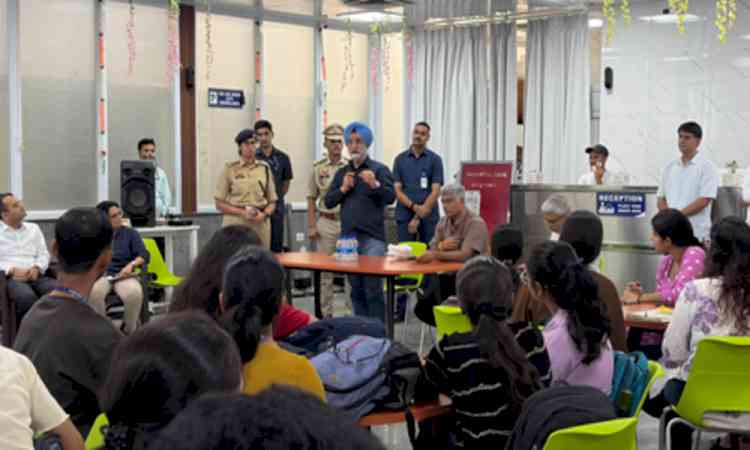
Rohtak, December 21, 2025: The Indian Institute of Management (IIM), Rohtak hosted the National Symposium 2025 on 20th December, centred on the theme “Perspectives on India’s Quest for Viksit Bharat 2047.” The symposium brought together more than twenty eminent speakers. There were three panel discussions lasting the entirety of the day -Countering Strategic Security Challenges, Techno-Economic Challenges, and Socio-Political Challenges. The panels represented organizations such as the IIM, retired Generals of the Indian Army, representatives from United Nations bodies, senior advocates from the Supreme Court of India, and CTOs from organizations.
The symposium featured distinguished panelists for its opening session on Countering Strategic Security Challenges, including moderator, Lt. Gen. A.K. Singh (Retd.), former Lieutenant Governor of the Andaman and Nicobar Islands, Lt. Gen. Philip Campose (Retd.), Former Vice Chief of the Indian Army; Meera Shankar, Independent Director, TCFI Limited & JK Tyres and former Ambassador of India to the United States and Germany; Col. Ashwani Sharma (Retd.), Founder, South Asia Defense & Strategic Review; Rami Niranjan Desai, Anthropologist, former Director of Northeast Policy Institute, Guwahati, and current Distinguished Fellow at India Foundation; and Shikhil Suri, Senior Advocate, Supreme Court of India alongside eminent experts who participated in the subsequent panels on Techno-Economic and Socio-Political Challenges. The event witnessed an enthusiastic participation of students, faculty, and staff of IIM Rohtak, adding to the engagement and vibrancy throughout the day.
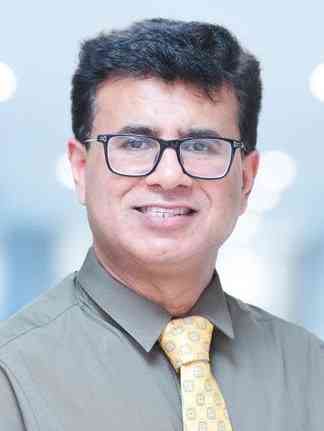
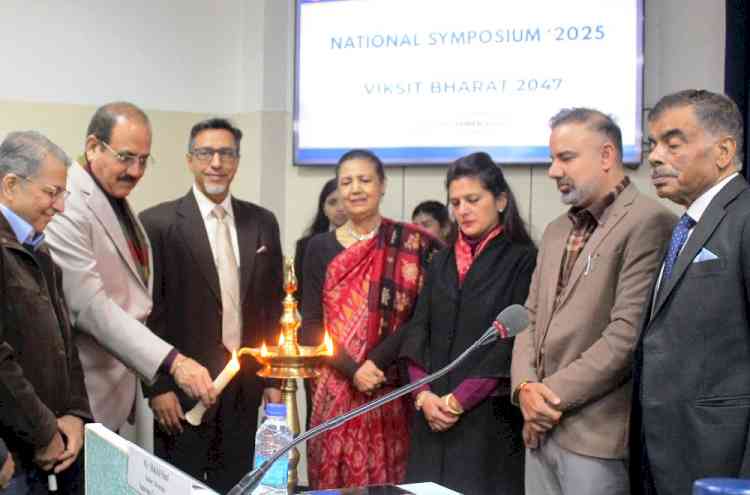
As part of the inaugural session, the symposium commenced with the ceremonial lamp lighting and the felicitation of the distinguished guests, setting the tone for the deliberations that followed. Anchoring his address in the symposium’s three core standpoints, Prof. Dheeraj Sharma, Director, IIM Rohtak, observed that attempts to strengthen global security often generate paradoxical dilemmas, where nations are compelled to “run as fast as they can just to stay in the same place,” resulting in greater complexity rather than simplicity. He also highlighted that investing heavily in weapons often does not translate into competitive advantage. Prof. Sharma also drew attention to techno-economic tensions arising from the rapid digital push, highlighting the conflict between digital and financial literacy and the resulting exposure of vulnerable populations to financial risks. He said that for Viksit Bharat 2047, superior strategies must be made to leverage fintech.
From a socio-political and socio-economic perspective, he pointed to research on externalities, noting that accelerated infrastructure development often comes at the expense of environmental balance and social equity. Taken together, he underscored that India’s journey toward becoming a developed and mature nation, rooted in self-reliance, domestic production, and being vocal for locals, captures the essence of Viksit Bharat 2047 and calls for a citizen-led integrated approach to achieve Viksit Bharat.
Focusing on India’s evolving security landscape, the panel discussion on “Countering Strategic Security Challenges” brought together experts from defence, strategic affairs, law, policy, and governance to deliberate on the multidimensional nature of national security. The discussion emphasized that national security must ultimately be anchored in the well-being of citizens and the social cohesion of the country as India advances toward Viksit Bharat 2047. Meera Shankar cautioned that the journey toward Viksit Bharat is unfolding in a highly contested global environment, underscoring the need for economic self-reliance. Lt. Gen. A.K. Singh (Retd.) stressed that strong internal and external security preparedness is a foundational prerequisite for national prosperity. Lt. Gen. Philip Campose (Retd.) emphasized that security is ultimately defined by development and human well-being, not by military strength alone, and that these are the true foundations of a developed India. The discussion further highlighted India’s role within the Global South, underscoring that deeper engagement with developing regions across South Asia, Africa, and Latin America through trade, connectivity, and economic partnerships will be critical to strengthening India’s long-term security, resilience, and development outcomes.
Addressing the economic and technological dimensions of India’s growth story, the panel discussion on “Countering Techno-Economic Challenges” featured leaders from technology, finance, and industry to examine India’s path toward sustainable and innovation-driven development. The discussion focused on the need to move beyond deploying Digital Public connectivity networks to the adoption and utilisation of the existing infrastructural facilities. Further emphasis was placed on building resilient, AI-enabled supply chains, translating academic research into scalable commercial innovation, future-proofing the workforce against automation-led disruption, and protecting data sovereignty and cybersecurity amid rapid digitalization. Turning to the social and institutional foundations of development, the panel discussion on “Countering Socio-Political Challenges” brought together voices from law, civil society, and global institutions to reflect on governance, inclusivity, and social cohesion in the context of Viksit Bharat 2047. The panel underscored the importance of addressing population ageing, persistent gender divides, and intersectional inequalities to ensure inclusive growth, social cohesion, and sustainable national development.
The discussion emphasized that responsive institutions and inclusive social frameworks will be critical to navigate these challenges as India progresses toward its long-term development vision. The symposium concluded with a vote of thanks, followed by the National Anthem. In his closing reflections, Prof. Dheeraj Sharma noted that the vision of Viksit Bharat can be realised only alongside the development of a Viksit mind (or progressive mind), one marked by maturity, nuance, sophistication, and humility.