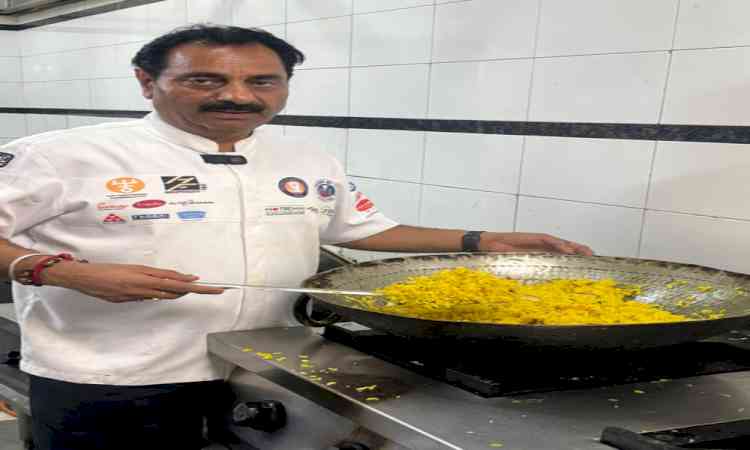
HIRD Director Dr. Virender Singh Chauhan Calls upon for transforming the Sanitation Drive into a Mass Movement
 Girish Saini
Mar 18, 2026 11:15
0
Girish Saini
Mar 18, 2026 11:15
0
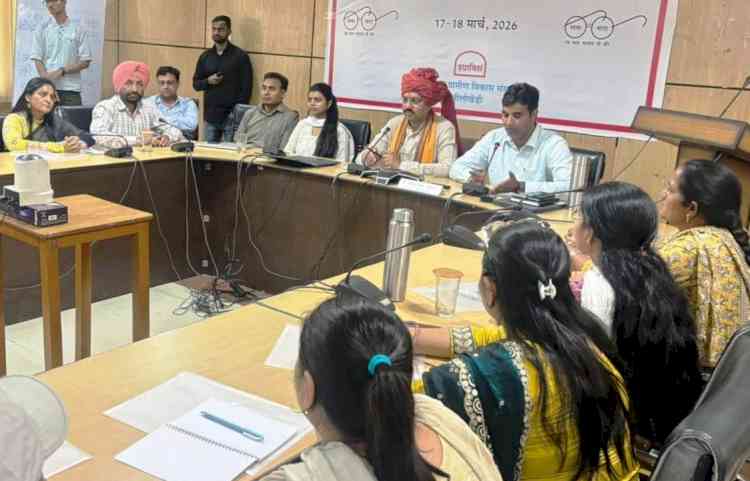
Nilokheri, March 18, 2026: Sanitation is not merely a campaign, but the very cornerstone of sustainable development and a healthy society; furthermore, waste management is emerging as the most critical link in this endeavor. These views were expressed by Dr. Virender Singh Chauhan, Director of the Haryana Institute of Rural Development (HIRD). He was addressing the participants during a two-day training program held at the HIRD on the subject of Solid and Liquid Waste Management, organized under the aegis of the Swachh Bharat Mission (Gramin).
Program Coordinator Sandeep Bhardwaj welcomed Dr. Chauhan by presenting him with a floral bouquet.
Dr. Virender Singh Chauhan said that, through this training, participants acquire in-depth knowledge regarding scientific techniques, modern methodologies, and practical measures for waste management—knowledge that empowers them to implement these strategies effectively within their respective areas.
He emphasized that tangible change becomes visible only when the lessons learned during training are translated into action at the grassroots level. This program not only heightens awareness regarding sanitation but also lays a robust foundation for strengthening sustainable development, environmental conservation, and public health in rural regions. He urged the participants to view this training as an opportunity and to assume a leadership role in transforming their villages into clean, beautiful, and healthy communities.
The HIRD Director Dr. Chauhan highlighted that approximately 5,600 tons of waste are generated daily across the country—a figure that is evolving into a grave challenge. If this waste is not managed appropriately, it poses a significant threat to both the environment and human health. Therefore, there is an imperative need for everyone to join forces and make concerted efforts in this direction. He advised the participants not to limit themselves merely to identifying problems, but to actively seek out their solutions as well. He urged them to first identify and analyze the issues at hand, and subsequently, to resolve this challenge—manifested in the form of waste—by formulating and implementing practical solutions.
He also conveyed a message to the participants, encouraging them to make maximum use of the Hindi language in their day-to-day professional activities. He stated that increasing the use of Hindi in training, communication, and administrative tasks also enhances work efficiency.
Addressing the participants, faculty member Dr. Sushil Mehta remarked that alongside technical knowledge, public awareness is also absolutely essential to ensure effective solid and liquid waste management. He appealed to the participants to transform the sanitation drive into a mass movement by spreading awareness within their respective areas.
Program Coordinator Sandeep Bhardwaj noted that such training programs provide participants with practical knowledge, enabling them to effectively implement sanitation initiatives in their respective regions. He explained that the institute's objective is not merely to impart training, but to empower participants to become agents of change.
In the end, Dr. Chauhan extended his best wishes to all participants and those present for the upcoming Indian New Year, to be celebrated on March 19, and wished everyone a bright future.
Present on the occasion were faculty member Dr. Sushil Mehta, Pinky Yadav (District Program Manager, Gurugram), Bhavna Sharma (Consultant, SIWM), and Fasih Hamad (Coordinator), along with other dignitaries and participants.