Hands-on Learning on Economic Offences and Human Trafficking for Students of Centre for Police Administration
As part of the ongoing three-week internship programme organised by the Centre for Police Administration, Panjab University, Chandigarh, in collaboration with the Recruit Training Centre (RTC), Chandigarh Police, the students of M.A. (Police Administration), Semester III, visited the Economic Offences Wing (EOW) and the Anti-Human Trafficking Unit (AHTU) to gain practical exposure to the functioning of these specialised investigation units of the Chandigarh Police.
 City Air News
Jul 16, 2026 10:19
0
City Air News
Jul 16, 2026 10:19
0
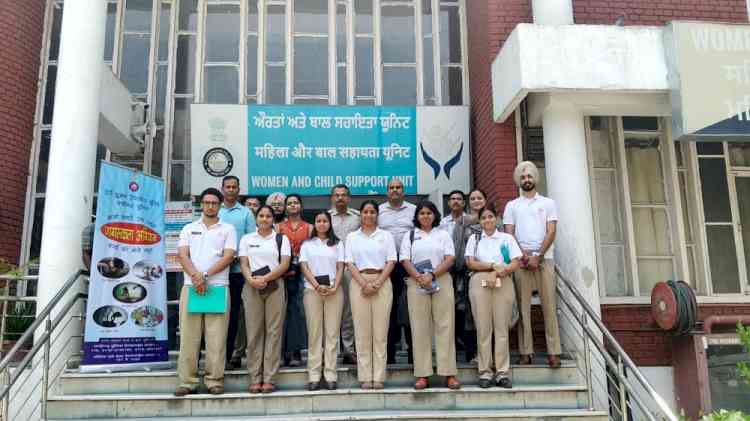
Chandigarh, July 16, 2026: As part of the ongoing three-week internship programme organised by the Centre for Police Administration, Panjab University, Chandigarh, in collaboration with the Recruit Training Centre (RTC), Chandigarh Police, the students of M.A. (Police Administration), Semester III, visited the Economic Offences Wing (EOW) and the Anti-Human Trafficking Unit (AHTU) to gain practical exposure to the functioning of these specialised investigation units of the Chandigarh Police.
During their visit to the Economic Offences Wing, the students were introduced to the investigation of financial and economic crimes, including financial fraud, cyber-enabled financial offences, criminal breach of trust, cheating, forgery, embezzlement, and other complex economic offences. Officers of the Wing explained the procedures for receiving complaints, conducting preliminary enquiries, collecting documentary and digital evidence, coordinating with banks and financial institutions, tracing financial transactions, and preparing cases for prosecution. The students also learned about the increasing challenges posed by digital financial frauds and the significance of financial investigation techniques, digital evidence, and inter-agency coordination in contemporary policing.
The visit to the Anti-Human Trafficking Unit (AHTU) provided students with an in-depth understanding of the legal, investigative, preventive, and rehabilitative dimensions of combating human trafficking. Police officers briefed the students on various forms of trafficking, including trafficking for forced labour, sexual exploitation, child trafficking, bonded labour, and organised trafficking networks. They explained the legal provisions governing trafficking offences, victim identification, rescue operations, rehabilitation measures, and the coordinated efforts undertaken with government departments, non-governmental organisations, and other stakeholders. Special emphasis was laid on adopting a victim-centric, rights-based, and sensitive approach while investigating trafficking cases.
Dr. Kuldeep Singh, Chairperson, Centre for Police Administration, Panjab University, Chandigarh, stated that such field visits effectively bridge the gap between classroom learning and professional practice by providing students with first-hand exposure to the functioning of specialised police units. He emphasised that experiential learning enhances the analytical, investigative, and administrative competencies of future policing professionals and equips them to address emerging challenges in criminal justice administration.
Dr. Kuldeep Singh expressed his sincere gratitude to Shri Pushpendra Kumar, IPS, Inspector General of Police, Chandigarh Police; Shri Manjeet Sheoran, IPS, Superintendent of Police (Headquarters), Chandigarh Police; and Inspector Punam Dilawari, Chief Law Instructor, Recruit Training Centre, for their invaluable guidance and continued support in making the internship programme a meaningful and enriching learning experience for the students.