From Research to Reality: CII-Green Business Centre Builds a National Bridge Between Academia and Industry
The Industry-Academia initiative at 25th CII Energy Efficiency Summit brought 40+ research submissions and 18 shortlisted papers into the spotlight, connecting emerging ideas with industry needs. The research areas included Industrial Decarbonization, Renewable energy & Biofuels, Cement, Concrete, Built Environment, Materials for Circular Economy and AI for Industry & Sustainability.
 City Air News
Sep 19, 2026 09:05
0
City Air News
Sep 19, 2026 09:05
0
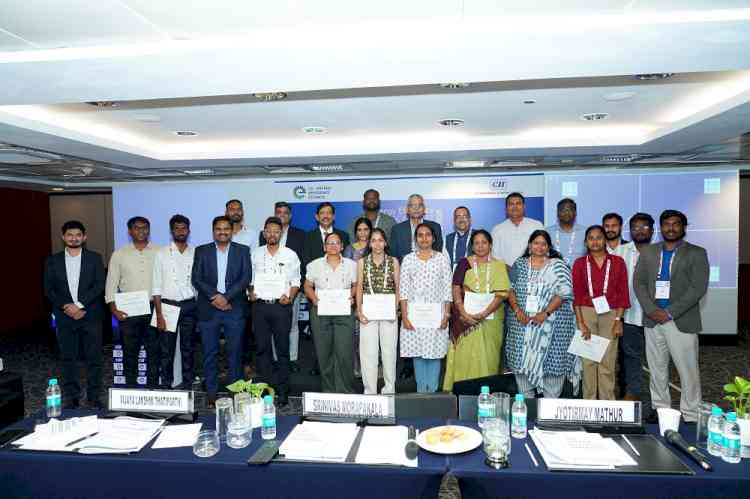
Hyderabad, September 19, 2026: The Confederation of Indian Industry’s Green Business Centre (CII-GBC) is strengthening the bridge between academia and industry through its National Platform for Industry-Academia Collaboration for Research and Innovation in Energy Efficiency and Sustainability, with the initiative taking centre stage at the 25th CII Energy Efficiency Summit 2026 being held at HICC, Hyderabad.
The Academic Paper Presentation Session on “Low Carbon Technologies and Energy Efficiency”, brought together researchers, scholars, faculty members, students and industry professionals to showcase research and explore pathways for translating academic ideas into practical, scalable solutions. More than 40 submissions from researchers and scholars across India were received for the paper presentation track. Following a structured evaluation, 18 abstracts were shortlisted for presentation, giving researchers an opportunity to place their work before industry leaders, technology providers and sustainability practitioners participating in the Summit.
K S Venkatagiri, Executive Director, CII-Green Business Centre, while setting the context for the Industry Academia alliance said: “The real value of research is created when an idea moves beyond the paper and begins solving a problem on the ground. This platform is designed to create that journey. By bringing researchers face-to-face with industry, we are creating an environment where academic excellence meets real-world experience, where industry challenges can inspire new research, and where promising technologies can find pathways to adoption. Our ambition is to build a sustained national ecosystem in which knowledge, innovation and industry action reinforce each other to accelerate India’s energy transition.”
The initiative comes at a time when India’s transition towards energy efficiency, sustainability and decarbonisation requires more than incremental improvements. New technologies, materials, processes, business models and approaches are increasingly needed across sectors. Against this backdrop, the Academic Paper Presentation initiative provides researchers and students with more than a forum to present their work. It creates an opportunity to receive feedback from experts, understand industry perspectives and assess the relevance and practical applicability of their research to real-world challenges and opportunities. For industry participants, the session offers a window into emerging technologies, ideas and talent that could shape the next generation of sustainable industry, while creating potential pathways for research collaboration, technology pilots, internships, project engagements and partnerships.
The shortlisted papers were evaluated by a multidisciplinary jury comprising Prof. Jyotirmay Mathur, BIS Chair Professor, Mechanical Engineering Department, Centre for Energy and Environment, MNIT Jaipur, and Chair of the Jury; Prof. Morapakala Srinivas, Professor, Department of Mechanical Engineering, BITS Pilani – Hyderabad Campus; and Prof. Vijaya Lakshmi Thatiparthi, Professor, Department of Environmental Science & Technology, Jawaharlal Nehru Technological University Hyderabad (JNTUH).
In their concluding remarks, Prof. Vijaya Lakshmi Thatiparthi appreciated the diversity of research themes and highlighted the need to focus on energy-specific outcomes, improve model validation, and adapt global approaches to local and regional contexts. Prof. Morapakala Srinivas emphasized that research must move beyond academic publications and be translated into technologies that solve real industrial challenges, with all models and analyses rigorously validated before being presented publicly. Prof. Jyotirmay Mathur commended the high energy and enthusiasm of the participants, the growing quality of experimental research, and the increasing focus on framework development. He encouraged researchers to engage with industry early, refine frameworks through iterative pilot studies, keep lifecycle assessment central throughout the research journey, and develop concise, impactful communication of their work. The collective message from the jury was clear: innovation, validation, lifecycle thinking, industry collaboration, and practical implementation are essential for transforming research into meaningful solutions that support India's energy efficiency, decarbonization, and sustainability goals.
The presentations highlighted the growing role of renewable energy, carbon capture, climate-responsive design, sustainable materials, digital technologies, and policy innovation in advancing India's energy transition. While the ideas presented show strong promise, the overarching recommendation from the jury was clear: future research must combine technical innovation with robust data, lifecycle-based sustainability evaluation, and practical implementation strategies to create meaningful large-scale impact.
Beyond research dissemination, the platform focuses on developing the next generation of professionals equipped to work at the intersection of technology, sustainability and industry. Participation strengthens capabilities in analytical thinking, technical communication, professional presentation, teamwork, research methodology and industry engagement.
In his concluding remarks, K.S. Venkatagiri, , Executive Director, CII-Green Business Centre highlighted the importance of innovation, collaboration and continuous learning in driving sustainable development. He emphasized that such platforms play a crucial role in recognising emerging ideas and enabling researchers to translate knowledge and research into practical, scalable solutions that create value for industry, society and the nation.
Over the longer term, CII-GBC envisions the initiative as a national ecosystem connecting educational institutions, industries, technology experts, researchers, innovators and sustainability practitioners. The initiative also creates opportunities for research findings and emerging technologies to move towards wider adoption by facilitating interaction between knowledge creators and industry stakeholders. Through networking, research proceedings, expert discussions, recognition and potential collaborative engagements, the platform seeks to create stronger pathways from research to implementation and from innovation to impact.