Fir Nahi Milenge Hum
People born in the 1960s form a unique bridge generation. They lived in the slowest era and adapted to the fastest. Their stories, wisdom, and lived transitions deserve to be recorded and remembered.
 Narvijay Yadav
Jan 16, 2026 08:18
0
Narvijay Yadav
Jan 16, 2026 08:18
0
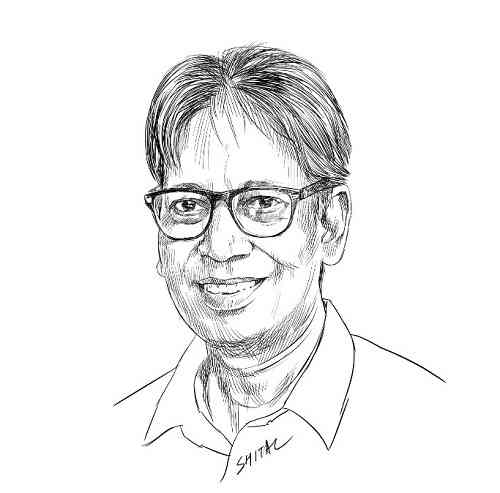
By Narvijay Yadav
People born in the early 1960s carry a rare depth. They stand between two eras. They witnessed the slowest rhythm of life and now observe the fastest phase in human history. This shift is not a concept for them. It is a lived memory. They have watched the world move from an analog flow to a digital pulse. This makes them a true bridge generation. A generation that understands both patience and speed.
Their childhood belonged to a quieter world. Walking long distances was common and respectful. Bullock carts carried families across villages. Bicycles covered miles. A train journey felt like a celebration. Letters took days and weeks to reach. News travelled gently. Life had pauses, and that pace carried a certain beauty. Everything felt grounded. Everything felt real.
Their professional lives also began in this unhurried era. Work was done on paper. Editing meant working by hand. Typewriters demanded accuracy, with every mistake requiring a white fluid to correct. Then computers arrived. They learned them. They adapted. Later came the internet, smartphones, and now AI. In one lifetime, they have ridden every technological wave without losing their balance. Fortunately, I belong to this rare tribe, and I’m proud of it.
Snail Mail to AI
This is why people from the 1960s hold a special value in society. They have seen landlines and now hold smartphones that run the world. They listened to vinyl records and now stream endless music. They lived in a time of limited information and now navigate an ocean of content. They worked without digital tools and now use AI to enhance their productivity. Such a long-time arc cannot be repeated. No future generation will ever witness that kind of slow beginning followed by such rapid acceleration.
This generation also carries an extraordinary adaptability. They survived political shifts, cultural changes, economic transitions, and social transformation. They rebuilt lives more than once. They adjusted quietly and steadily. They did not learn this adaptability at a workshop. It is a life-earned skill, shaped by decades of constant change.
Along with adaptability comes clarity. When people experience long phases of life, they naturally understand the difference between noise and value. They learn where to invest their energy and what to ignore. This clarity becomes their strength. It makes them natural mentors. It allows them to guide younger minds with wisdom that comes from seeing life from both sides.
A Bridge to Remember
Many individuals from this generation have also lived through difficult times. Illnesses, uncertainties, and the COVID years tested families across the country. Those who survived found a renewed purpose. Many embraced healthier lifestyles, quiet mornings, and simple practices that restore peace, clarity, and inner balance.
For this generation, documentation has become important. They have crossed the longest bridges of change. They have seen worlds that no longer exist. Today’s children in cities and villages grow up with screens, conveniences, and technology, unaware of how life once unfolded. If the bridge generation does not record its experiences, a valuable part of human history will disappear.
This is why their stories matter. Their memories hold lessons for the future. Their experiences explain how societies evolve. Their journeys reveal how resilience grows. They are a living archive of change. People born in the 1960s are precious. They are living libraries. They are bridges. And their stories must live on.
The writer is the founder of BlissMedia.
(Views are personal)