Expert Lecture Highlights Importance of Emotional Climate in Classrooms
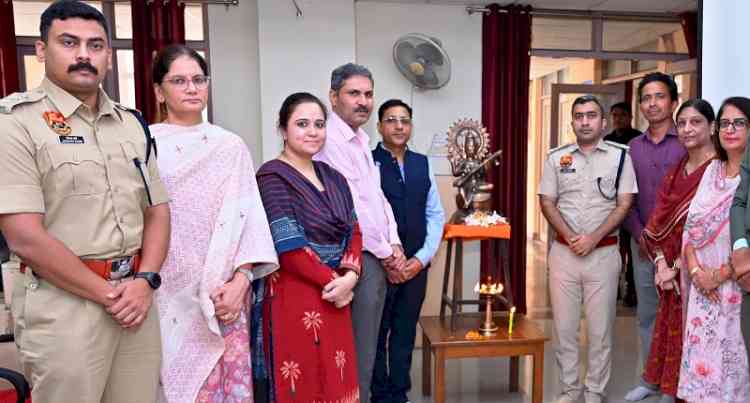
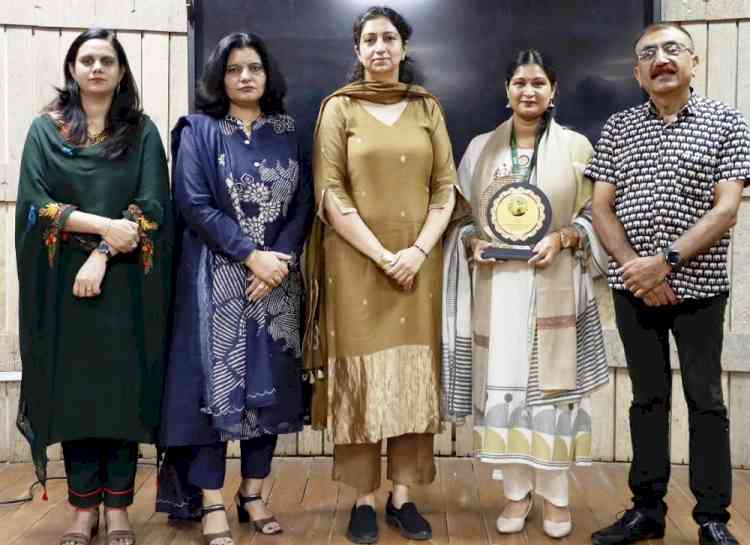
The Department of Education, Panjab University, organised an insightful academic lecture on “Learning Environments and Classroom Emotional Climate” on Tuesday at the Seminar Room, Department of History, Arts Block-2, Shaheed Bhagat Singh Hall. The lecture was delivered by Prof. Rekha Bhan Koul, Professor of Science Education, Discipline Lead in STEM, and Deputy Head of the School of Education at Curtin University, Australia.
 City Air News
Jan 27, 2026 09:25
0
City Air News
Jan 27, 2026 09:25
0
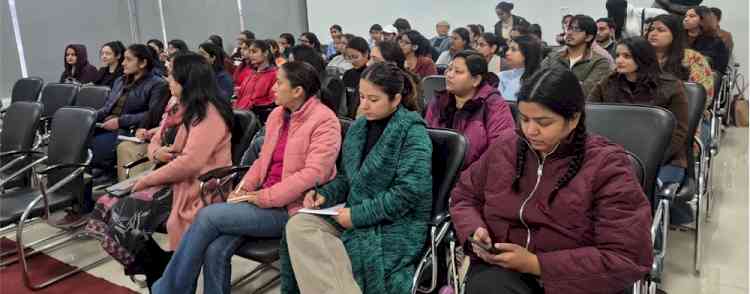
Chandigarh, January 27, 2026: The Department of Education, Panjab University, organised an insightful academic lecture on “Learning Environments and Classroom Emotional Climate” on Tuesday at the Seminar Room, Department of History, Arts Block-2, Shaheed Bhagat Singh Hall. The lecture was delivered by Prof. Rekha Bhan Koul, Professor of Science Education, Discipline Lead in STEM, and Deputy Head of the School of Education at Curtin University, Australia.
Addressing faculty members, research scholars and students, Prof. Koul emphasised that learning does not take place in isolation from emotions. She explained that the classroom environment—how students feel, interact, and relate to their teachers and peers plays a crucial role in shaping academic achievement, motivation, confidence and overall engagement with learning.
Drawing on decades of international research, Prof. Koul highlighted how classroom emotional climate influences not only students’ academic performance but also their attitudes, self-belief and willingness to participate. She stressed that a positive learning environment fosters care, clarity, collaboration and motivation, enabling students to thrive academically and emotionally.
A key focus of the lecture was the Classroom Emotional Climate (CEC) Questionnaire, a research-based tool developed to understand students’ perceptions of their classroom environment. Prof. Koul explained that this instrument captures important dimensions such as care, control, clarity, challenge, motivation, consolidation and collaboration, offering educators meaningful insights into classroom dynamics from the students’ perspective.
The lecture also discussed how the CEC tool has been rigorously validated through multiple stages, including expert review, student focus group discussions, large-scale field testing and advanced statistical analyses. These processes, Prof. Koul noted, ensure that the questionnaire is reliable, meaningful and useful for both research and classroom improvement.
Highlighting practical implications, Prof. Koul pointed out that understanding students’ emotional experiences can help teachers reflect on their teaching practices and make classrooms more inclusive and supportive. She also underlined the value of such tools in teacher education, assessment and action research aimed at improving learning environments.
The session concluded with an engaging discussion, where participants reflected on the relevance of emotional climate in Indian classrooms and the need to integrate such perspectives into educational practice and policy. The lecture was widely appreciated for bridging research and practice and for drawing attention to the often-overlooked emotional dimensions of teaching and learning. The event was organised by the students and faculty of the Department of Education, Panjab University, as part of its ongoing efforts to promote meaningful academic dialogue and research-informed teaching practices. The vote of thanks was proposed by Professor Kuldeep Kaur, who expressed gratitude to Professor Rekha Bhan Koul for her enriching lecture and acknowledged the gracious presence of Mr. Jawahar Lal Koul and Mr. Bill Koul and Professor Rachel sheffield, the faculty members, students, and the organising team.