CU Punjab’s Department of Mass Communication’s Researchers Achieves Global Milestone as IDEL Lab Research is Accepted at IARC–WHO
In a historic achievement for the Indian social sciences, the Central University of Punjab (CU Punjab), Bathinda, is proud to announce the formal acceptance of its pioneering research by the International Agency for Research on Cancer (IARC), the specialized cancer agency of the World Health Organization (WHO).
 City Air News
Mar 6, 2026 04:50
0
City Air News
Mar 6, 2026 04:50
0
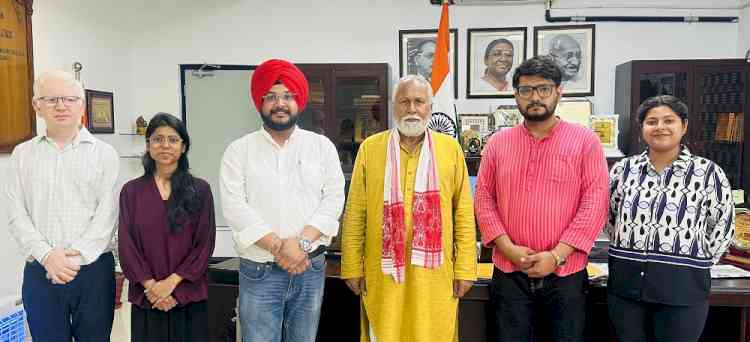
Bathinda, March 5, 2026: In a historic achievement for the Indian social sciences, the Central University of Punjab (CU Punjab), Bathinda, is proud to announce the formal acceptance of its pioneering research by the International Agency for Research on Cancer (IARC), the specialized cancer agency of the World Health Organization (WHO).
The cancer misinformation research “Cancer Misinformation in the Digital Age: A Global Synthesis of Research Trends and Key Themes”, emanating from the Interventions Design and Effects Lab (IDEL) within the Department of Mass Communication and Media Studies, under the School of Information and Communication Studies, has been selected for presentation at the prestigious IARC@60 conference in Lyon, France. This acceptance marks a definitive milestone, signalling the university's emergence as a global contributor to life-saving public health communication.
Navigating the "Gold Standard" of Evaluation: The research acceptance is a rare distinction, as it requires passing the Scientific Consensus Review—widely regarded by the global academic community as one of the most rigorous and toughest evaluation procedures in existence. Unlike traditional peer-review processes, a consensus review demands that an international panel of elite oncologists, epidemiologists, and scientists reach a collective, unanimous agreement on the methodology, data integrity, and policy-relevance of the work.
The IDEL team successfully cleared this "Zero-Doubt" filter, proving that their interdisciplinary approach to managing the cancer "infodemic" meets the highest global standards. This victory underscores the success of the "Research for Resurgent Punjab " of interdisciplinary studies, which effectively bridges the gap between mass communication and clinical public health.
Under the visionary leadership of Vice Chancellor Prof. Raghavendra P. Tiwari, the Central University of Punjab has undergone a strategic shift toward fostering globally competitive research. Prof. Tiwari’s commitment to the mission of "Research for Resurgent Punjab" has created a high-performance ecosystem where young scholars are empowered to compete against legacy international institutions.
"This 'David vs. Goliath' victory is the ultimate validation of our research vision," stated Prof. Tiwari. "Clearing the IARC Scientific Consensus Review proves that CUPB is not just producing academic papers but is actively shaping the future of global health guidelines. We are incredibly proud of our scholars for placing Punjab on the world’s scientific map."
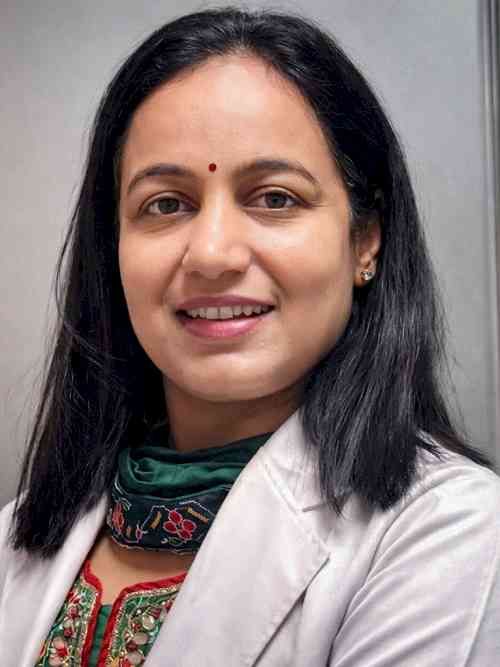
The project is spearheaded by Dr. Rubal Kanozia, Associate Professor and Head of the Department of Mass Communication and Media Studies. Under Dr. Kanozia’s mentorship, the Interventions Design and Effects Lab (IDEL) have been instrumental in initiating research aimed at developing evidence-based interventions to combat cancer-related misinformation.
The accepted research features the primary work of PhD scholar Naman, whose ongoing doctoral research on Cancer Misinformation has now been vetted by the world's toughest scientific minds, and Ritu Arya. Their analysis of misinformation patterns is now recognized as a vital tool for international health agencies. This collaborative triumph is shared by their fellow labmates—Robin Jindal, Ragendu R, and Raktima Gupta—whose synergy within the IDEL has been the engine of this significant work.
Global Policy Implications: By passing through IARC’s rigorous scientific review process, the IDEL’s findings are now positioned to contribute to the policy platforms of IARC, WHO, and international strategies for health literacy. This achievement reinforces CU Punjab’s role as a nodal centre for health communication and Infodemiological studies in South Asia, demonstrating that precision-driven social science is as critical as medicine in the global fight against cancer.