Congress slams US-Israel joint strike on Iran, urges India to intervene citing safety of expatriates
The Congress on Saturday condemned the United States and Israel’s attack on Iran and urged the Union government to intervene and end “the hostilities”, and also ensure the safety of Indians in the region.
 IANS
Feb 28, 2026 11:01
0
IANS
Feb 28, 2026 11:01
0
New Delhi, Feb 28 (IANS) The Congress on Saturday condemned the United States and Israel’s attack on Iran and urged the Union government to intervene and end “the hostilities”, and also ensure the safety of Indians in the region.
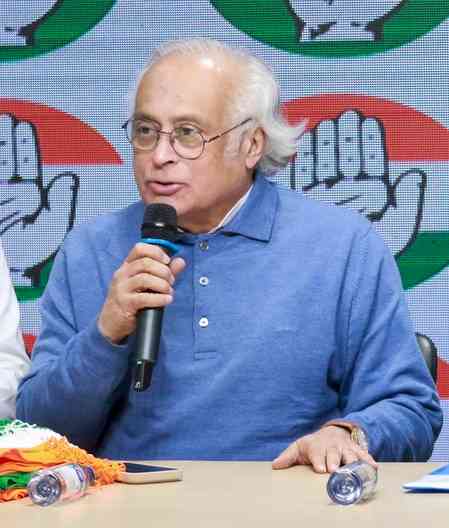
“For weeks, President Trump maintained the charade of diplomacy and negotiations with Iran. Egged on by the Israeli PM, Mr Netanyahu and hawks in the US, he has launched a military offensive aimed at achieving regime change,” posted Jairam Ramesh, Congress general secretary in charge of communication, publicity, and media on the social media platform X.
“The INC condemns this attack and calls upon the Government of India to help bring the hostilities to an immediate end. The Govt of India must take all necessary steps to ensure the safety and security of the millions of Indians who live and work in the West Asia region,” added the Congress MP.
This followed the dramatic escalation of tension in the Middle East following the United States and Israel jointly launching military strikes against Iran. The offensive marks one of the most significant confrontations in the region in recent times.
While Washington reportedly carried out precision airstrikes on suspected missile sites and command centres across Tehran, Isfahan, and Shiraz, Israeli forces were said to have focused on locations linked to Iran’s Revolutionary Guard and alleged drone production hubs.
It came after mounting rhetoric from Washington and Tel Aviv accusing Tehran of destabilising the region through proxy militias and advancing its nuclear programme beyond agreed limits.
While the United States framed the strikes as necessary to curb Iran’s “aggressive posture”, Israel’s Prime Minister Benjamin Netanyahu called the operation “a decisive step to ensure regional security”.
Critics, however, warned that the move risks igniting a wider conflict across the Middle East.
Meanwhile, Iranian state media denounced the attacks as “an act of war”, with reports of Tehran launching missile strikes on Israel American bases in Gulf countries.
As the situation develops, the world watches anxiously, fearing that this confrontation could spiral into a prolonged war with far‑reaching consequences.
While Iran itself hosts a smaller expatriate community, the broader Middle East remains home to nearly 9 million Indians.
The United Arab Emirates leads with about 34 lakh workers, followed by 26 lakh in Saudi Arabia, 10 lakh in Kuwait, 7.50 lakh in Qatar, and about 7 lakh in Oman. Many are employed in construction, services, and healthcare.
New Delhi is closely monitoring the developments, emphasising contingency plans to safeguard citizens in Iran and neighbouring Gulf states.