Brainstorming Session on Chandigarh Startup Policy Organised at Panjab University
The Technology Enabling Centre (TEC), Panjab University, Chandigarh, organised a brainstorming session on Chandigarh’s Startup Policy on the university campus. The session brought together key stakeholders from academia, government, industry, and the startup ecosystem.
 City Air News
Mar 2, 2026 09:46
0
City Air News
Mar 2, 2026 09:46
0
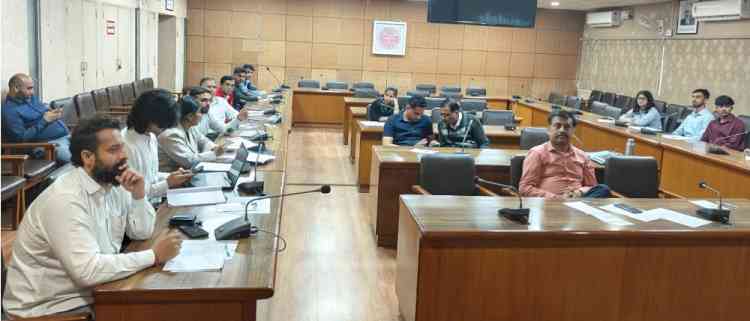
Chandigarh, March 2, 2026: The Technology Enabling Centre (TEC), Panjab University, Chandigarh, organised a brainstorming session on Chandigarh’s Startup Policy on the university campus. The session brought together key stakeholders from academia, government, industry, and the startup ecosystem.
Earlier in the day, a startup–investor interaction session was organised wherein 10 startups pitched their innovations before seven investors to seek funding in exchange for equity. This session provided a valuable platform for startups to present their technologies, business models, and growth plans directly to potential investors and marked an important step toward facilitating access to early-stage capital.
The brainstorming session was chaired by Professor N. S. Vyas, Indian Institute of Technology Kanpur, and co-chaired by Professor Rupinder Tewari. The Chandigarh Administration was represented by Ms. Vijayta from the Industries Department.
Professor Vyas emphasized that Chandigarh has strong potential to emerge as a “Technology Nerve Centre” rather than a manufacturing hub. He suggested that the startup policy should strategically position Chandigarh as a deep-tech, design, digital, and systems innovation hub serving the industrial MSMEs of Punjab, Haryana, and Himachal Pradesh.
The session witnessed participation from startup founders, innovators, incubator heads, scientists, students, and investors. The house unanimously agreed that entrepreneurship education should begin at the school level to nurture innovation and risk-taking abilities among youth.
Professor Tewari proposed the creation of a dedicated fund to promote startups led by senior citizens, recognizing their experience and potential to contribute meaningfully to the innovation ecosystem. Participants also emphasized the need for concrete policy measures to attract investors to Chandigarh.
Dr. Radhika Trikha from Indian Institute of Technology Ropar highlighted that the Research Development and Innovation Fund (RDIF) under the Anusandhan National Research Foundation can significantly support startups by providing large-scale capital, risk funding, and commercialization support through venture funds and financial institutions.
Professor Navdeep Goyal from Panjab University emphasised that industry R&D centres in the Chandigarh region should obtain recognition from the Department of Scientific and Industrial Research. This would help position Chandigarh as a major innovation hub and enable access to national-level funding opportunities such as RDIF.
The participants also recommended that the Chandigarh Administration establish a “One-Stop Startup Café,” where entrepreneurs, investors, and stakeholders can interact with government representatives, understand startup policies, exchange ideas, and foster collaboration.
There was a strong consensus that industry should be encouraged to invest approximately 2% of its revenue in research and development to promote sustained innovation.
Dr. Sadaf Jan, Technology Enabling Centre (TEC), Panjab University, emphasized that the startup policy should include provisions to help startups secure their first commercial orders, which are critical for their survival, credibility, and growth.
The session concluded with a shared vision to transform Chandigarh into a vibrant deep-tech and innovation hub, leveraging its academic strength and policy support to drive entrepreneurship, attract investment, and accelerate technology commercialization.