7th DGSIC International Conference Starts at Panjab University
Scholars Examine Algorithms, Machinic Ontology and Culture as Assemblage
 City Air News
Feb 28, 2026 08:58
0
City Air News
Feb 28, 2026 08:58
0
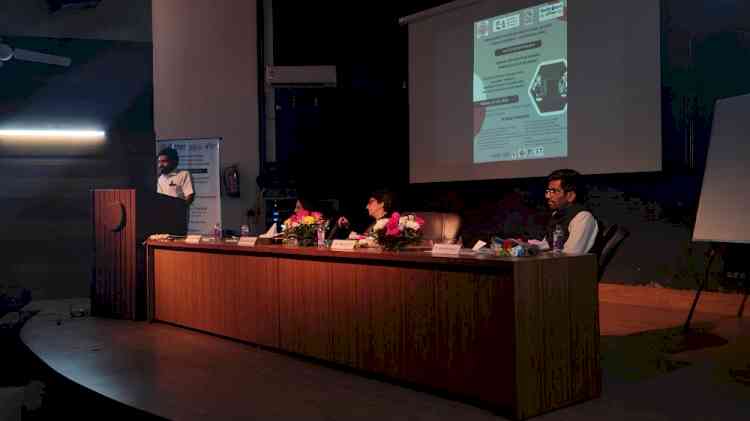
Chandigarh, February 27, 2026: Panjab University on Friday inaugurated the 7th Deleuze and Guattari Studies in India Collective (DGSIC) Conference at the Department of English and Cultural Studies, marking the commencement of the two-day international conference.
As many as 116 registered delegates and 65 paper presenters from 18 Indian states and Union Territories, along with international scholars are participating in the prestigious international conference being organised by the Department of English and Cultural Studies, Panjab University, and the Deleuze and Guattari Studies in India Collective. The conference is themed “Culture Without Organs (CWO): Machinic Thought, Transdisciplinary Assemblages, and Cartographies of Difference.”
Prof. Meenu Gupta, Chairperson, Department of English and Cultural Studies, delivered the welcome address, expressing gratitude to Vice Chancellor Prof. Renu Vig and acknowledging institutional support that made interdisciplinary scholarship possible. She highlighted the use of sustainable materials throughout the conference and highlighted the theme of Culture Without Organs as an invitation to rethink culture as a living assemblage.
Dr. Manoj N.Y. formally declared the conference open, elaborating on culture as an emergent, evolving field shaped within open systems rather than fixed frameworks.
Prof. Rumina Sethi extended the conceptual discussion by interpreting the Deleuzian idea of the “Body without Organs” and its contemporary relevance. She addressed algorithmic systems, artificial intelligence, and their implications for language, free speech, and democracy. Emphasising that theory must travel, she advocated for building a “library without walls” and a “classroom without walls.”
The inaugural session concluded with a vote of thanks by Dr. Jaidev Bishnoi.
The first online plenary lecture, chaired by Dr. Manoj N.Y., was delivered by Ian Buchanan on “The Assemblage, the Algorithm, and the Body Without Organs.” Drawing on Gilles Deleuze’s Difference and Repetition, he examined social engineering and matching algorithms through a Deleuzian lens, arguing that every choice must be understood within its assemblage.
The second online plenary, also chaired by Dr. Manoj N.Y., featured George Varghese K. He examined Félix Guattari’s shift from structuralism to machinic ontology, contrasting static structures with dynamic machines as productive forces.
Six sessions were conducted in the morning, chaired by Prof. Paru Bal Sidhu, Prof. Joff Bradley, Dr. Manoj N.Y., Prof. Manju Jaidka, Prof. Abhik Ghosh, and Prof. Pushpinder Syal.
Subsequent plenary lectures included Prof. David R. Cole on “Tipping Points: Moments to Despair, or to the Spark of Creation?” (Chair: Pushpinder Syal), Dr. Wahida Khandker on “Nomadic Adventures: Living and Dying in Real and Virtual Worlds” (Chair: Prof. Rumina Sethi), and Prof. Felicity Colman on “The Smallest Circuit: Modal Logic of the Crystal Image and Algorithmic Conditions” (Chair: Dr. Manoj N.Y.), further advancing discussions on technology, ontology, ethics, and cinematic philosophy.
Six afternoon parallel sessions were chaired by Prof. Jagdish Rai, Prof. Ashutosh Kumar, Prof. Satvinder Kaur, Prof. Ranvir Singh, Prof. Ramanjit Kaur Johal, Prof. Jasbir Singh.
The day concluded with cultural programmes like Durga Chalisa, Nepali Folk Dance, Natti, Luddi and band perfomance.
The first day of the conference established a rigorous interdisciplinary platform for examining culture, technology, multiplicity, and political responsibility. Deliberations on these ideas will continue on the second day of the conference on 28th February 2026.