US split over Iran strike, killing of Ayatollah Khamenei
The United States' political establishment was sharply divided on Sunday over President Donald Trump's decision to strike Iran and the reported killing of its Supreme Leader, Ayatollah Ali Khamenei, with senior lawmakers clashing over whether the action was a necessary blow against a long-time adversary or, as one senator put it, “a war of choice”.
 IANS
Mar 1, 2026 10:26
0
IANS
Mar 1, 2026 10:26
0
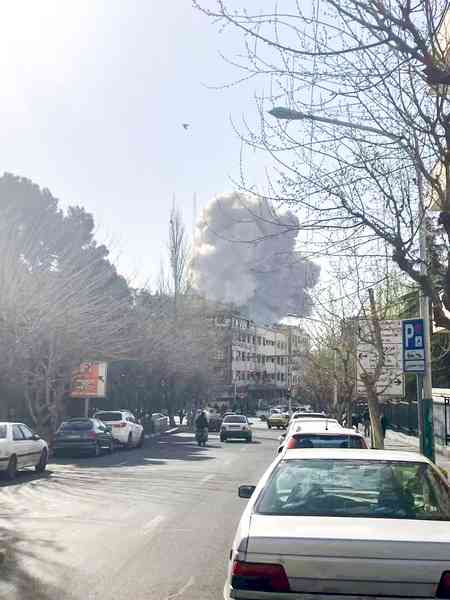
Washington, March 1 (IANS) The United States' political establishment was sharply divided on Sunday over President Donald Trump's decision to strike Iran and the reported killing of its Supreme Leader, Ayatollah Ali Khamenei, with senior lawmakers clashing over whether the action was a necessary blow against a long-time adversary or, as one senator put it, “a war of choice”.
Senate Intelligence Committee Chairman Tom Cotton strongly defended the operation. Speaking to CNN, Cotton said, “There’s no doubt that Iran is going to continue to target our bases in the region, our Arab friends and Israel.”
He signalled further military action aimed at crippling Tehran’s capabilities. “What the American people will see in the days ahead is going to be a methodical and systematic focus on Iran’s missiles, its missile launchers and ultimately its missile manufacturing capability,” he said.
In a separate interview with CBS News, Cotton said the President had “no plan for any kind of large-scale ground force inside Iran”, describing instead an “extended air and naval campaign” focused on Iran’s missile arsenal.
But Senator Mark Warner, the Democratic Vice Chairman of the Senate Intelligence Committee, sharply disagreed. In an interview with CNN, Warner called the move “a war of choice”.
“There was no imminent threat to the United States,” he said. “I saw no intelligence that Iran was on the verge of launching any kind of pre-emptive strike against the United States of America.”
Warner also cautioned that Washington lacked clarity on what would follow inside Iran. “We have had very little visibility into what happens next after the Supreme Leader is eliminated,” he said.
On ABC News, Democratic Senator Adam Schiff echoed those concerns.
“There was simply no basis to go in with this massive military campaign, with the goal of regime change,” he said. He added that Iran “posed no imminent threat of attack to the United States”.
Schiff said he was “glad the regime is gone” and that “at least the leader of that terrible regime is gone”, but warned against creating expectations that American troops would back any uprising on the ground in Iran.
Iran’s Foreign Minister Abbas Araghchi rejected Washington’s justification.
Speaking to ABC News, he said, “What the United States is doing is an act of aggression. What we are doing is an act of self-defence.”
“We are defending ourselves, whatever it takes,” he added.
The exchanges underscore a widening debate in Washington over the intelligence underpinning the strikes, the question of Congressional authorisation and the strategic endgame. Supporters frame the action as a decisive attempt to dismantle Iran’s military infrastructure. Critics warn of escalation and an open-ended conflict in a volatile region.
Iran has been under clerical rule since the 1979 Islamic Revolution, which ruptured ties with the United States and led to the 440-day hostage crisis at the US Embassy in Tehran.
Over the decades, successive American administrations have sought to curb Tehran's nuclear ambitions and regional influence through sanctions, diplomacy and, at times, covert operations.
--IANS
int/lkj/pgh