After Ayatollah Ali Khamenei, Iran faces power vacuum
The reported killing of Iran’s Supreme Leader, Ayatollah Ali Khamenei, has pushed the Islamic Republic into uncertain territory, with American lawmakers and Iranian officials offering sharply different assessments of what may follow within Tehran’s power structure.
 IANS
Mar 1, 2026 10:25
0
IANS
Mar 1, 2026 10:25
0
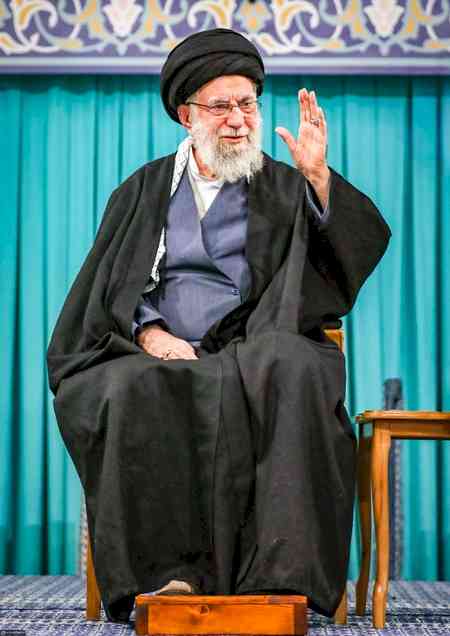
Washington, March 1 (IANS) The reported killing of Iran’s Supreme Leader, Ayatollah Ali Khamenei, has pushed the Islamic Republic into uncertain territory, with American lawmakers and Iranian officials offering sharply different assessments of what may follow within Tehran’s power structure.
Speaking to CNN, Senate Intelligence Committee Chairman Tom Cotton said the military campaign would continue. “What the American people will see in the days ahead is going to be a methodical and systematic focus on Iran’s missiles, its missile launchers and ultimately its missile manufacturing capability,” he said.
Cotton added, “There’s no doubt that Iran is going to continue to target our bases in the region, our Arab friends and Israel.”
In an interview with CBS News, Cotton said the President had “no plan for any kind of large-scale ground force inside Iran”, instead describing an “extended air and naval campaign”.
But Senator Mark Warner, Vice Chairman of the Senate Intelligence Committee, warned that Washington had limited clarity on developments inside Iran. Speaking to CNN, Warner said, “We have had very little visibility into what happens next after the Supreme Leader is eliminated.”
On ABC News, Democratic Senator Adam Schiff criticised what he described as the broader objective. “There was simply no basis to go in with this massive military campaign, with the goal of regime change,” he said. He added that Iran “posed no imminent threat of attack to the United States”.
Schiff also said he was “glad the regime is gone” and that “at least the leader of that terrible regime is gone”, but cautioned against creating expectations of American troops supporting an internal uprising.
Iran’s Foreign Minister Abbas Araghchi rejected the US justification. Speaking to ABC News, he said, “What the United States is doing is an act of aggression. What we are doing is an act of self-defence.”
“We are defending ourselves, whatever it takes,” he added.
The contrasting statements reflect deep uncertainty over how Iran’s leadership transition may unfold. While Washington has signalled continued military pressure, Tehran has framed the strikes as unlawful aggression.
--IANS
int/lkj/pgh