Union Budget 2026-27 Quotes - PwC India spokespersons commenting on key sectors
 City Air News
Feb 1, 2026 04:18
0
City Air News
Feb 1, 2026 04:18
0

Mohammad Athar Saif, Partner and Leader CP&I and Industrial Development, PwC India
“The Budget has done an excellent job of balancing immediate and long-term job creation by placing the integration of infrastructure and manufacturing at its core. An infrastructure outlay of 12.2 lakh crore—representing a 9% increase—reinforces the government’s sustained focus on meeting India’s evolving infrastructure needs. Cities continue to be positioned as key growth engines, with a proposed scheme which will provide funding support of ?5,000 crore per city as per their economic regions for all cities with populations above 5 lakh, and a strong emphasis on urban mobility through seven new high-speed connectivity corridors which could collectively strengthen the economic aspirations of urban India.
On the manufacturing front, the announcement of Semiconductor Mission 2.0, enhanced support for the electronics components scheme, plans to revitalise 200 industrial clusters, and a focused push on critical minerals could significantly strengthen India’s manufacturing ecosystem, and accelerating the country’s transition into a competitive global destination. This could also develop India’s self-reliance for emerging industries such as semiconductors, electronics, and advanced batteries, and advance the government’s vision of Viksit Bharat@2047.“
Sujay Shetty, Managing Director (ESDM & Semiconductor), PwC India
“As someone who is deeply invested in India’s tech ecosystem, I warmly welcome the Union Budget 2026–27’s visionary and strategic advancements for the electronics and semiconductor sector. The launch of ISM 2.0 represents a transformative step forward, prioritising domestic production of equipment and materials, full-stack design capabilities, development of Indian IP, resilient supply chain fortification, intensified industry-led R&D, and a robust skilled workforce through dedicated training initiatives. This comprehensive framework could significantly elevate India’s role in the global semiconductor value chain.
The government’s forward-looking focus on promoting mining, processing, research, and manufacturing of rare earth minerals, through dedicated corridors in the mineral-rich states of Odisha, Kerala, Andhra Pradesh, and Tamil Nadu is equally commendable. This initiative could address critical supply chain vulnerabilities and strengthen the country’s self-reliance in essential inputs for high-tech industries.
Complementing these efforts, the additional ?40,000 crore outlay for the Electronics Components Manufacturing Scheme (ECMS) could catalyse substantial investments, enhance domestic value addition, generate high-quality employment, and solidify India’s emergence as a global leader in electronics manufacturing and innovation.”
Ranen Banerjee - Partner and Leader Economic Advisory, PwC India
“The theme of the Budget can be summarised as consolidation, rationalisation, and incentivisation - —consolidation of ongoing schemes, rationalisation of overlapping schemes, and incentivisation of business, individuals, and entrepreneurs through further ease of doing business.
Given the fiscal constraints, the Budget was on expected lines with the fiscal deficit for FY26 being met and the FY27 target being just 10 bps lower with the debt- to- GDP ratio targeted to be lowered by 50 bps. Job creation is a cross- cutting theme, with interventions and further momentum through creation of a cadre of Corporate Mitras, training of tourist guides, veterinary, hospitality, and allied healthcare professional skilling, and development of tourist circuits and specialised tourist trails.”
Sujay Shetty, Partner and Leader – Health Industries, PwC India
“Union Budget 2026–27 sends across a powerful statement of intent for India’s biopharma sector. The focus on supporting both patient and industry needs through key pillars strengthening biomanufacturing, expanding skills development via additional NIPERs, and accelerating approval timelines—signals a clear commitment towards improving ease of doing business through regulatory capacity building and faster decision-making.
Another significant aspect of this year’s Budget is the strong emphasis on medical tourism. By positioning India as a trusted global destination for high-quality, affordable care, the Budget reinforces the sector’s potential both as a growth engine as well as a contributor to India’s global healthcare leadership.
Equally encouraging is the much-needed focus on Ayurveda and wellness. By providing targeted support to help the sector build scale and global competitiveness the government recognises India’s unique strengths in the pharma sector and opens new opportunities for innovation, exports, and job creation.
Taken together—across biopharma, medical tourism, Ayurveda, wellness, and skills building—these proposals make this a truly forward-looking Budget that will take India well on its way to achieving the goals of a Viksit Bharat.”
Sambitosh Mohapatra, Partner and Leader, Climate and Energy, PwC India
“India’s latest Union Budget marks a decisive shift from chasing capacity targets to building true system resilience. It signals a bold ambition: to lead the global green industrial revolution.
The launch of the ₹20,000 crore CCUS Mission and the SMR Nuclear Mission shows that the government is directly addressing hard-to-abate sectors that define the next frontier of decarbonisation. The restructuring of Power Finance Corporation (PFC) and Rural Electrification Corporation (REC) is a transformative move—unlocking deep capital pools which are critical to powering the ₹12.2 lakh crore capex cycle.
At the same time, focus on the semiconductor ecosystem, critical mineral corridors, and permanent magnet manufacturing tackles the biggest vulnerability in the clean energy transition: supply chain sovereignty. For industry, extended customs duty exemptions for Battery Energy Storage System (BESS) and a simplified Income Tax Act offer predictability and a clearer fiscal runway.
This isn’t just a green budget—it’s a competitive industrial strategy. One that positions India as a global hub for cleantech and biopharma innovation, while maintaining fiscal discipline with a 4.3% deficit. India is no longer merely participating in the energy transition but is positioning itself to shape it.”
Manpreet Singh Ahuja, Chief Clients Officer and TMT Leader, PwC India
Media & Entertainment
“For media and entertainment, the ‘Orange Economy’ push—especially AVGC content creator labs across 15,000 schools and 500 colleges— could create a pipeline for India to lead in content, gaming, and immersive storytelling. Taken together, these measures can strengthen the TMT flywheel—better infrastructure, better innovation, better trust, and better growth—thereby accelerating India’s Viksit Bharat goals.”
Technology
“Union Budget 2026–27 is a clear signal that India wants to be a producer of digital value. The Budget strengthens the foundations of a future-ready digital economy through three big moves: building global-scale digital infrastructure, deepening ‘trust by design’ in governance, and accelerating talent creation for the next wave of technology-led growth. For the technology ecosystem, the most significant announcement is the intent to make India a global hub for cloud and data infrastructure—via a tax holiday till 2047 for foreign companies providing global cloud services using India-based data centre capacity. This move, coupled with a more predictable tax and compliance regime for IT services, reduces uncertainty, improves capital confidence, and enables faster global scaling for India.”
Telecom
“For telecom and connectivity-led businesses, the direction is clear: capital efficiency improves when regulation simplifies, supply chains strengthen, and domestic electronics capacity expands. ISM 2.0 and the expanded Electronics Components Manufacturing Scheme could reinforce the device-to-network stack, and create a stronger backbone for the next-generation enterprise and consumer use cases.”
Gayathri Parthasarathy, Partner and Leader - Financial Services, PwC India
“Union Budget 2026–27 reinforces the government’s dual priority of sustaining growth while maintaining fiscal discipline. Continued high capital expenditure in infrastructure, manufacturing, digital public infrastructure, and energy transition is expected to crowd in private investment and strengthen India’s long-term growth trajectory.
A key highlight is the strong emphasis on financial sector reforms. The banking system was described as healthier and more resilient—with improved asset quality, stronger balance sheets, and rising profitability. A high-level committee on banking has been proposed to align the sector with India’s next growth phase and help in achieving Viksit Bharat goals. This committee will undertake a comprehensive review of the banking sector’s structure, governance, and future readiness to meet India’s expanding credit needs, while safeguarding stability and consumer interests.
Public sector banks are set to see further governance and technology-driven reforms aimed at improving efficiency and competitiveness. The Budget also includes the restructuring of Power Finance Corporation (PFC) and Rural Electrification Corporation (REC), alongside a comprehensive review of the Foreign Exchange Management (FEMA) (non-debt instruments) Rules.
Additionally, the Budget underscores the growing role of non-banking financial companies (NBFCs) in expanding credit access and calls for deeper insurance penetration. It further provides an incentive of ?100 crore for single issuance of municipal bonds of more than ?1,000 crore and introduces a market-making framework and total return swaps on corporate bonds—supported by tax measures such as raising the STT on futures from 0.02% to 0.05% and increasing STT on options premium and exercise of options to 0.15% from 0.1% and 0.125%, respectively.
Together, these measures point to a reform-led push to build a stronger, more inclusive financial ecosystem.”
Manish Sharma, Sector Leader - Infrastructure, Transport and Logistics, PwC India
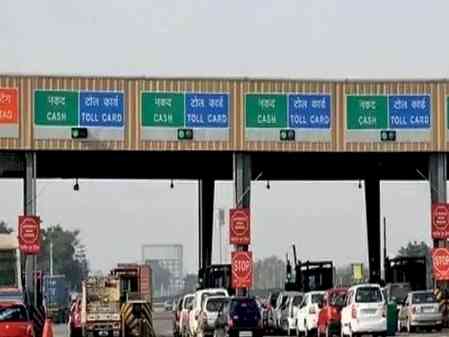
“After more than 30% increase in capex between FY23 and FY25, the budget has now settled down to a modest growth of around 11% in FY26 and now to 9% for FY27. The emphasis is now shifting towards enabling better execution. Launch of initiatives like partial credit guarantee mechanism is one such intervention, where large number of new project developers are entering into PPP opportunities, with likelihood of user charge-based PPP projects like toll roads gaining traction, this could increase the risk profile for lenders and impact financial closures. Therefore, credit guarantee mechanisms should address the concerns of lenders, however, these mechanisms need to work before the default and not after a default has occurred.
Setting up seven new high speed rail corridors and DFCs is another welcome step, however, launching these developments need to be tied down to iron clad, irrevocable state government commitments on aspects like land, first and last mile access arrangements, and security to ensure timebound execution.
REITs for surplus CPSE lands is a long overdue intervention and, if effectively implemented, it could lead to a significant asset monetisation opportunity. The focus on creating a domestic capability in construction and infrastructure equipment and container manufacturing is a positive move to address the vulnerability which supply chain disruptions can cause to the country’s infrastructure and trade agenda.
Finally, the creation of City Economic Regions is a welcome step to check the unplanned and uncontrolled proliferation of Tier 2 and 3 cities and, capitalise on the economic opportunities they present, though this will require reforms to happen in tandem with creation of CERs, inclusion of peri-urban regions in municipal limits, recognising industrial clusters as an integral part of city planning, and extending reliable and quality municipal services to such regions.”
Shashi Kant Singh, Partner -Agriculture - Food – Agribusiness, PwC India
“Budget 2026-27 underscores India’s commitment to enhancing agricultural innovation, improving export competitiveness, and promoting women’s empowerment in agriculture—key pillars of the Viksit Bharat strategy. Focused support for high-value crops, along with special incentives for the fisheries and dairy sector, aims to augment farm incomes while strengthening India’s global agricultural competitiveness and boosting exports.”