Budget 2026 Reaction Quotes
 City Air News
Feb 1, 2026 04:44
0
City Air News
Feb 1, 2026 04:44
0

Sunil Agarwal, Co-founder and Chairman of Joy Personal Care (RSH Global)
"The Union Budget 2026 shows clear confidence in India’s manufacturing and MSME sector. The focus on reviving industrial clusters, supporting growing SMEs through a dedicated fund, and strengthening supply chains will help businesses become more resilient and competitive. The continued push on capital spending, easier foreign investment norms, and support for women-led and micro enterprises underline the government’s commitment to inclusive and long-term growth. For Indian consumer brands, this creates the right environment to grow responsibly, innovate with confidence, and play a meaningful role in India’s economic progress."
Amit Majumdar, Group Chief Strategy Officer, Angel One Ltd
“India’s retail participation and broader financialisation are still in the early stages. Marginal changes in transaction costs do not alter the long term behaviour of participants in the capital markets. Over the years, we have transformed Angel One into a diversified franchise spanning wealth, credit, asset management and soon insurance, adding steady, diversified revenue streams. With more Indians adopting digital investment platforms and building long term portfolios, and therefore our stated goal of deepening client engagement and continue compounding as a tech led, diversified wealth platform remains intact.
In Q3 FY26, F&O brokerage contributed about 44% of our gross revenue, while interest income from client funding and our broader platform accounted for around 33%, with the rest coming from cash and commodity broking, depository, distribution, and other income streams. This diversified mix reinforces the resilience of our model and gives us confidence that the broader trajectory of our business remains firmly intact.”
Vaqarjaved Khan, Senior Fundamental Analyst, Angel One Ltd.
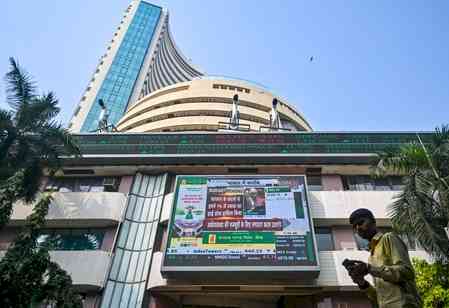
“The Budget strikes a prudent balance between growth and fiscal discipline, with FY27 fiscal deficit targeted at 4.3% of GDP and capex hiked to RS. 12.2 lakh crore, signalling sustained infrastructure push. Key positives include enhanced incentives for manufacturing, semiconductors, biopharma, textiles, and MSMEs via a Rs. 10,000 crore funds, alongside boosts for agriculture, defence, and clean energy positioning these sectors for accelerated expansion. The rationalized TDS/customs duties and tax slab simplifications ease compliance, fostering business confidence. For Indian markets, while the STT hike on F&O triggered a knee-jerk sell-off (Sensex down 600+ points), the focus on jobs, exports, and reforms should support long-term equity upside, especially in infra, renewables, and export-oriented plays, amid resilient 6.8–7.2% GDP projections.”
Sandeep Kumar Jain, Managing Director, CDK Global
“The creation of a High Powered Education to Employment and Enterprises Standing Committee signals a landmark shift in India’s approach to human capital development. By directly linking education, skilling, employment, and entrepreneurship, the government is building the connective tissue needed for sustainable growth in the services sector—especially as India aspires for a 10% global share by 2047.
The unified IT Services framework eliminates tax arbitrage, streamlines compliance, and strengthens India’s position as the world’s software and digital services hub. For the technology and services industries, this initiative comes at a pivotal moment. As artificial intelligence and emerging digital platforms redefine work, the focus on adaptive skill pathways will be crucial to ensuring that opportunity keeps pace with innovation. At CDK Global, we see this as an inflection point to deepen industry academia collaboration, integrate AI driven skill development, and create future ready career paths in technology, analytics, and customer experience.
Also, the vision for technology as a societal equalizer—from empowering farmers and women in STEM to enhancing accessibility for divyangjan—echoes our own belief that digital progress must be inclusive by design. This alignment between policy intent and industry capability sets the stage for India’s next chapter as a global leader in technology enabled services.”
Jayant Chaudhary, Minister of State (Independent Charge) for Skill Development & Entrepreneurship and Minister of State for Education, Government of India
“The Union Budget 2026–27 presents a confident roadmap for India’s next phase of growth. I congratulate Hon’ble Prime Minister Shri Narendra Modi ji for his visionary leadership and thank Hon’ble Finance Minister Smt. Nirmala Sitharaman ji for a Budget that balances ambition with inclusion, and reforms with responsibility.
This is a truly Yuva Shakti–driven Budget, anchored in the vision of Viksit Bharat 2047. By prioritising productivity, competitiveness and cutting-edge technologies, including AI, it lays a strong foundation for Viksit Bharat through sustained structural reforms and people-centric growth. It reinforces India’s steady economic trajectory through fiscal discipline, sustained growth and strategic investments in future-ready capacities.
A strong push to manufacturing, MSMEs and services stands out as a key growth engine. Investments across biopharma, semiconductors, electronics, textiles (SAMARTH 2.0), chemicals, capital goods and sports manufacturing will deepen domestic value chains and position India as a trusted global production hub. The three-pronged MSME framework, ₹10,000 crore SME Growth Fund, TReDS-based liquidity, and professional support through “Corporate Mitras”, will empower entrepreneurs to scale and compete.
Initiatives such as AI-backed Bharat Vistaar to integrate agri-stack, creation of SheMarts, Biopharma SHAKTI, ISM 2.0, rejuvenation of industrial clusters, creation of champion MSMEs through equity support, and the 10-year Khelo India Mission reflect a future-ready approach that integrates technology, health, agriculture and human capital.
A defining feature of this Budget is its decisive commitment to skill development and human capital. The Ministry of Skill Development and Entrepreneurship has received a 62% increase in allocation, with the budget rising from ₹6,100 crore to ₹9,885.80 crore, affirming the Government’s resolve to place skills at the centre of economic transformation. From NSQF-aligned programmes and caregiver training to modernised textile skilling, sports ecosystems and industry-linked pathways, this Budget creates a seamless bridge from education to employment and entrepreneurship, preparing youth to lead in manufacturing, services, technology and the care economy.
The renewed emphasis on the services sector, including healthcare, medical value tourism, AVGC, design, IT and hospitality, recognises that India’s growth will be powered as much by skills and services as by infrastructure. Continued public capital expenditure will crowd in private investment and expand opportunities across Tier-II and Tier-III cities.
I especially welcome the strong focus on agriculture and allied sectors, particularly for states like Uttar Pradesh, —supporting high-value farming, fisheries, animal husbandry, FPOs and agri-startups. These measures will strengthen farmer incomes while opening new avenues for rural youth and women-led enterprises. Integrating skilling with agriculture and rural entrepreneurship will help move our villages from subsistence to sustainability.
The Budget also advances social inclusion through targeted support for women, Divyangjans, education, healthcare and social justice. Empowering women through hostels, skilling and entrepreneurship, alongside focused interventions for persons with disabilities, reflects our commitment to ensuring that every citizen participates meaningfully in India’s growth story.
Sports receives a strategic boost as well, recognising its potential for manufacturing, innovation and youth engagement, while aligning with Uttar Pradesh’s emerging role in sports goods clusters and talent development, and strengthening India’s preparations as we move forward with our bid to host the Olympic Games in 2036. We recently launched SportsEdge Meerut in alignment with this vision—an initiative aimed at building a world-class sports goods manufacturing cluster by integrating skilling, innovation and MSME support, and I am confident it will add significant value by creating jobs, strengthening local enterprises and nurturing sporting talent.
Taken together, Budget 2026–27 is not just a financial statement, it is a national mission document. It strengthens economic foundations, unlocks enterprise, empowers farmers and MSMEs, and invests deeply in skills.”
Sunil Nair, CEO of Ramky Infrastructure Ltd
“The Union Budget 2026 underscores a clear continuity of confidence in India’s infrastructure growth story. The proposal to establish an Infrastructure Risk Guarantee Fund is a particularly forward looking intervention, it directly addresses one of the biggest hurdles in the sector: risk perception during the early stages of project development and construction. By offering partial credit guarantees to lenders, the Fund will not only ease financing bottlenecks but also embolden private players to invest in new, large scale projects with greater assurance.
Equally significant is the government’s move to accelerate asset monetisation through dedicated Real Estate Investment Trusts (REITs) for Central Public Sector Enterprise (CPSE) owned real estate. This will unlock dormant capital, enhance liquidity in the system, and catalyse a new wave of investments across allied sectors like logistics, housing, and industrial infrastructure.
Complementing these reforms, the Budget’s thrust on industrial infrastructure through the Chemical Park and bulk drug park, Biopharma Shakti schemes enhances India’s manufacturing and innovation ecosystem. The Chemical Park and bulk drug park will create plug and play clusters to boost domestic chemical production and reduce imports, while the ₹10,000 crore Biopharma Shakti initiative aims to build a globally competitive biopharma ecosystem through new NIPERs, clinical trial networks, and upgraded regulatory standards.
Finally, with a proposed capital expenditure of ₹12.2 lakh crore for FY 2026 27, the Budget reaffirms infrastructure as the backbone of India’s economic momentum. These measures together create a balanced ecosystem, de risked, capital efficient, and geared towards sustainable, high velocity growth. For developers like Ramky Infrastructure, this paves the way for deeper partnerships in nation building.”
Shivika Goenka, Director – Luxury and Education, RPSG Group
“The Budget 2026–27 signals a welcome shift towards deeper integration of AI within the education ecosystem. It is encouraging to see a focus on embedding AI as a foundational capability from the school level onwards, along with strengthening teacher training and sustained investments in upskilling and reskilling.”