Training-cum-Exposure Visit on Digital Climate Smart Hill Farming organised
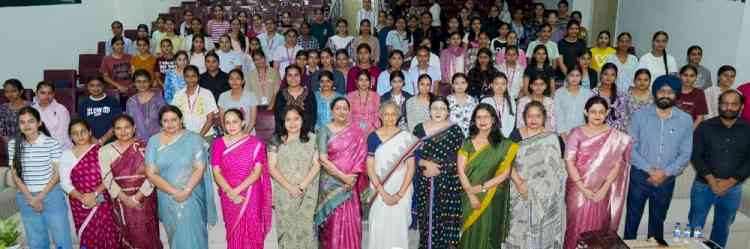
The Department of Environmental Science, Dr. Yashwant Singh Parmar University of Horticulture and Forestry (UHF), Nauni, organized a three-day Training-cum-Exposure Visit on ‘Digital Climate Smart Hill Farming’ from 13-15 July, 2026 for 25 farmers and 2 officials from Uttarakhand. The programme was sponsored by the Mission Director, Department of Horticulture & Food Processing, Government of Uttarakhand.
 City Air News
Jul 16, 2026 09:04
0
City Air News
Jul 16, 2026 09:04
0
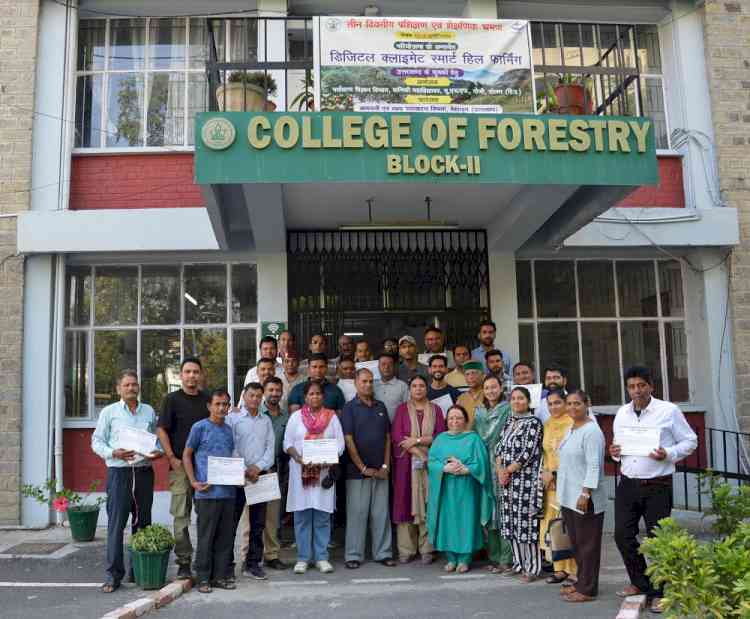
The Department of Environmental Science, Dr. Yashwant Singh Parmar University of Horticulture and Forestry (UHF), Nauni, organized a three-day Training-cum-Exposure Visit on ‘Digital Climate Smart Hill Farming’ from 13-15 July, 2026 for 25 farmers and 2 officials from Uttarakhand. The programme was sponsored by the Mission Director, Department of Horticulture & Food Processing, Government of Uttarakhand.
The training programme aimed to enhance the knowledge and skills of farmers regarding climate-resilient agricultural technologies, weather-based advisory services, crop insurance, natural resource management and sustainable horticultural practices suitable for hill farming systems.
During the inaugural session, Training Coordinator Dr MS. Jangra highlighted the objectives and importance of climate-smart agriculture in the Himalayan region. Dr. Parminder Kaur Baweja, Professor and Head, Department of Environmental Science, apprised the trainees about Restructured Weather Based Crop Insurance Scheme emphasizing its role in minimizing weather-related risks faced by farmers.
Experts from various departments of the University shared their expertise on topics including bio-based solutions for climate-smart farming, agro-advisory services and mobile applications, biofertilizers and plant growth-promoting rhizobacteria (PGPR), propagation techniques in temperate fruits, soil fertility management in orchards, pollination management, sewage sludge composting, mushroom cultivation entrepreneurship and integrated drainage measures for soil and water conservation.
The participants also visited the Medicinal and Aromatic Garden, the Climate Smart Model Garden at Solan, and the Regional Horticultural Research and Training Station, Mashobra, where they received practical exposure to advanced horticultural technologies and orchard management practices. A visit to the University’s Agrometeorological Observatory was also organized to familiarize farmers with weather monitoring instruments and the role of weather forecasting in farm decision-making.
The trainees actively interacted with scientists and experts and expressed keen interest in adopting climate-smart technologies in their farming systems. The programme concluded with a valedictory function during which certificates were distributed to the participants. The organizers expressed confidence that the training would contribute significantly to enhancing climate resilience, productivity, and sustainability of hill agriculture in Uttarakhand.