Towards Universal Social Security - powered by India’s Labour codes and Digital Public Infrastructure
Social security systems play a central role in reducing poverty, enhancing resilience, and promoting equitable development. Universal social security coverage allows every resident, regardless of income, employment status, or demographic characteristics, access to a minimum set of social protections such as pensions, healthcare, unemployment benefits, or disability support. India is closer than ever to building a universal social security system—something most nations even the most developed ones took decades of sustained investment to achieve.
 City Air News
Dec 11, 2025 12:58
0
City Air News
Dec 11, 2025 12:58
0
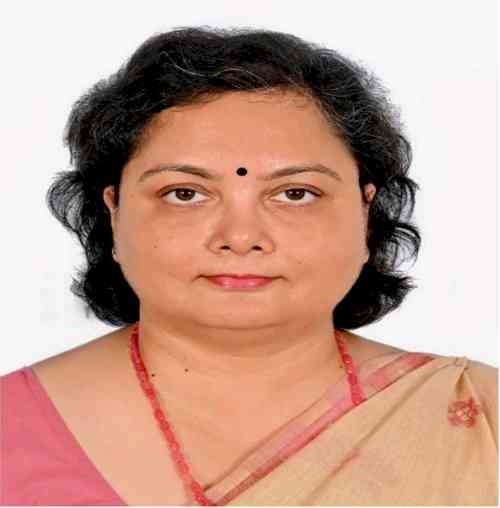
By G. Madhumita Das
Social security systems play a central role in reducing poverty, enhancing resilience, and promoting equitable development. Universal social security coverage allows every resident, regardless of income, employment status, or demographic characteristics, access to a minimum set of social protections such as pensions, healthcare, unemployment benefits, or disability support. India is closer than ever to building a universal social security system—something most nations even the most developed ones took decades of sustained investment to achieve.
With the Labour Codes, especially the Code on Social Security, 2020, the country has the legislative architecture to protect every worker, from gig drivers to factory employees to migrant construction labourers. The Code on Social Security consolidates nine major laws into a single framework. This helps in reducing the administrative complexity, improves portability of benefits, simplifies compliance for employers and strengthens monitoring and enforcement increasing the likelihood that workers—especially those in smaller enterprises in the informal sector where 90% of India’s workers are employed—can receive benefits without bureaucratic hurdles.
The code also allows the government to extend coverage of Employees’ Provident Fund Organisation (EPFO), Employees’ State Insurance Corporation (ESIC), Maternity benefits and Gratuity for enterprises in all sectors, for the benefit of hitherto uncovered workers and encourage voluntary enrolment in smaller establishments. It provides for a National Social Security Fund/State Social Security Funds where Government funding, CSR funding, contributions from Employer and workers can be collected which can support social security coverage.
But legislation is only one piece of the puzzle. What could truly set India apart from global counterparts is its emerging digital public infrastructure—from the e-Shram database and Aadhaar authentication to Unified Payments Interface (UPI) and Direct Benefit Transfer (DBT) platforms. Combined, these tools give India a unique opportunity to leapfrog traditional welfare models and build a portable, transparent, tech-enabled welfare system unlike any in the world.
Aadhaar: The Backbone of Universalisation
Global leaders in social protection ensure universality by guaranteeing every resident a unique ID that is tied to benefits. India has this already in Aadhaar, which provides highly reliable, no-cost authentication.
Aadhaar solves the biggest barrier to universal social security: identifying and verifying beneficiaries across states, sectors, and employers. For migrant workers, Aadhaar-enabled portability can do what no previous generation of welfare reforms could achieve: ensure uninterrupted access to entitlements regardless of location. This mirrors the digital ID–based systems in Norway and Denmark, where citizens carry their welfare identity seamlessly across regions and services.
A Unified Code riding on a Unified Database
While around the World, workers in the organized sector are typically covered under social security, it is far more difficult to cover unorganized sector workers where stable employer-employee relationship doesn’t exist. Many countries rely on integrated labour laws, but few have the benefit of a national worker registry as massive as India’s eShram database. The Social Security Code’s mandate for a unified registration mechanism aligns perfectly with eShram, which already captures demographic, skill, and occupation data for more than 310 million unorganised sector workers, each of whom are uniquely identified through Aadhaar authentication and given a e-Shram Universal Account Number (UAN).
India’s ability to uniquely identify, directly register and track informal workers through a single digital platform could enable faster enrolment for social security benefits, better portability, and real-time updation of worker data. In future, if the eShram and EPFO UANs are made portable, it will be possible to track labour movement between the unorganized sector and organized sector. This will allow analysis of labour market dynamics and be a goldmine of data that can inform public policy.
UPI and DBT: The Missing Link That Most Countries Are Yet to Master
Countries with strong welfare focus rely heavily on banks and legacy payment systems. India, however, has pioneered UPI, one of the world’s fastest, lowest-cost, interoperable payment networks. Integrated with DBT, India has the proven ability to send social security payouts instantly and directly to workers—across the length and breadth of the country.
This is a capability even advanced economies struggle with. During the pandemic, even in the US, millions waited weeks for stimulus cheques. In contrast, India transferred emergency COVID-19 payments to hundreds of millions of beneficiaries with unprecedented speed.
The Central and State Governments have a number of social security schemes spanning life insurance, accident insurance, health coverage, maternity benefits, old age protection etc. By enrolling eShram registrants in such schemes and leveraging UPI and DBT, universal social protection can be achieved, at scale, in a user friendly, transparent and efficient way.
India Can Leapfrog the World
For the first time in history, India holds all the cards, a legal framework (Labour Codes), a national worker registry (e-Shram), a universal ID system (Aadhaar), a real-time payments system (UPI) and a direct benefits pipeline (DBT). This combination is rare globally. If harnessed well, India could build a universal social protection model that is not only inclusive, but digitally native and future-proof—a model other nations may one day study.
The Social Security Code is more than legislation; it is a chance to redefine how a nation protects its workers in the 21st century. India must seize this opportunity and ensure the Labour Codes deliver on this unique opportunity for ensuring social security for all workers.
(The author is the Additional. Secretary & Finance Advisor, Ministry of Labour and Employment)