Road Safety Network Pushes Evidence-Based Speed Limits to Cut India’s Road Fatalities
Speed management is the fastest and most effective way to save lives on Indian roads, experts said at a national seminar held today at IIT Delhi during National Road Safety Month 2026. The seminar, organised by the Road Safety Network (RSN) in collaboration with IIT Delhi and IIT Kharagpur brought together road safety researchers, policymakers, enforcement officials, urban planners and civil society organisations to deliberate on maximum speed limits on National Highways and urban roads.
 City Air News
Jan 29, 2026 07:56
0
City Air News
Jan 29, 2026 07:56
0
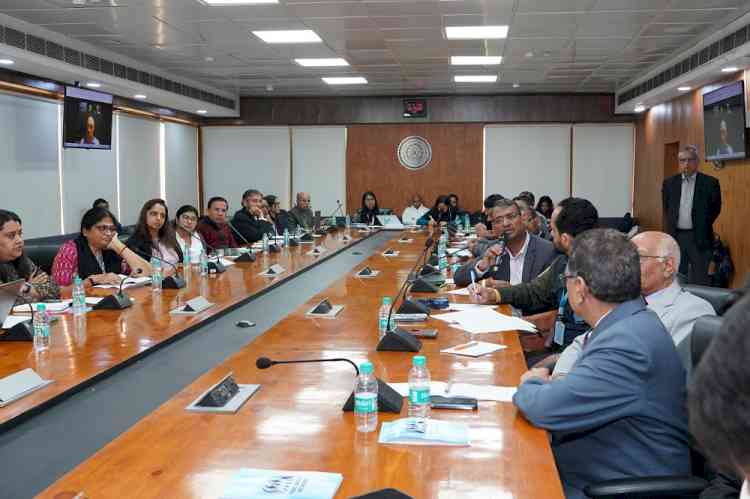
New Delhi, January 29, 2026: Speed management is the fastest and most effective way to save lives on Indian roads, experts said at a national seminar held today at IIT Delhi during National Road Safety Month 2026. The seminar, organised by the Road Safety Network (RSN) in collaboration with IIT Delhi and IIT Kharagpur brought together road safety researchers, policymakers, enforcement officials, urban planners and civil society organisations to deliberate on maximum speed limits on National Highways and urban roads.
India records over 1.7 lakh road fatalities annually, with speeding consistently cited as the leading cause, contributing to more than 70% of these fatalities. Speakers noted that while road infrastructure has expanded rapidly, speed limits have not been recalibrated to reflect mixed traffic conditions, human injury tolerance, and the safety of vulnerable road users.
“While National Highways form just 2% of India’s road network, they account for over 36% of road fatalities. Speeding is the biggest risk factor, especially for vulnerable road users. Lowering maximum speed limits, along with stronger enforcement, greater awareness, and improved emergency response, is critical to saving lives” said Bhargab Maitra, Professor, Civil Engineering Department, IIT Kharagpur, and Member of Road Safety Network, speaking at the seminar.
The first session focused on National Highways, which account for a disproportionately high share of road fatalities despite carrying a smaller portion of total traffic. Experts highlighted those high operating speeds, combined with heterogeneous traffic, frequent access points, roadside activity and inadequate protection for pedestrians and two-wheelers, have significantly increased crash severity.
David Cliff, Chief Executive Officer, Global Road Safety Partnership, Geneva, Switzerland, highlighted that even modest speed reductions can significantly lower fatalities and injuries. He recommended maximum speeds of 30 km/h in cities, under 80 km/h on rural roads, and 100 km/h on expressways, with strict enforcement aligned to global best practices.
Speakers also cautioned against treating highways purely as high-speed corridors, particularly when they pass through or near settlements. Instead, speed limits must reflect road function, surrounding land use and traffic composition, rather than vehicle capability alone.
The second session focused on urban speed limits, highlighting that speeding continues to claim thousands of lives in cities every year. Experts noted that, contrary to popular belief, most fatal crashes in urban areas occur on wide arterial roads, flyovers, and signal-free corridors, particularly during low-traffic hours. According to the 2023 MoRTH report, more than 17,000 people (17,255) were killed and over 73,000 (73,476) were injured in 50 million-plus cities. Currently, maximum speed limits in India are set at 120 km/h on expressways, 100 km/h on highways, and up to 70 km/h on urban roads, raising concerns about safety in densely populated areas.
Vulnerable road users—pedestrians, cyclists and two-wheeler riders—account for the majority of urban road crashes. At higher speeds, the chances of survival in a collision drop sharply.
“In India, setting rational speed limits is crucial as road crashes rise. There’s often a gap between road design, speed limit implementation, and public compliance. Effective enforcement, combined with better road planning, is key—especially to manage high speeds of motorized two-wheelers and changing travel behaviour. Global evidence is clear that 50 km/h is the absolute maximum safe speed in urban areas” said Prof. Geetam Tiwari IIT Delhi/TRIP Centre
Participants called for a maximum speed limit of 50 km/h on urban roads, with lower limits in residential areas, school zones and pedestrian-dense streets. Lower speeds, they noted, also improve liveability, public health, and environmental outcomes, without significantly affecting commute times due to existing congestion.
The discussions highlighted that enforcement alone cannot deliver safe speeds. Road design—through traffic calming, lane narrowing and self-explaining streets—was identified as critical to ensuring compliance.
Dr Kayitha Ravinder Chief Scientist, TPE & Head (ILT) Division, CSIR-CRRI, said- "Enforcement alone cannot solve speeding, especially in cities. Police cannot be present everywhere, and issuing fines without redesigning streets has limited impact. Evidence-based speed limits combined with road design interventions are the most reliable way to reduce fatalities."
“Under-reporting of speeding-related crashes and high motorcycle fatalities continue to mask the true scale of India’s road safety problem. With nearly 60% of serious crashes occurring at intersections, speed management and context-sensitive road design are critical, particularly on highway stretches with significant local access,” said Prof. P. K. Sikdar, advisor, International Road Federation (India Chapter), former Prof., IIT Mumbai and Director, CSIR-CRRI)
Participants emphasised that revising speed limits is a low-cost, high-impact regulatory action that can be implemented immediately, unlike infrastructure-heavy interventions that require long timelines.
The seminar outcomes will be compiled into a formal policy submission by the Road Safety Network to the Ministry of Road Transport and Highways, urging the adoption of evidence-based speed limits as a core pillar of India’s road safety strategy.
The event was hosted by the Road Safety Network (RSN), a national coalition working to make India’s roads safer through evidence-based policy, stronger governance, and accountability, grounded in the Safe Systems approach. The seminar brought together leading voices including; Pankaj Aggarwal, Chief Engineer (Standards, Research & Road Safety Engineering), Ministry of Road Transport and Highways (MoRTH), Government of India; Monika Bhardwaj (IPS), Addl. CP/Traffic (Zone-I), Dr. B. Mohammed Asheel, National Professional Officer (Injuries, Disabilities, Assistive Technology and Rehabilitation), World Health Organization (WHO) India; Aashima Bhandari, Senior Program Associate, Sustainable Cities and Transport, World Resources Institute (WRI) India, and Ashim Sanyal, Chief Operating Officer, Consumer VOICE. Together, they deliberated on actionable strategies to improve road safety through rational speed limits and enforcement measures.