RIT Integrates Print and Graphic Media Program into Packaging Science Curriculum: A Progressive Step Echoing India's Packaging Renaissance
The Rochester Institute of Technology (RIT) USA, a premier global institution in applied sciences and engineering, has integrated its longstanding Print and Graphic Media Technology program into its Packaging Science program. This strategic evolution preserves vital printing knowledge while prioritising the burgeoning packaging sector – a move that strongly resonates with India's thriving packaging industry.
 City Air News
Jan 6, 2026 11:48
0
City Air News
Jan 6, 2026 11:48
0
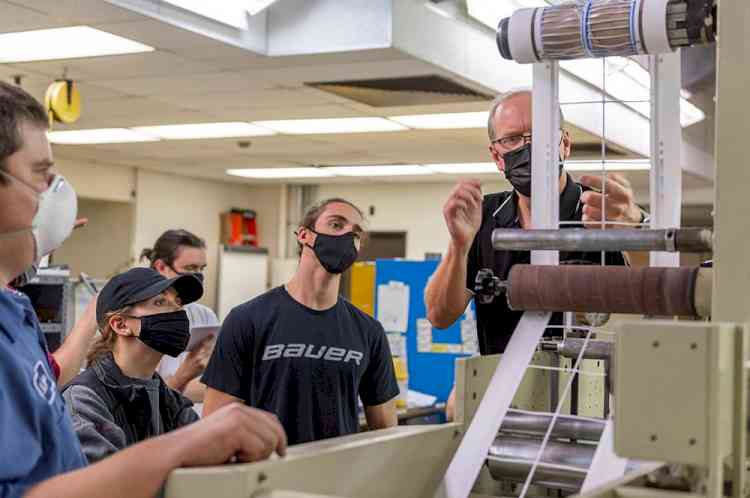
Ludhiana, January 6, 2026: The Rochester Institute of Technology (RIT) USA, a premier global institution in applied sciences and engineering, has integrated its longstanding Print and Graphic Media Technology program into its Packaging Science program. This strategic evolution preserves vital printing knowledge while prioritising the burgeoning packaging sector – a move that strongly resonates with India's thriving packaging industry.
RIT's printing program, established in 1922, has trained generations of leaders in graphic arts. Facing declining enrolment in traditional printing amid digital disruptions, the university is pivoting to equip students for high-demand careers in packaging. Kyle Dunno, Chair of Packaging and Graphic Media Science at RIT’s College of Engineering Technology, said: “For generations, our print and graphic media program has prepared leaders in printing, publishing, and media. As technologies advance and industries evolve, this integration honours that legacy while expanding relevance in the rapidly growing packaging and converting sectors.” The new curriculum emphasises manufacturing, materials science, colour management, package printing, and converting technologies, covering premedia, process control, variable data printing, and applications in cartons, flexible packaging, labels, and corrugated boards.
In India, this aligns perfectly with the packaging boom. The sector, valued at over USD 100 billion in 2025, is projected to reach USD 143-170 billion by 2030 at a 10-11% CAGR, driven by e-commerce, FMCG, pharmaceuticals, and sustainability norms. While commercial printing grows modestly at 2-4%, package printing thrives on endless demand for branded, eco-friendly solutions.
RIT’s STEM-oriented Packaging Science program prepares graduates for engineering and technical roles, with global starting salaries of USD 70,000-90,000. In India, such expertise is highly valued across 22,000+ units and rising foreign investments. Current students will complete their degrees, with ongoing research, testing, and certifications like G7 standards. Dean S. Manian Ramkumar stated: “By connecting print and packaging competencies, we ensure hands-on, future-oriented education aligned with workforce needs.”
Prominent Indian industry leaders have endorsed this change. Prof. Kamal Mohan Chopra, renowned printing expert and former Chairman of the World Print and Communication Forum, and a key advocate for print education and packaging growth, remarked: “RIT's revolutionary decision to integrate print education with packaging science is a visionary step that mirrors the global and Indian reality. Worldwide, commercial printing is declining, but in India, we are fortunate to witness a packaging boom growing at 15% annually, saving and transforming the industry. This integration will produce skilled professionals blending print heritage with packaging innovation – essential for our sustainable, export-driven economy. It is time to embrace this change wholeheartedly; print is not dying; it is evolving into its most vital form yet.” Representatives from India's print education community added: “This forward-thinking integration at RIT reflects the real-world evolution of the graphic arts industry. In India, where packaging drives growth, blending print heritage with packaging science creates professionals ready for high-demand roles in flexible packaging and converting.”
For aspiring Indian students, RIT’s program provides an excellent gateway to global opportunities, contributing to India's packaging leadership in sustainability and advanced technologies. As Dunno concluded: “We’re not ending print; we’re adapting to new directions. When the wind changes, adjust your sails.” This development at RIT indicates bright prospects for India's youth in a sector powering economic and sustainable growth.