Rajya Sabha MP Rajinder Gupta Bats for Higher Public Spending on Education, Health
Seeks ₹10,000-Crore Package for Mohali Semiconductor Lab
 City Air News
Feb 12, 2026 02:18
0
City Air News
Feb 12, 2026 02:18
0
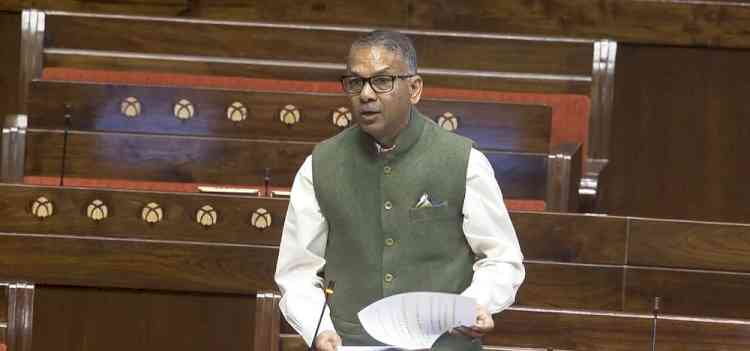
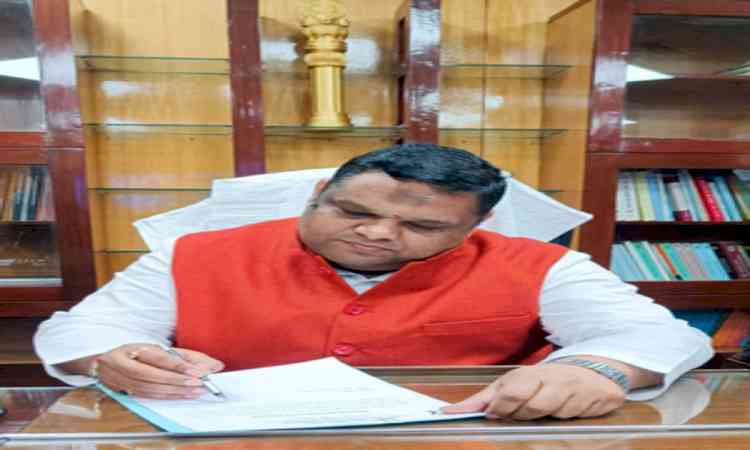
Chandigarh, February 12, 2026: Participating in the discussion on the Union Budget in the Rajya Sabha, Member Parliament Padma Shri Rajinder Gupta described the Budget as fiscally prudent and growth-oriented, but argued that India’s march towards becoming the world’s third-largest economy must be anchored in stronger public expenditure on education and healthcare.
Thanking the Chair for the opportunity to speak, Gupta congratulated the Finance Minister on presenting her ninth consecutive Budget, calling it a symbol of stability, continuity and the rising leadership of women. Referring to Punjab as the land of “gurus, pirs and prophets” guided by the spirit of sarbat da bhala, he said the true test of any Budget lies in how it treats the poorest and most vulnerable.
Gupta welcomed the government’s emphasis on fiscal discipline, noting the projected fiscal deficit of 4.3 per cent and capital expenditure outlay exceeding ₹12 lakh crore as steps aligned with the vision of “Viksit Bharat”. He also appreciated tax reforms aimed at ease of doing business, measures to support domestic pharmaceuticals, enhanced allocations for women-centric schemes, and the recently concluded India–EU trade deal, which he termed a landmark achievement.
However, he cautioned that sustained economic growth must be accompanied by greater public investment in education, healthcare and infrastructure. “To match and surpass global economic powers, per capita income must rise equitably and the everyday lives of farmers, workers, women, senior citizens and youth must visibly improve,” he said.
Education and employability
Gupta noted that while the Budget allocation of over ₹1.39 lakh crore for education reflects positive intent, overall spending remains between 4.1 and 4.6 per cent of GDP — below the 6 per cent target envisioned in the National Education Policy (NEP) 2020. He expressed concern over rising fees, closure of over 90,000 schools in recent years, and declining public confidence in government schools.
Arguing that commercialization weakens the spirit of Article 21A, which guarantees the right to education, he called for the establishment of an independent education commission to ensure affordability and curb profiteering. He also proposed centres of excellence within government schools, accountability mechanisms to encourage public servants to enrol their children in government institutions, and the creation of Education–Employment–Enterprise (EEE) clusters to bridge the degree-skill mismatch and address youth unemployment.
Healthcare spending ‘critically low’
On healthcare, Gupta acknowledged the expansion of allied health institutions, support for Ayurveda and medical tourism, and relief provided under Ayushman Bharat. However, he said India’s public health expenditure at around 1.9 per cent of GDP remains inadequate in the face of rising population, disease burden and longevity.
He warned that weak public systems push families towards high out-of-pocket expenses, often leading to debt. He urged the government to undertake emergency strengthening of public healthcare infrastructure, extend full tax incentives to hospitals in underserved regions, and widen coverage and improve reimbursements under Ayushman Bharat.
Senior citizens, women and MSMEs
Highlighting the contribution of nearly 15 crore senior citizens above the age of 60, Gupta requested that senior citizens of India be provided with reasonable relief in rent and taxes, and that they be given higher and safer interest on their bank deposits, to ensure a respectable and self-reliant income.
On women’s empowerment, he said schemes such as Lakhpati Didi and SHE-Marts were promising but stressed the need for structural reforms, including safe workplaces, childcare support, land rights and mandated government procurement from women-led enterprises.
Turning to MSMEs, which employ over 11 crore people, Gupta said access to patient, long-term capital remains a challenge. He called for the creation of a strong development bank to support long-term industrial growth, arguing that “a long-term vision cannot be financed with short-term money”.
Push for semiconductor investment in Punjab
Focusing on Punjab’s industrial potential, Gupta said strengthening sectors such as semiconductors, textiles and advanced manufacturing could curb youth migration. He referred to the Semiconductor Laboratory (SCL) in Mohali, India’s only government-owned semiconductor Lab and urged the Centre to announce a special package of ₹10,000 crore to establish a fully modernised semiconductor fabrication facility there.
“This is not merely Punjab’s demand; it is a question of India’s technological self-reliance,” he said, adding that Punjab has consistently stood with the nation and deserves priority support.
Concluding his speech, Gupta said economic policy must ultimately translate into tangible benefits in classrooms, hospitals, farms and homes. “When welfare reaches every life equally, trust deepens — and the promise of inclusive growth becomes real,” he said.