Punjab Government Should Stop Harassing Traders: Punjab Pradesh Beopar Mandal
Growing resentment among traders and businessmen due to the lack of a business-friendly environment in the state
 City Air News
Jun 9, 2026 04:39
0
City Air News
Jun 9, 2026 04:39
0
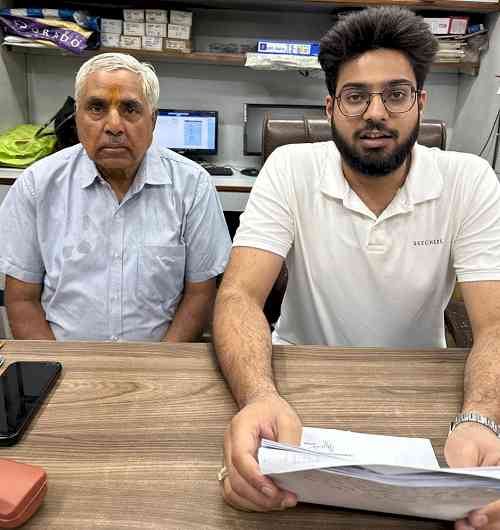
Ludhiana, June 9, 2026: A meeting of the Punjab Pradesh Beopar Mandal (Regd.) was held today at its office near Mata Rani Chowk. The meeting was attended by State General Secretary Sunil Mehra, State Secretary Ayush Aggarwal, District President Parveen Goyal, District Chairman Pawan Lahar, District General Secretary Parveen Sharma, Atul Kapoor, Ashwani Mahajan, Romesh Mahajan, Pawan Malhotra, Umesh Soni, and other members.
During the meeting, concerns were raised regarding the increasingly unfavourable environment for trade and industry in Punjab.
According to the leaders, Punjab collected approximately ₹26,000 crore in GST during the financial year 2025–26, which is nearly half of Haryana’s collection. In May 2026 alone, Punjab collected around ₹2,400 crore in GST, approximately ₹3,000 crore less than Haryana. It was further stated that Punjab earned nearly ₹200 crore in just two months of the current financial year through GST penalties and raids. Instead of attracting new businesses and industries, the existing business community and industrialists are being subjected to unnecessary harassment. Frequent raids and penalties are weakening an already struggling business sector.
The leaders emphasized that while some traders may engage in wrongful practices and the Beopar Mandal stands firmly against them, it is equally opposed to those government officials who, after conducting complete verification and issuing GST registrations, later declare those same GST numbers to be fake, often in collusion with certain traders, thereby causing losses to the government exchequer. As a result, honest traders suffer alongside dishonest ones.
Expressing concern over this issue, the Mandal urged the government not to harass all traders indiscriminately through GST authorities or the State Pollution Control Board. Traders from outside Punjab are already reluctant to enter the state or participate in trade fairs and exhibitions due to fears of GST inspections. At the same time, industries that have been operating in Punjab for years continue to face frequent GST raids.
The leaders also questioned why only the State GST Department appears to conduct such raids, while cases involving raids by the Central GST Department rarely come to light.
The trader representatives also expressed concern over delays in the release of pending VAT and GST refunds. In December 2025, Punjab GST Commissioner had announced the release of ₹660 crore in pending GST and VAT refunds, including ₹120 crore pertaining to December and ₹370 crore from earlier pending claims. However, the leaders stated that approximately ₹200 crore still remains outstanding, while refunds for the current financial year are also being delayed. Changes in GST slab rates between input and output taxes have significantly increased refund differentials. Delayed Input Tax Credit (ITC) reduce working capital availability and often force small traders to borrow funds.
The ongoing conflict between Iran and the United States has increased transportation costs through the Strait of Hormuz, leading to higher input costs. Raw material prices are fluctuating almost every week, making production both more expensive and less viable.
The leaders stated that during such difficult times, the government should support traders and industries rather than add to their challenges.
They further said that the additional 0.25% stamp duty, which was imposed simultaneously on mortgages and loans despite repeated representations to then-Minister Sanjeev Arora, should now be withdrawn. Given the economic slowdown already affecting Punjab’s trade and industry, its removal would provide substantial relief.
The leaders also revived a long-standing issue concerning electricity. According to them, every year the Punjab Government announces power subsidies but simultaneously leaves traders and industrialists facing frequent unannounced power cuts. Such outages increase production costs and, in many cases, require entire manufacturing processes to be restarted. This raises operational costs and prevents Punjab’s traders and industrialists from offering competitive prices compared to businesses in other states, resulting in loss of business opportunities.
The leaders urged the Punjab Government to immediately create a more business-friendly environment in the state so that the migration of small and medium businesses and industries to other states can be halted.
They also warned that if the government fails to take prompt decisions in favour of trade and industry, it will soon witness widespread resentment and agitation from the trading community across the state.