PU Hosts Policy Dialogue on Bridging Skills-to-Work Gap under NITI Aayog Mission
Chandigarh Skill Ecosystem Reviewed at PU Policy Roundtable: Stakeholders discuss skill-gap mapping, industry engagement and employment outcomes
 City Air News
Mar 12, 2026 07:59
0
City Air News
Mar 12, 2026 07:59
0
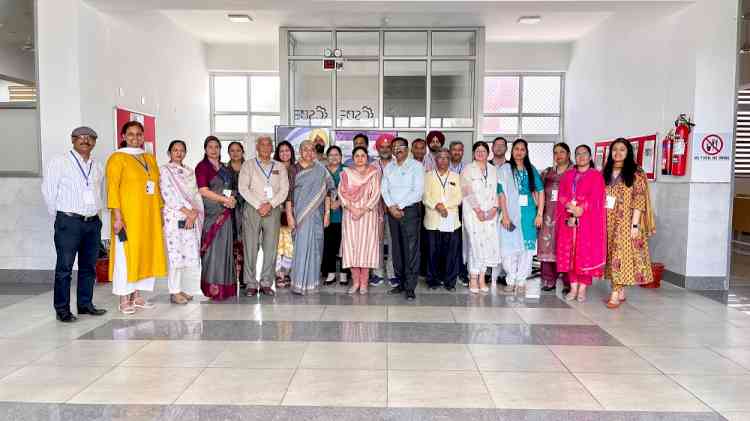
Chandigarh, March 12, 2026: The Centre for Skill Development & Entrepreneurship (CSDE), Panjab University (PU), today hosted a policy dialogue on “Closing the Skills-to-Work Gap: Progress Review, Ecosystem Roundtable & Policy Co-Design Dialogue” at the PU’s South Campus. The dialogue was organised under the Lead Knowledge Institute (LKI) project of the State Support Mission of NITI Aayog, which focuses on “Skill-Gap Mapping for Policy Reform: Designing and Piloting Assessment Tools in Chandigarh.”
PU Director, Research & Development Cell (RDC), Prof. Meenakshi Goyal, served as Institutional Lead for the initiative. Policymakers, industry representatives, academic experts and training institutions took part in the consultation to review progress and discuss policy directions for improving the transition from skill development to employment.
Prof. Meenakshi Goyal said, “Panjab University, as a knowledge partner, supports evidence-based policy dialogue and collaboration among academia, government and industry. Research-led initiatives of this nature can help strengthen the skilling and employability ecosystem in Chandigarh.”
The programme began with a progress review of diagnostic findings emerging from the LKI project presented by the Honorary Director, Centre for Skill Development & Entrepreneurship. The review highlighted key insights on the gap between training outcomes and labour-market requirements in the region. Participants discussed possible interventions to improve programme alignment with industry needs, increase employer participation and strengthen monitoring of employment outcomes.
An ecosystem roundtable examined the region’s MSME-dominated industrial structure, the growth of services-sector employment and the increasing demand for digital and knowledge-based skills. Participants also discussed emerging opportunities linked to Global Capability Centre (GCC)-type work models.
The concluding policy co-design session identified three clusters for further work. These include institutional adoption and governance mechanisms for skill-gap analytics, stronger industry engagement in training ecosystems and improved systems for tracking employment outcomes and programme effectiveness.
The dialogue generated inputs for the forthcoming LKI Policy Toolkit and Implementation Roadmap, and contributed to a shared understanding of skills-to-work challenges in Chandigarh.