Project Mumbai hosted the Zero Waste Schools Sustainability Mela 2025
Project Mumbai hosted the Zero Waste Schools Sustainability Mela 2025, a vibrant, youth-led climate action festival titled “Hope in Action: Youth for a Climate-Resilient Mumbai” that brought together over 30 schools, educators, civic leaders, environmentalists, and hundreds of enthusiastic student changemakers. Designed as a bridge between classroom climate initiatives and the upcoming Mumbai Climate Week 2026, the Mela showcased how hands-on sustainability can ignite real behavioural change across the city.
 City Air News
Dec 5, 2025 07:00
0
City Air News
Dec 5, 2025 07:00
0
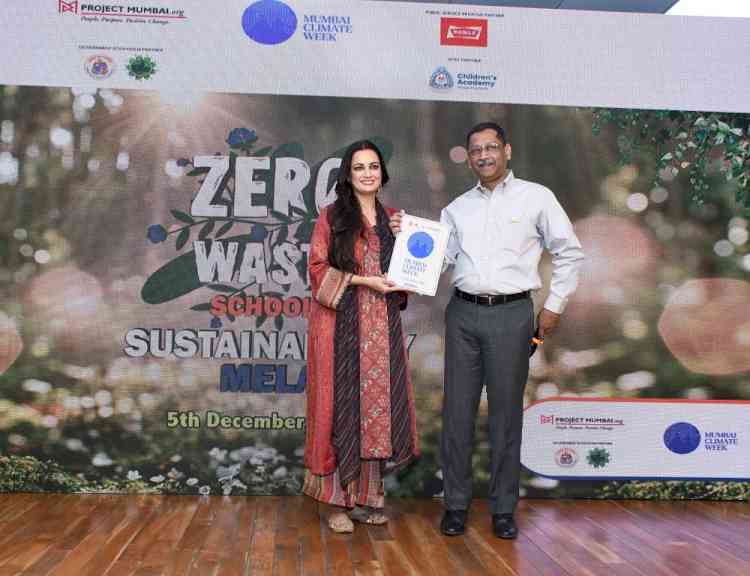
Project Mumbai hosted the Zero Waste Schools Sustainability Mela 2025, a vibrant, youth-led climate action festival titled “Hope in Action: Youth for a Climate-Resilient Mumbai” that brought together over 30 schools, educators, civic leaders, environmentalists, and hundreds of enthusiastic student changemakers. Designed as a bridge between classroom climate initiatives and the upcoming Mumbai Climate Week 2026, the Mela showcased how hands-on sustainability can ignite real behavioural change across the city.
The event opened with an engaging introductory segment, including the screening of the Zero Waste Schools film, a diya lighting ceremony, and a welcome to dignitaries who have been pivotal in India’s climate and sustainability landscape. Guest of Honour, Sudhakar Bobade, Mission Director of Majhi Vasundhara Abhiyan, shared insights from his four decades of public service and his leadership in strengthening climate-responsive governance. Shishir Joshi, Founder & CEO of Project Mumbai and Mumbai Climate Week, highlighted the importance of citizen-driven climate transformation. Ronit Bhat from Children’s Academy emphasized the need for experiential, sustainability-focused learning in schools, while Konark Borkar, Marine Biologist and Senior Project Officer for Zero Waste Schools, reflected on nurturing scientific curiosity and climate responsibility among students. Adding a spark of youthful energy, the two youngest student champions of the Zero Waste Schools Programme took the stage as representatives of student-led climate leadership.
The heart of the Mela came alive through three simultaneous hands-on workshops on Sustainable Gift Wrapping, Green Reading, and Plastic-Free Décor, paired with a buzzing exhibition zone. Students explored ten interactive sustainability game stalls, circular economy showcases, NGO booths, and four Project Mumbai stalls that demonstrated composting, recycling, upcycling, and low-waste living. The experience demonstrated how sustainability becomes exciting and accessible when students learn by doing.
In the afternoon, the audience was inspired by a keynote address from Yusuf Kabir, WASH CCES Specialist at UNICEF India, whose decades of work in WASH, climate adaptation, and public health deeply resonated with the young crowd. This was followed by the first panel discussion, moderated by youth environmentalist Rahul Bagwe, featuring Level 2 school students who spoke candidly about their climate initiatives and the challenges and opportunities of building greener school communities.
The highlight of the day was the youth conversation with Chief Guest Dia Mirza, UN Environment Goodwill Ambassador. She engaged directly with students in a powerful panel on climate responsibility, followed by a heartfelt townhall-style address. Her message underscored the belief that young people are not just the leaders of tomorrow—they are the leaders of today, shaping the city’s climate future with courage and clarity.
The Mela also celebrated student and school achievements through an awards ceremony recognising 9 Level 2 schools, 20 Level 1 schools, and 20 facilitators who have demonstrated exceptional commitment to the Zero Waste Schools Programme. These recognitions affirmed the progress of schools transitioning into zero-waste zones through composting, segregation, plastic recycling, and student-led climate initiatives.
The Sustainability Mela 2025 stands as a shining example of how collaboration between students, educators, civic authorities, and community partners can accelerate climate action. As part of Mumbai Climate Week’s larger movement, the event amplified the voices of young green champions and showcased scalable ideas such as community composting, plastic reduction campaigns, and circular economy solutions. By connecting school-level action to city-level climate resilience conversations, the initiative strengthens Mumbai’s ecosystem of climate leadership.
As we close this year’s celebration, one message echoes clearly across the Mela: when students lead, the city moves. The Zero Waste Schools Sustainability Mela 2025 reaffirms that every small action—from segregation habits to upcycling projects—creates ripples far beyond the classroom. With committed partners, inspiring leaders, and passionate young changemakers, Mumbai’s journey toward a cleaner, greener, zero-waste future is already in motion.