Prof. Man Mohan Sharma delivers Panjab University Colloquium and Foundation Day Lecture
Highlights Potential of Agricultural Waste in Sustainable Chemical Industry
 City Air News
Oct 15, 2026 07:56
0
City Air News
Oct 15, 2026 07:56
0
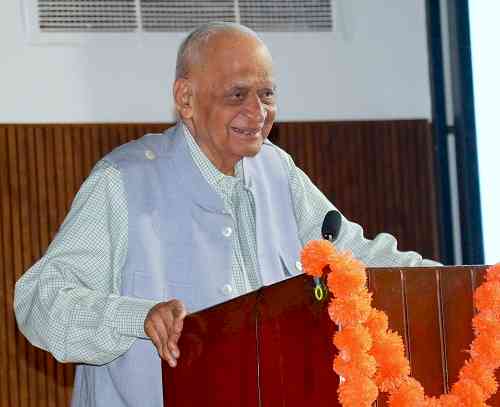
Chandigarh, October 15, 2026: Agricultural residues often treated as waste can become valuable industrial raw materials, offering new opportunities for sustainable manufacturing and better resource utilisation. This was the central message of a lecture delivered by eminent chemical engineer Prof. Man Mohan Sharma at Panjab University’s Foundation Day-cum-Colloquium Lecture on Thursday.
Prof. Sharma, FREng, Padma Vibhushan awardee and Emeritus Professor of Eminence at the Institute of Chemical Technology (ICT), Mumbai, spoke on “Sustainability in Chemical Industry and Important Role of Biotransformations”. He highlighted the potential of agricultural by-products to create value-added industrial chemicals and stressed the need to adopt circular economy practices.
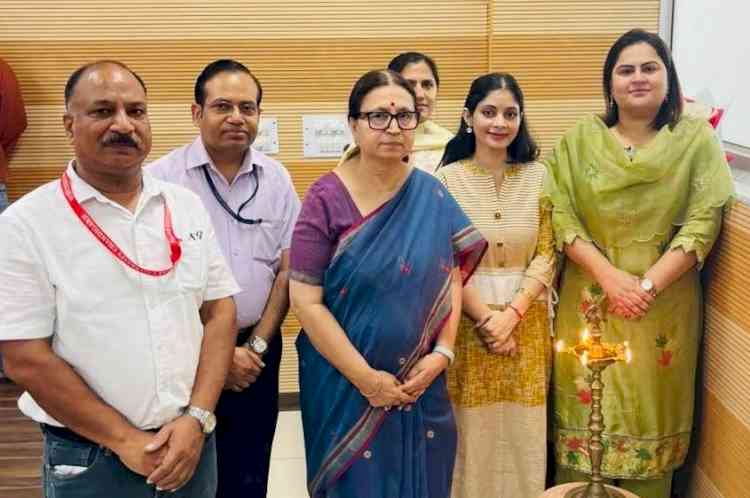
PU Vice Chancellor Prof. Meenakshi Goyal presided over the function. Former Vice Chancellors Prof. Renu Vig and Prof. A.K. Grover attended the event, along with senior scientists, faculty members, research scholars and students.
Illustrating the scope for value addition, Prof. Sharma cited bagasse, a by-product of sugarcane processing, which can be utilised to obtain lignin, cellulose and hemicellulose, materials with several industrial applications. He also discussed ferulic acid obtained from rice-processing residues, which can be converted into vanillin through biotransformations. Cashew nut shell liquid (CNSL), another by-product of agricultural processing, was cited for its industrial applications.
Prof. Sharma emphasised that agricultural resources must be used more efficiently and that industrial processes should minimise waste while extracting greater value from available raw materials. Such approaches can help strengthen the links between agriculture, biotechnology and the chemical industry, he added.
Discussing biofuels, Prof. Sharma recalled the use of ethanol as a fuel in vehicles in the 1950s. He stressed the need for judicious use of biofuels to ensure that food resources are not diverted for fuel production. He also highlighted the potential of molasses, a by-product of the sugar industry, for producing bioethanol through fermentation.
The lecture focused on the role of biotransformations in developing sustainable industrial processes and making better use of renewable resources. It also highlighted the importance of integrating scientific research with industrial applications to support resource efficiency and value creation.
Prof. Sharma previously served as Director of ICT, Mumbai, and is recognised for his contributions to chemical engineering research and education. He was the first Indian engineer elected a Fellow of the Royal Society, UK, and has received several national and international honours for his contributions to science and engineering.
Prof. Desh Deepak Singh, coordinator of the colloquium, proposed the vote of thanks.