Exposure Visit to P U Tech Innovation Forum Promotes Scientific Curiosity and Innovation among School Students
P U Tech Innovation Forum, in collaboration with the Department of Microbial Biotechnology and E-YUVA Centre, Panjab University, Chandigarh, hosted students from Government Model Senior Secondary School (GMSSS), Sector 14 (West), Chandigarh, for an exposure visit to the Bioincubator under SIC Activity 2 of the DICE Initiative, themed “Field Visit and Idea Creation.”
 City Air News
Oct 15, 2026 08:02
0
City Air News
Oct 15, 2026 08:02
0
Chandigarh, October 15, 2026: P U Tech Innovation Forum, in collaboration with the Department of Microbial Biotechnology and E-YUVA Centre, Panjab University, Chandigarh, hosted students from Government Model Senior Secondary School (GMSSS), Sector 14 (West), Chandigarh, for an exposure visit to the Bioincubator under SIC Activity 2 of the DICE Initiative, themed “Field Visit and Idea Creation.” The visit aimed to nurture scientific curiosity, creative thinking, problem-solving abilities, and an entrepreneurial mindset among young students by introducing them to advanced scientific facilities, biotechnology applications, and the start-up ecosystem.
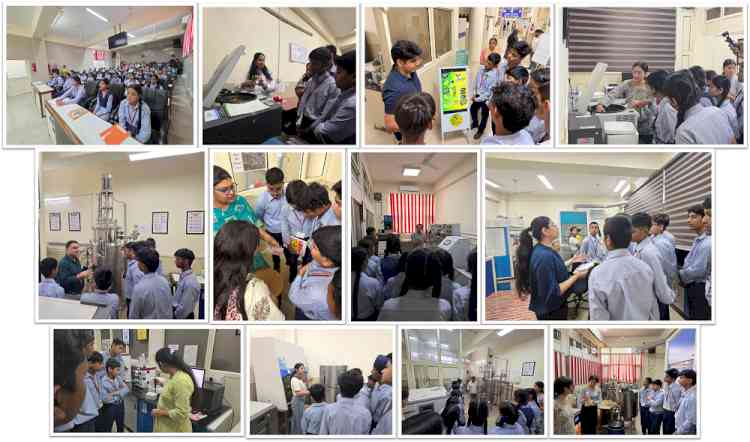
During the visit, students explored various research and scale-up facilities at the Bioincubator and learned how scientific discoveries can be translated into practical applications and innovative products. They visited the cell culture laboratory, where they observed cells under an inverted microscope, gaining a first-hand understanding of cell visualization and its importance in biological research. They also visited the microbial facility laboratory, where they were introduced to the applications of microbial technologies in biotechnology research, product development, and industrial processes.
Another major highlight of the visit was the exposure to the Bioincubator's bioprocessing and scale-up infrastructure. Students observed bioreactors of 5-litre, 7-litre, 25-litre, and 250-litre capacities, gaining an understanding of how biological processes can be developed and scaled up from laboratory-level experiments to pilot-scale production. They were also introduced to advanced analytical and purification systems, including High-Performance Liquid Chromatography (HPLC) and Fast Protein Liquid Chromatography (FPLC), and learned about their applications in the analysis, separation, and purification of biological compounds and proteins.
The students were particularly enthusiastic about understanding how these sophisticated instruments and facilities support biotechnology research and help transform laboratory findings into products with potential commercial and societal applications. They actively asked questions about the functioning of the equipment, the practical applications of biotechnology, and the journey from scientific experimentation to product development.
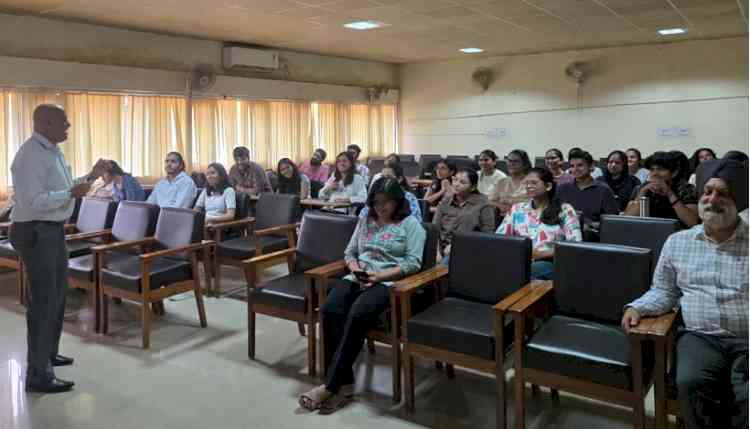
Another key highlight of the visit was an interactive session with four start-ups incubated at the Bioincubator. The entrepreneurs shared their experiences of developing innovative ideas, conducting research, overcoming technical challenges, and translating concepts into practical solutions. The interaction provided students with first-hand insights into the entrepreneurial journey and demonstrated how scientific knowledge, creativity, perseverance, and appropriate institutional support can contribute to building successful ventures.
The students participated enthusiastically in the discussions and asked numerous questions about the start-ups' technologies, product development processes, and the challenges associated with innovation and entrepreneurship. The interaction encouraged them to think beyond textbooks, identify everyday problems, and explore how scientific ideas can be developed into useful solutions.
The exposure visit offered an enriching experiential learning opportunity by connecting classroom education with real-world scientific research and entrepreneurship. It highlighted the importance of introducing students to advanced research infrastructure and successful innovation initiatives at an early stage to foster curiosity, critical thinking, and a problem-solving attitude.
The students thoroughly enjoyed the visit and showed keen interest in the facilities, technologies, and start-up activities. The programme reinforced the idea that innovation begins with curiosity and that even a simple observation can lead to a meaningful discovery or a promising entrepreneurial venture.
Through the DICE Initiative, P U Tech Innovation Forum, in collaboration with the Department of Microbial Biotechnology and E-YUVA Centre, Panjab University, Chandigarh, continues to encourage young students to explore science, embrace creativity, and develop an innovation-oriented mindset.
The visit concluded on an inspiring note, emphasizing that exposure to science, technology, and entrepreneurship can empower young minds to transform their ideas into innovations that address real-world challenges.