Panjab University Commemorates Teacher’s Day 2026 with Public Lecture on “Liberal Arts Education and the Ashoka Experiment”
Panjab University (PU), Chandigarh commemorated Teacher’s Day Celebration through a Public Lecture on “Liberal Arts Education and the Ashoka Experiment.”
 City Air News
Sep 7, 2026 08:40
0
City Air News
Sep 7, 2026 08:40
0
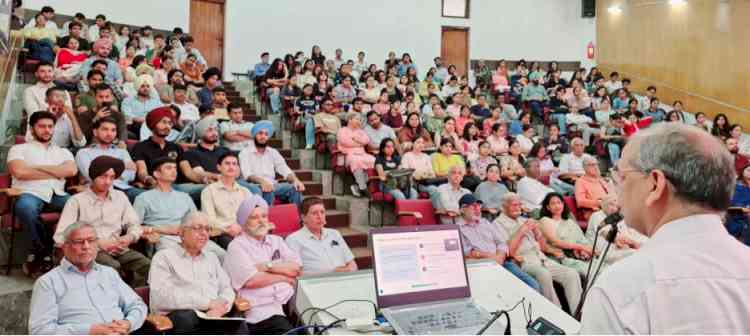
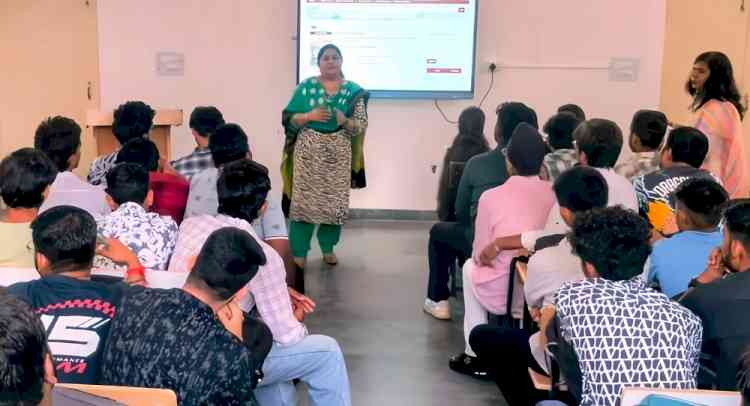
Chandigarh, September 7, 2026: Panjab University (PU), Chandigarh commemorated Teacher’s Day Celebration through a Public Lecture on “Liberal Arts Education and the Ashoka Experiment.”
The event was organised under PU Institute of Social Science Education and Research (ISSER) in association with The Society for Promotion of Science & Technology in India (SPSTI), The PU-IIT Ropar Regional Accelerator for Holistic Innovations Foundation (PI-RAHI), Northern Science & Technology Cluster, and Chandigarh Chapters of the Indian National Science Academy (INSA), National Academy of Sciences, India (NASI) and Indian National Young Academy of Sciences (INYAS).
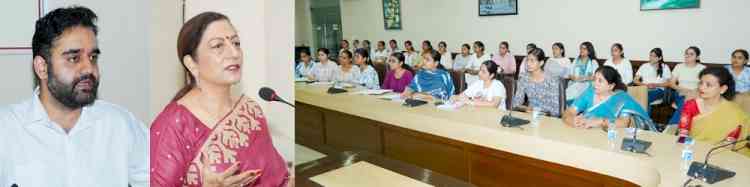
The program was graced by Vice Chancellor PU, Prof. Meenakshi Goyal; Director, PI-RAHI, Prof. Rajat Sandhir; Coordinator, ISSER, Dr. Anju Suri; Chairperson, UICET, Prof. Anupama Thakur; President, Mr. Dharamvir; Former Vice Chancellor, PU & Vice-President, Prof. Arun Kumar Grover and General Secretary, SPSTI, Prof. Keya Dharamvir.
Mr. Dharamvir welcomed the dignitaries. The public lecture was delivered by Dean, Student Affairs; Dean, Office of Academic Affairs, Ashoka University, Prof. Dheeraj Sanghi, presented insights into evolution, relevance and future of liberal arts education in India, with particular emphasis on the institutional model developed by Ashoka University.
He explored liberal arts education as a broad, interdisciplinary model integrating humanities, social sciences, sciences and arts, while fostering critical thinking, ethical reasoning, communication and adaptability. Tracing its roots from Greece and India’s Takshashila and Nalanda to contemporary higher education, he highlighted the renewed emphasis on multidisciplinary learning in India, through inclusive NEP 2020.
The key focus was the “Ashoka Experiment,” its model of collective philanthropy, institutional autonomy, distributed governance and academic freedom, supported by a multidisciplinary academic structure comprising majors, minors, foundation courses, research, internships and electives. He also emphasized that in an AI-driven future, human capabilities such as critical thinking, creativity, ethical judgement and understanding the “what” and “why” will become increasingly important.
The discussion also highlighted the value of creating and strengthening more institutions on the lines of Ashoka University, while recognizing that PU has envisioned and pursued multidisciplinary and holistic education since its inception. Expanding and strengthening such models across institutions could further broaden their mandate and contribute to preparing students for the complex challenges of the 21st century.