Operation KAWACH: Student-centric preventive policing initiative aims to transform peer pressure into peer protection via 3-pillar model: ‘connect, detect, protect’
In a major step towards transforming conventional anti-drug enforcement into a student-centric preventive model, Deputy Inspector General of Police (DIG) Ludhiana Range Sandeep Goel on Friday launched ‘Operation KAWACH’ at the Gulzar Group of Institutions in Khanna. The initiative is the brainchild of Senior Superintendent of Police (SSP) Khanna Dr Darpan Ahluwalia.
 City Air News
Oct 9, 2026 08:17
0
City Air News
Oct 9, 2026 08:17
0
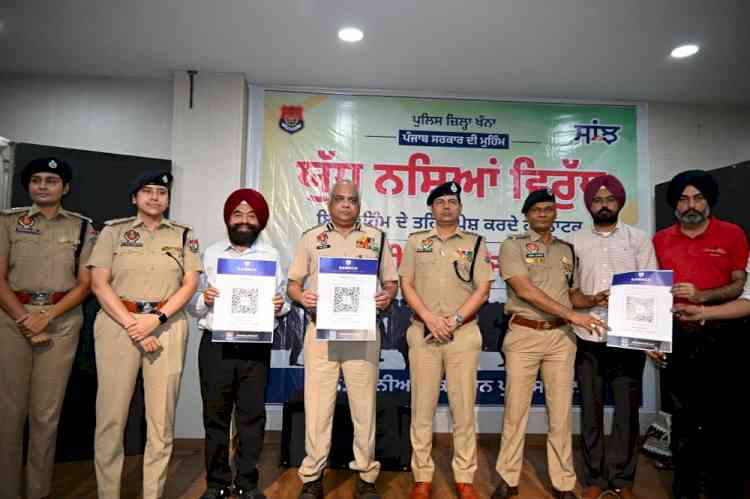
Chandigarh/Ludhiana/Khanna, October 9, 2026: In a major step towards transforming conventional anti-drug enforcement into a student-centric preventive model, Deputy Inspector General of Police (DIG) Ludhiana Range Sandeep Goel on Friday launched ‘Operation KAWACH’ at the Gulzar Group of Institutions in Khanna. The initiative is the brainchild of Senior Superintendent of Police (SSP) Khanna Dr Darpan Ahluwalia.
Operation KAWACH is designed to create a robust protective network around young people by shifting the focus from purely reactive enforcement to early intervention and peer support.
Addressing the gathering, DIG Sandeep Goel highlighted that illicit drug markets often expand through peer circles, where one user inadvertently draws others in, eventually creating supply chains. “Operation KAWACH seeks to reverse this network effect. Instead of allowing peer groups to become a pathway into substance abuse, KAWACH empowers them to act as a protective shield where concerns are identified early and help is accessible long before vulnerability turns into addiction or crime,” the DIG said.
Elaborating on the initiative, SSP Khanna Dr Darpan Ahluwalia stated that Operation KAWACH operates on three interconnected pillars—CONNECT, DETECT, and PROTECT.
She said that as part of the Connect, students will be encouraged to form ‘Peer Groups’, subsequently developing into peer support networks. The underlying principle is that no student should feel that he or she has to face a difficult situation alone, she said, while adding that these peer groups will be linked with designated civil and police mentors, creating a trusted support structure between students and the administration.
Similarly, the Detect part gives students a safe voice through a distinctive feature 'KAWACH QR Codes' that students can scan to communicate anonymously under three broad options: ‘I need help’ when the student is personally facing a difficulty; ‘I am worried about someone’ when a student is concerned about a friend or fellow student; ‘I want to report something’ to provide information regarding suspected drug activity, harassment, unsafe surroundings or any other concern.
The third most important pillar ‘Protect’ is about ensuring timely support and intervention. Once the information received through the KAWACH mechanism, it will be channelled for appropriate response through the designated civil and police mentors.
“A student may hesitate to walk into a police station, but they will readily scan a QR code to seek help or flag an issue anonymously. The core objective of Operation KAWACH is simple: before drugs can reach a student, KAWACH must reach them first,” emphasised SSP Dr Darpan Ahluwalia.
On the occasion, Superintendent of Police (Headquarters) Khanna Harpinder Kaur Gill, Superintendent of Police (Investigation) Khanna Rakesh Kumar Yadav, college management, faculty, students, as well as the District and three Halqa coordinators of 'Yudh Nashian Virudh' were present.